|
The Philatelic Truck
Posted January 31, 2024 |
The Royal Flying Corps in Beamsville Ontario
Posted November 21, 2023 |
British Columbia Philately
Posted September 29, 2023 |
Tristan da Cunha
Posted July 10, 2023 |
Charles Lindbergh
Posted May 16, 2023 |
Ron Brigham - A Great Canadian Collector
Posted April 10, 2023 |
Queen Elizabeth 1926-2022
Posted February 26, 2023 |
Fifty Years at Vance Auctions
Posted December 5, 2022 |
Deltiology
Posted November 21, 2022 |
The World's Columbian Exposition of 1893
Posted September 25, 2022 |
Tonga Tin Can Mail
Posted August 30, 2022 |
CAPEX22
Posted July 30, 2022 |
Forwarding Agents
Posted April 28, 2022 |
Canada's Bluenose
Posted February 27, 2022 |
USA Postage and Fractional Currency
Posted December 28, 2021 |
Niagara Falls
Posted November 30, 2021 |
The Covers of Karl Lewis
Posted September 30, 2021 |
The Red Cross
Posted July 18, 2021 |
Fred Jarrett
Posted April 24, 2021 |
Vance Auctions Purchases Maddy's Philatelic Services Stock
Posted April 14, 2021 |
The 1935 KGV Silver Jubilee Omnibus
Posted March 2, 2021 |
The First Official Airmail Stamp
Posted January 11, 2021 |
Wilfrid "Wop" May
Posted October 29, 2020 |
Yousuf Karsh
Posted October 2, 2020 |
The Sea Floor Post Office
Posted July 29, 2020 |
General Balbo's Flying Armada
Posted June 29, 2020 |
Grace Kelly
Posted March 29, 2020 |
Dr. Hugo Eckener and the Graf Zeppelin
Posted January 26, 2020 |
Admiral Richard Byrd
Posted December 3, 2019 |
Amelia Earhart
Posted October 14, 2019 |
Canada's Map Stamp
Posted September 8, 2019 |
The Stamps of the Ryukyu Islands
Posted August 13, 2019 |
Newfoundland's 400th Anniversary Set
Posted March 29, 2019 |
Ballon Monté Covers
Posted February 25, 2019 |
The White Plains Sheet
Posted January 5, 2019 |
Benjamin Franklin and the Canadian Postal System
Posted December 11, 2018 |
Canada's King George V Admirals
Posted September 4, 2018 |
Project Mercury Makes Philatelic History
Posted June 19, 2018 |
Wells, Fargo & Co.
Posted May 3, 2018 |
Where is Smithville?
Posted February 16, 2018 |
Precancels
Posted January 15, 2018 |
Queen Victoria's Diamond Jubilee
Posted December 14, 2017 |
Canada's Most Popular Winter Sport
Posted July 14, 2017 |
Pneumatic Mail
Posted May 30, 2017 |
Spanish Civil War Locals
Posted April 7, 2017 |
Canada's First Official Airmail
Posted February 22, 2017 |
Great Britain Penny Reds
Posted January 18, 2017 |
Earl Mountbatten of Burma
Posted December 23, 2016 |
Movie Stamps
Posted November 4, 2016 |
World Stamp Show NY 2016
Posted July 21, 2016 |
Yukon Airways & Exploration Co.
Posted April 27, 2016 |
Herman Herst, Jr.
Posted April 4, 2016 |
The Mail Must Be Delivered!
Posted February 29, 2016 |
Mahatma Gandhi
Posted December 24, 2015 |
Canada's Squared Circle Cancels
Posted November 5, 2015 |
How Did They Do That?
Posted September 10, 2015 |
Royal 2015 Stamp Convention
Posted August 25, 2015 |
German Colonials
Posted June 27, 2015 |
New Zealand Advertising Stamps
Posted April 13, 2015 |
The United States Kansas-Nebraska Issue
Posted February 17, 2015 |
Dr. Norman Bethune
Posted December 23, 2014 |
The 1939 Royal Visit of KGVI and Queen Elizabeth
Posted November 7, 2014 |
Famous Canadian Stamp Dealer K. Bileski
Posted July 17, 2014 |
The Wilding and Machin Portraits of Queen Elizabeth
Posted May 23, 2014 |
Little Norway
Posted March 9, 2014 |
The Siege of Mafeking
Posted January 10, 2014 |
Newfoundland Trail of the Caribou
Posted October 18, 2013 |
Canada's 1927 Special Delivery Stamp
Posted October 10, 2013 |
Newfoundland's Signal Hill and Marconi
Posted July 8, 2013 |
Stamp Collecting Documentary
Posted May 31, 2013 |
Why Tulips Have a Special Meaning to Canadians
Posted May 29, 2013 |
Richard M. Lamb (1923-2012)
Posted April 9, 2013 |
Alexander Graham Bell
Posted March 1, 2013 |
The S.S. Empress of Ireland
Posted January 8
, 2013 |
China 1932 Northwest Scientific Expedition
Posted January 2, 2013 |
The First Animal Topical
Posted November 12, 2012 |
Antarctic Expeditions and Stamps
Posted August 3, 2012; |
The Newfoundland $1 Wayzata Air Mail
Posted May 25, 2012 |
The World's First Philatelist?
Posted April 9, 2012 |
My Top 3 Favourite Stamps
Posted January 10, 2012 |
Fourth Generation Stamps Dealers?
Posted December 9, 2011 |
Canada's Navy on Stamps and Postcards
Posted October 28, 2011 |
Stamp Collectors' Exchange Club
Posted July 8, 2011 |
Canada's Avro Arrow
Posted April 5, 2011 |
Heligoland
Posted December 22, 2010 |
WWII Occupation of the Channel Islands
Posted November 23, 2010 |
First United Kingdom Aerial Post
Posted August 29, 2010 |
Topical Collecting
Posted July 10, 2010 |
Canadian Postmasters
Posted July 6, 2010 |
Universal Postal Union
Posted April 26, 2010 |
Canada Semi-Official Airmails
Posted December 21, 2009 |
12 Penny Black sold for $260,000 US in New York!!
Posted November 20, 2009 |
John Lennon
Posted August 11, 2009 |
Revenue Stamps
Posted July 9, 2009 |
Rowland Hill and the First Stamp
Posted May 22, 2009 |
The R.M.S. Nascopie
Posted May 5, 2009 |
The Queen Victoria Chalon Head
Posted April 27, 2009 |
Falkland Islands
Posted April 20, 2009 |
Canada's Famous 12 Penny Black
Posted March 28, 2009 |
Allan Steinhart
Posted March 20, 2009 |
Franklin Delano Roosevelt
Posted March 3, 2009 |
Captain Cook
Posted February 20, 2009 |
Canadian Provinces
Posted February
10, 2009 |
London to London 1927
Flight
Posted February
7, 2009 |
The Carmichael New
Issue
Posted February 7, 2009 |
King Farouk of Egypt
Posted February 7, 2009
|
Royal 2008 Stamp
Convention
Posted February 7, 2009
|
The Largest Stamp Store in
the World
Posted February 7, 2009
|
Vance Goes Green
Posted February 7, 2009
|
Canada Official OHMS Perfins
Posted February 7, 2009 |
United Empire Loyalists
Posted February 7, 2009 |
| |
The Philatelic Truck
|
Every so often we come across one of these small sheets. Over 700,000 of them, about 3 by 4½ inches, were printed by the United States Post Office Department as souvenirs of the “Philatelic Truck” initiative to promote stamp collecting from 1939 to 1941.
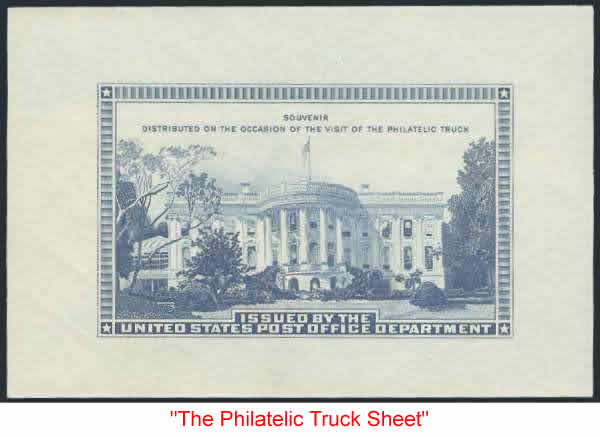
President Franklin D. Roosevelt, an avid collector, and James Farley, his Postmaster General, were strong advocates of the hobby. In 1939 they literally sent the show on the road! A custom bus-like vehicle called the Philatelic Truck was filled with stamps, literature, and everything needed to print stamps including a small printing press, ink, paper, and gum. The goal was to introduce adults and children all across America to the world of stamp collecting.
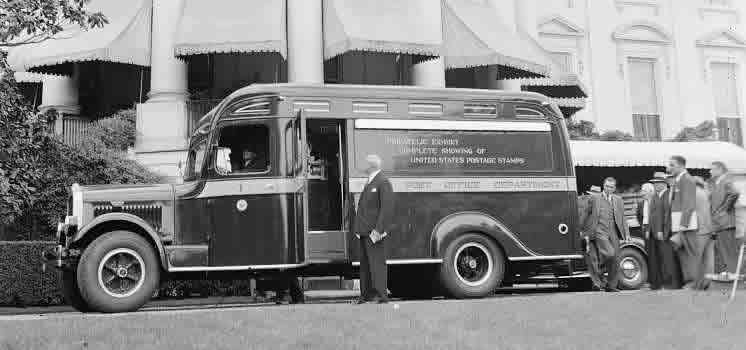
The Philatelic Truck had a very extensive itinerary that took it
through many states. It was parked outside post offices, department stores, schools, and city halls in large cities and small towns. The traveling staff would display the impressive collection of US stamps
and talk all about stamp collecting and how stamps were produced.
The truck even made a stop at the New York World’s Fair in 1939.
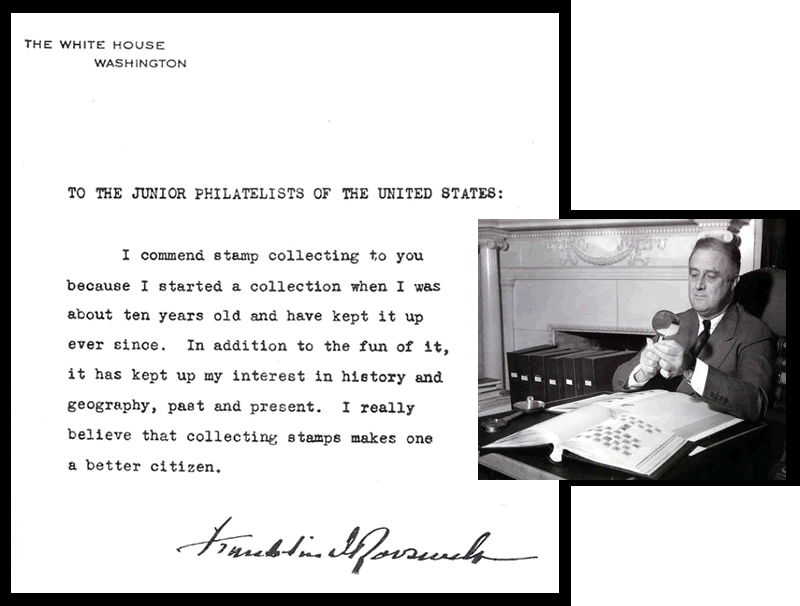
There was a special emphasis on reaching children. To inspire junior collectors, the President’s message was printed in a special booklet:
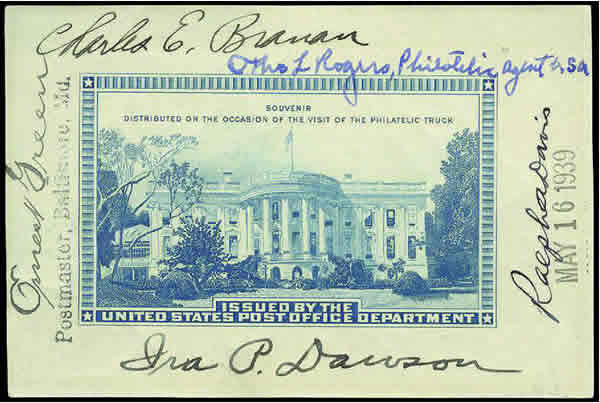
The sheet above was signed on May 16, 1939 when the truck stopped in Baltimore MD.
Ernest Green was the Postmaster of Baltimore. Ralph A. Davis, Charles E. Branan and Ira P. Dawson manned the truck for the US Post Office Department. Otho L. Rogers was the Philatelic Agent for the PO Department at Washington.
I choose to believe that a great many of the youngsters who left
the Philatelic Truck holding their souvenir sheets became collectors.
|
|
The Royal Flying Corps in Beamsville Ontario
|
| This story will interest anyone who enjoys military or aviation history.
Just a few miles away from Smithville lies the town of Beamsville in the heart of the Niagara fruit belt. Few people know that during World War I
it was the site of a very active Royal Flying Corps airfield that served as
a school for aerial gunnery from 1917-18. The aerodrome covered 300 acres with 60 wooden structures including 9 flight hangars. The camp prepared 1,200 pilots to meet the challenges of aerial warfare in Europe.
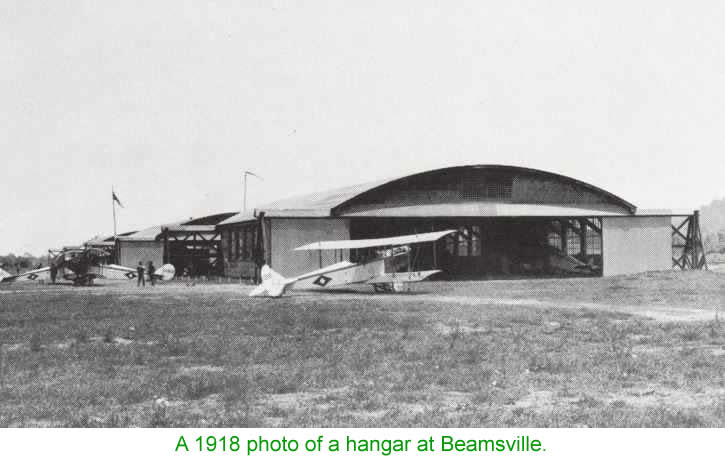
After the war ended in 1918, the airfield was closed and the property gradually reverted to fruit farms and houses. Over the years the military
buildings were either relocated, torn down, or destroyed by fire. Some years ago I discovered that one of the original hangars had somehow survived. It is now the home of a horticultural business and a plaque detailing its history stands outside. Despite renovations over the years, you can still see the original wooden lattice supporting the roof.

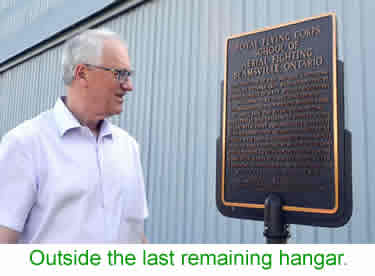
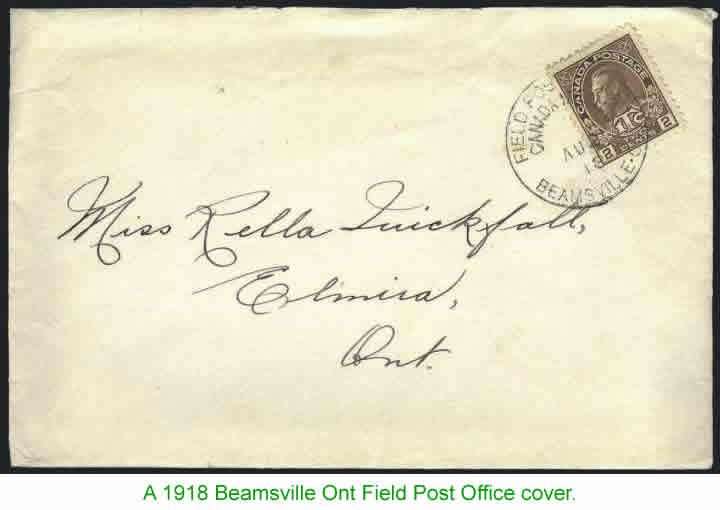
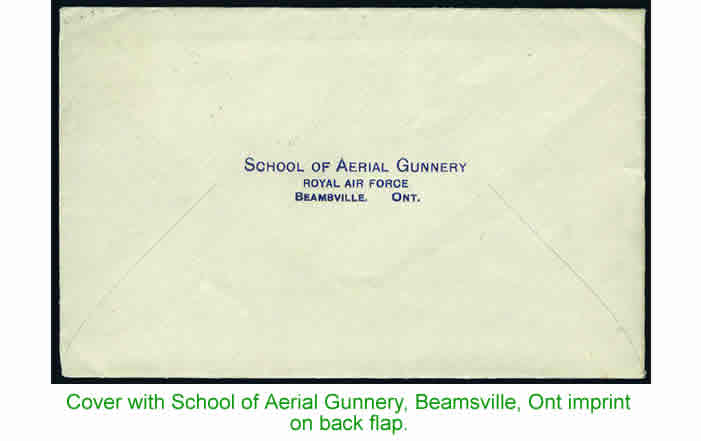
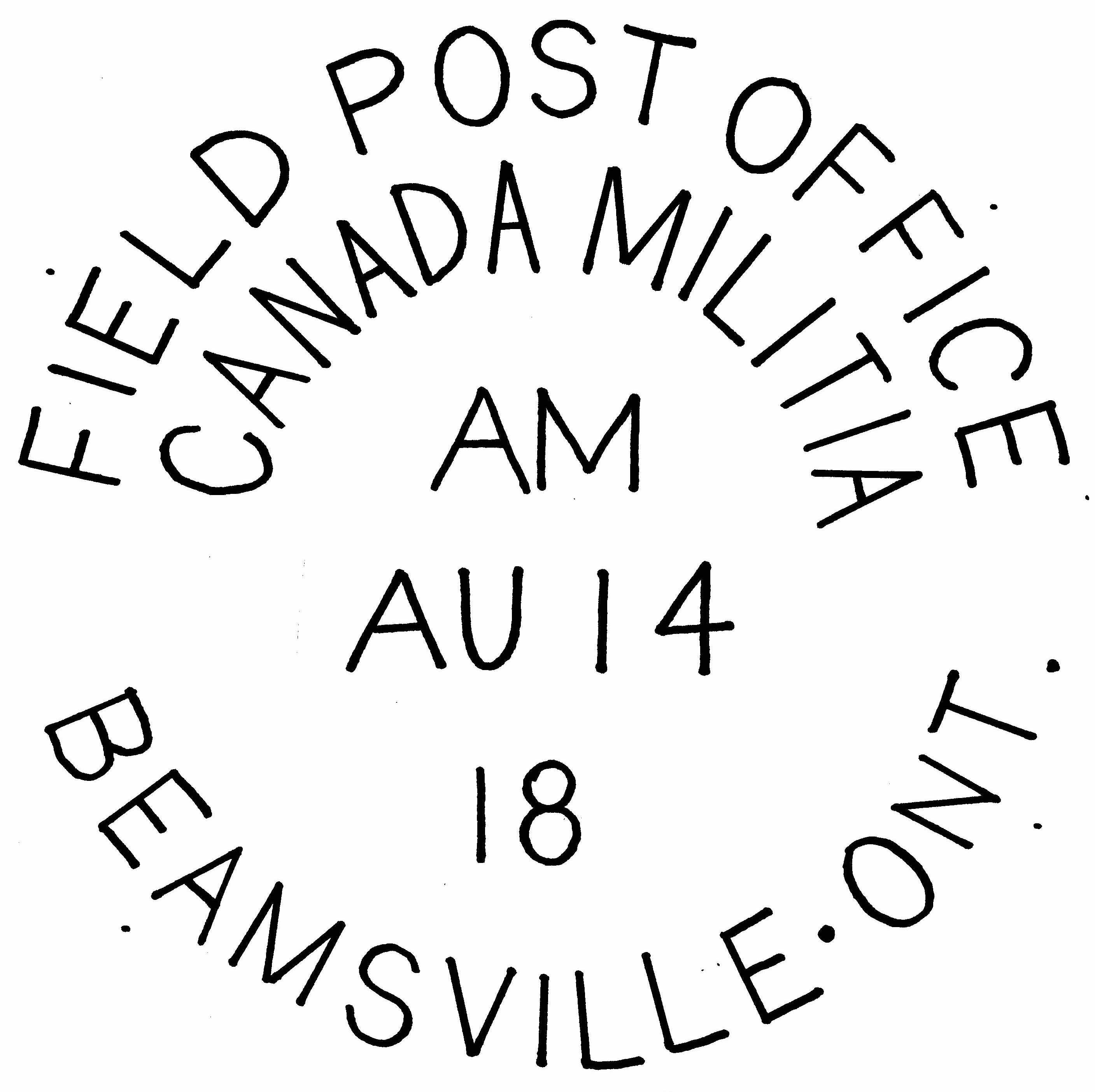 The airfield also brought Beamsville its own little piece of philatelic history. For a few months in 1918 it had its own Field Post Office. When covers with this FPO cancel have
been offered at various auctions they usually sell for $250 to $500. We are lucky to have acquired a few Beamsville FPO cancellations for our own collection of local postal history. I recently enjoyed a return visit to this historic site where brave pilots trained. The airfield also brought Beamsville its own little piece of philatelic history. For a few months in 1918 it had its own Field Post Office. When covers with this FPO cancel have
been offered at various auctions they usually sell for $250 to $500. We are lucky to have acquired a few Beamsville FPO cancellations for our own collection of local postal history. I recently enjoyed a return visit to this historic site where brave pilots trained.
|
|
British Columbia Philately
|
 The philatelic history of Canada's most western province is fascinating. British Columbia and Vancouver Island were separate British Crown Colonies until they were joined in 1866, and the first stamps bore both of their names. A total of 18 different stamps were issued from 1860-1871, all bearing either the portrait of Queen Victoria or the Seal of British Columbia. The philatelic history of Canada's most western province is fascinating. British Columbia and Vancouver Island were separate British Crown Colonies until they were joined in 1866, and the first stamps bore both of their names. A total of 18 different stamps were issued from 1860-1871, all bearing either the portrait of Queen Victoria or the Seal of British Columbia.
In 1871, British Columbia joined Confederation and became part of the Dominion of Canada. At that time there were no mail routes across the Rocky
Mountains between the west and the five other provinces (Ontario, Quebec, Nova Scotia, New Brunswick and Manitoba), so most outbound mail from British Columbia traveled through the United States. The sender had to pay the postage across America as well as the Canadian postage. Many interesting covers bearing combinations of various stamps exist. The completion of the Canadian Pacific Railway in 1885 made it easier to get mail across Canada.
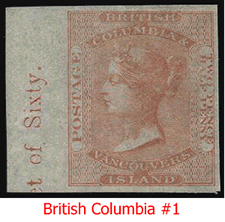
Another interesting aspect of British Columbia postal history is related to the gold rush. Several Express companies were set up to supplement the official mail services during the influx of miners, prospectors and adventurers from around the world who hoped to strike it rich after gold had been discovered in the Fraser River and Cariboo areas. Covers bearing the names of Express companies like Wells Fargo, Dietz, Barnard and Nelson can be found.
Our auctions always include interesting offerings of British Columbia stamps and postal history. |
|
Tristan da Cunha
|
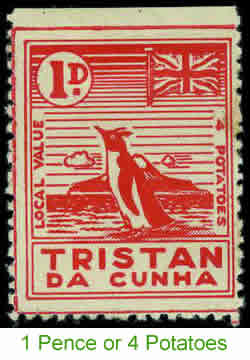
The most remote inhabited island in the world has a very interesting philatelic history. A volcanic island in the middle of the South Atlantic Ocean, Tristan da Cunha was discovered in 1506, but because of its location, size (38 square miles), and rugged geography, it had no permanent settlers until 1810.
Annexed by Great Britain in 1816, Tristan da Cunha's tiny population of potato farmers and fishermen used the stamps of St. Helena. Wanting their own stamps,
a petition was presented to the British Postmaster in 1946. Although the petition was not successful, the proposed stamps are still very interesting. Cash was in short supply on the island but potatoes were plentiful, so in addition to being valued in pence, each of the nine designs was valued in potatoes!
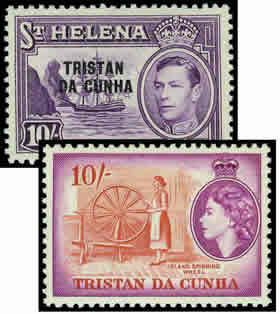
In 1952, a set of St. Helena stamps was overprinted 'TRISTAN DA CUNHA'. Prior to that various postal cachets were used on outgoing mail. It was not until 1953
that Tristan da Cunha had its very own stamp which was included in the omnibus set commemorating Queen Elizabeth’s Coronation. By 1954 Tristonians had their first set of definitives.
Still only accessible by boat, Tristan da Cunha has a population of under 300 today. Our auctions often include stamps and covers that tell the story of this fascinating place. |
|
Charles Lindbergh
|
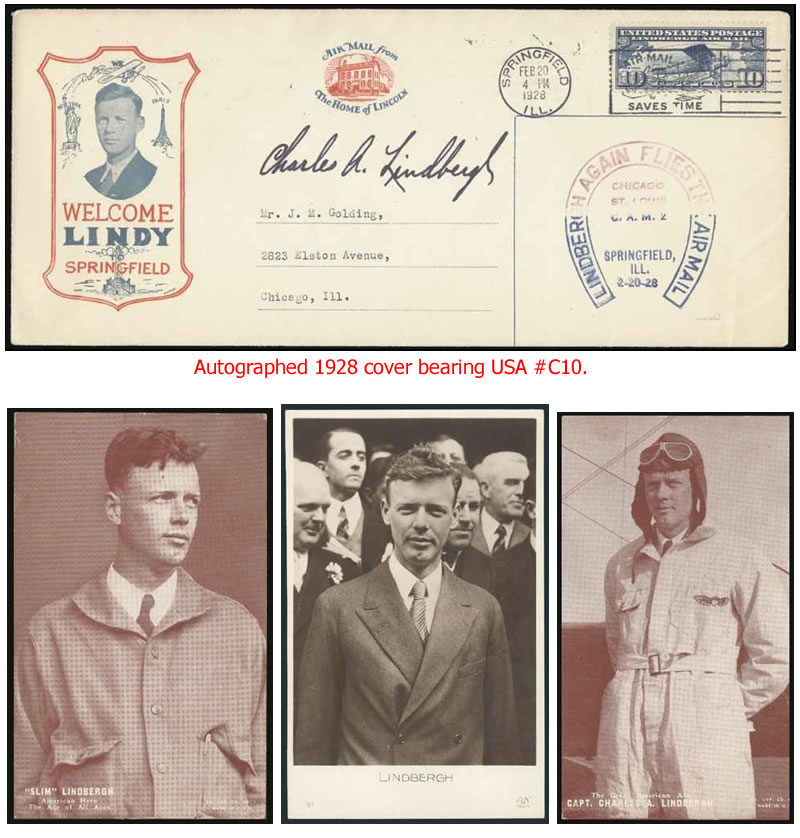
 Over the years our auctions have offered some great postcards related to early aviation. These have depicted pioneers like the Wright Brothers, Louis Bleriot, Over the years our auctions have offered some great postcards related to early aviation. These have depicted pioneers like the Wright Brothers, Louis Bleriot,
Amelia Earhart, and Count von Zeppelin. One of the most famous early pilots was American Charles Lindbergh.
In the 1920’s Lindbergh was a stunt pilot touring the Southern and Midwestern United States. By 1926 he was flying mail from St. Louis to Chicago. As he gained experience his aspirations grew. He obtained backing from a group of St. Louis businessmen to compete for a $25,000 prize being offered to the first aviator to cross the Atlantic from New York to Paris (or the reverse) in a solo flight without stopping. The prize was first offered in 1919 by New York hotel owner Raymond Orteig,
and in
1927 Lindbergh was the first to even attempt the feat. Needless to say,
there was little expectation that the 25-year-old mail pilot would succeed.
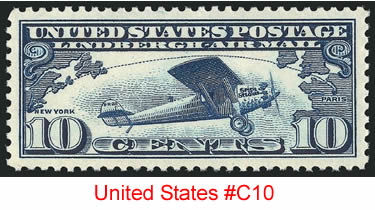
In a specially designed airplane dubbed the Spirit of St. Louis, Lindbergh completed the first non-stop solo flight across the Atlantic Ocean on May
20-21, 1927. Since every bit of space in the plane was needed to carry fuel for the 33½ hour flight, only two or three letters accompanied Lindbergh from New York to Paris.
Lindbergh was instantly famous around the world, and he went on
to accomplish many more ‘firsts’ during his illustrious career.
|
|
Ron Brigham - A Great Canadian Collector
|

We were sorry to hear of the passing of Ron Brigham of Mississauga Ontario in August of 2022.
Over
the years he formed an amazing award-winning Canada collection that most authorities
consider
the greatest collection of Canadian stamps ever assembled.
In March 2023 the first portion of his Pence and Cents issues were sold by Eastern Auctions Ltd.
The high prices achieved astounded even the most seasoned auction buyers. Many prices rewrote
the record book.
I knew Ron for many years
and he was a
frequent bidder in our auctions. He told me that his keen
interest in stamp collecting
grew when he
visited my father’s stamp store in Toronto during the 1950’s
and 60’s. |
|
Queen Elizabeth 1926-2022
|
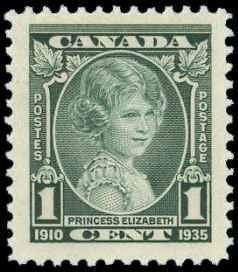
Queen Elizabeth and philately will forever be intertwined. She first appeared on a Canadian stamp in 1935. It was the 1¢ value of the set that celebrated the Silver Jubilee
of her grandfather, King George V. At that time Princess Elizabeth was nine years old and highly unlikely to be queen. It was only because her uncle, King Edward VIII, abdicated
to marry Wallis Simpson that her father became King George VI.
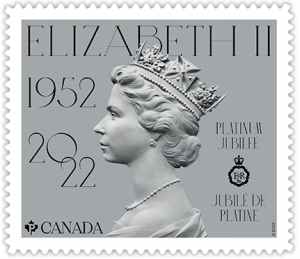
On her father’s death in 1952, Elizabeth ascended to the throne at the age of 25. Her image has appeared on over 70 Canadian stamps since then, the most recent celebrating
her Platinum Jubilee in 2022. King George V, who reigned
for twenty-six years, would never have believed that his little granddaughter would later reign for over seventy!
Seeing the Queen is one of those things that you never forget. I was fortunate
to see Queen Elizabeth twice on visits to England, once at the International Stamp Exhibition in London in 1980.
Queen Elizabeth was the longest reigning monarch in Canadian and British
Commonwealth history. She dedicated her life to public service for over seven
decades. She will long be missed. |
|
Fifty Years at Vance Auctions
|
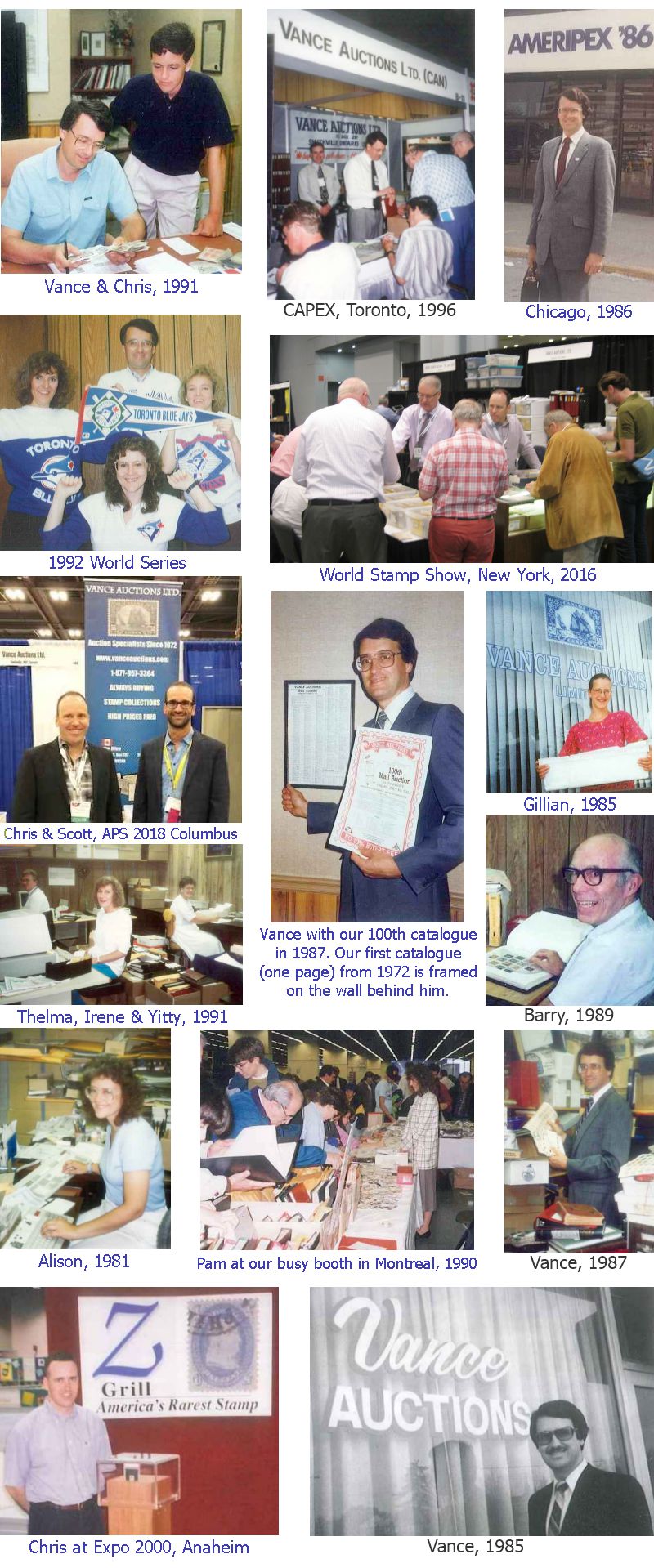
Our 359th sale which closed in November of 2022 marked our 50th Anniversary! The photos below bring back a lot of great memories. We hope that you will enjoy these glimpses of Vance Auctions over the past fifty years.
|
|
Deltiology
|
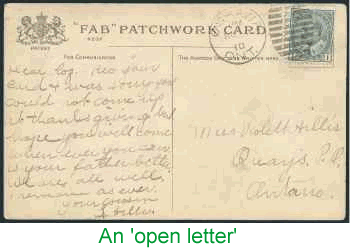
Philately got its start when the Penny Black was issued in 1840. Deltiology, the study and collection of postcards, did not become popular until the close of the 19th Century. As travel increased and worldwide postal delivery improved, the idea of ‘open letters’ really caught on as an easy and economical way to stay in touch.
Postcard makers quickly adopted the convention of displaying attractive or informative images on one side, and dividing the other side with the message on the left, and the address and postage on the right.

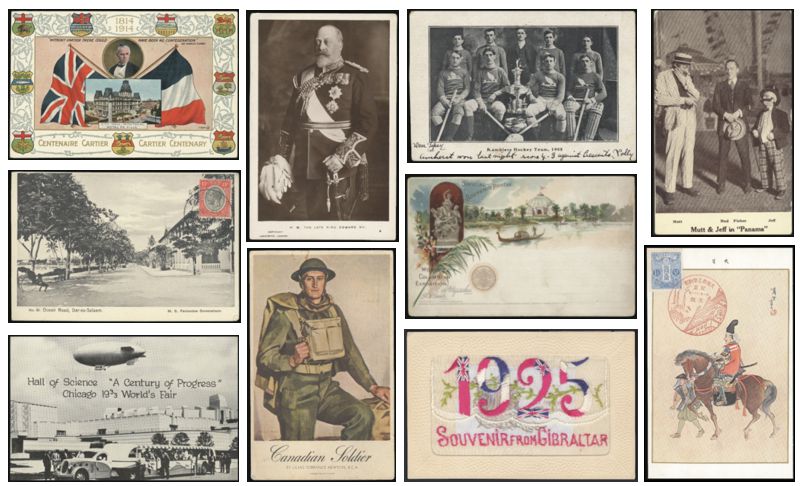
Postcards are often collected by country or town, or by topic. I am always on the lookout for street scenes of Smithville. The endless list of topics includes postcards depicting buildings, maps, coins, autos, sporting events, military history and famous people. Another popular area is boats and ships. You can collect all types like passenger ships, freighters, warships, sailing ships, etc, or focus on a more specific topic like the Titanic.
Events such as exhibitions and noteworthy accomplishments are often documented on postcards. Travellers always find picture postcards to send home. Greetings for occasions and holidays have often been delivered on a postcard.
Deltiologists have unlimited collecting options in this visually appealing hobby.
|
|
The World's Columbian Exposition of 1893
|
|
Celebrating the 400th anniversary of Christopher Columbus and his voyages may have been 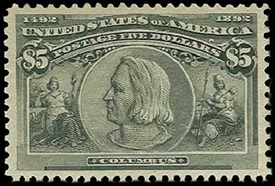 the inspiration behind the World’s Columbian Exposition in Chicago, but the 1893 World’s Fair was ultimately more about the future than the past. It was essentially an enormous trade show that changed the future of the United States
and the entire world by spotlighting culture, art, music, science, and new technology in a spectacular setting. the inspiration behind the World’s Columbian Exposition in Chicago, but the 1893 World’s Fair was ultimately more about the future than the past. It was essentially an enormous trade show that changed the future of the United States
and the entire world by spotlighting culture, art, music, science, and new technology in a spectacular setting.
During the six months of the Exposition, over 20 million people from around the world visited the 633-acre venue of almost 200 buildings enhanced with statues, canals, and a huge lagoon. They marveled at the electricity which was used for the first time to illuminate a World’s Fair.
The grounds could be viewed from the world’s first Ferris wheel or from a moving sidewalk.
The popularity of picture postcards soared. Shredded Wheat, hamburgers, and Cracker Jacks were just a few of many products introduced in Chicago that are still around today.
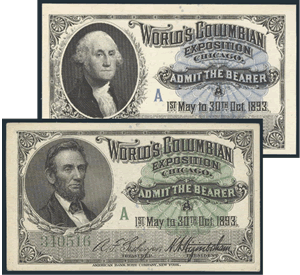 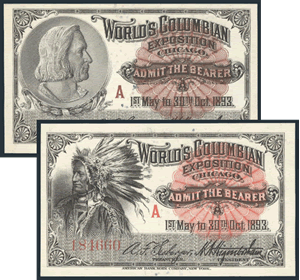
Tickets for the Exposition were in great demand. Printers were kept busy producing millions of tickets for daily admission to the grounds, the many buildings, exhibits, and attractions. A one-day admission ticket for
an adult cost 50¢. For another 50¢ you could
ride the Ferris wheel high above Chicago.
The most elaborate tickets were season passes
that were issued to organizers, exhibitors, and the press. The American Bank Note Company produced 60,000
of these engraved ‘portrait’ tickets with serial numbers.
The Exposition inspired one of the United States’ most beautiful sets of stamps, the Columbian Issue. Also printed by the American Bank Note Company, Scott #’s 230 to 245 were used to promote the Exposition, but by honouring Christopher Columbus they gained the distinction of becoming the United States’ first commemorative stamps. In 1893, you could buy the entire set from 1¢ to $5 for its face value of $16.34!

|
|
Tonga Tin Can Mail
|
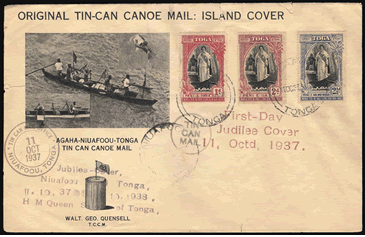
Since the very first letter was delivered, mail carriers have often been put in danger. Swimming out into the
South Pacific Ocean to pick up mail a mile or more from a volcanic island in Tonga is a perfect example.
Isolated without mail service on the island of Niuafo'ou in 1882, a resident named William Travers was tired of watching passenger liners steam right past because the island had no beaches or harbours. Why not have mail thrown overboard from passing ships in waterproof tins? He wrote to the Tongan postal authorities with his request, sealed his letter as best he could, and attached it to a stick. Travers found the strongest swimmer on the island and asked him to swim out and give his letter to the captain of the next passing ship. Thus began Tonga Tin Can Mail.
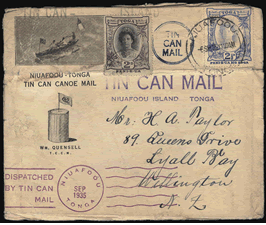 The captains of ocean liners started sealing mail in tin cans, throwing
them overboard and sounding the ship's siren so that natives, either swimming or in canoes, could retrieve the tins and take them back to the island. Happily the system worked in both directions. The residents of Niuafo'ou could send outgoing mail back to the ships in the same tins. The captains of ocean liners started sealing mail in tin cans, throwing
them overboard and sounding the ship's siren so that natives, either swimming or in canoes, could retrieve the tins and take them back to the island. Happily the system worked in both directions. The residents of Niuafo'ou could send outgoing mail back to the ships in the same tins.
Despite the perils, 'Tin Can Mail' worked for decades. When a German born trader named Walter Quensell came to Niuafo'ou he saw a unique opportunity. In 1927, he began stamping all incoming and outgoing mail with a 'Tin Can Mail' rubber stamp for a small fee. Soon this mail became so popular that many cruise ships in the South Pacific made a point of passing by Niuafo'ou to watch the natives pick up the mail. People from all over the world sent their self-addressed envelopes to Quensell so that
he could handstamp them and send them back with a myriad of markings, both front and back.
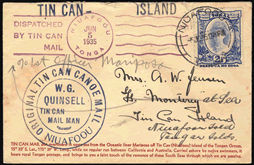 As time passed, the handstamps became more elaborate and multilingual. Quensell was Tonga's 'Tin Can Canoe Mail Man' until 1946 when a volcano erupted and Niuafo'ou was evacuated. By the time that the islanders were permitted to return 12 years later Quensell had died, but Tin Can Mail service was resurrected from 1962 until 1983 when an airfield was built on the island. As time passed, the handstamps became more elaborate and multilingual. Quensell was Tonga's 'Tin Can Canoe Mail Man' until 1946 when a volcano erupted and Niuafo'ou was evacuated. By the time that the islanders were permitted to return 12 years later Quensell had died, but Tin Can Mail service was resurrected from 1962 until 1983 when an airfield was built on the island.
Quensell was not the originator of Tin Can Mail, but he can be credited with bringing it to the world's attention. His service greatly increased ship traffic in the South Pacific, and the tin cans carried much needed communication
for the islanders. Our sales always include covers that made the trip to and from Niuafo'ou in waterproof tins. |
|
CAPEX22
|


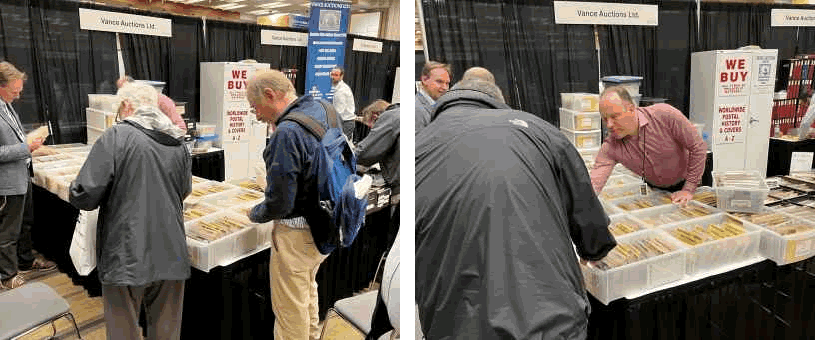
The CAPEX22 show held in June of 2022 was a great success. Thousands of collectors, dealers and exhibitors came from all over the world to visit the 4-day event at the Metro Toronto Convention Centre.
The show had many exciting things to do and see. Besides an active bourse of dealers there were many great exhibits, seminars, meetings and society gatherings. The organizing committee is to be congratulated on the show’s success.
Our booth was busy from start to finish with active buying and selling. Our thanks to all who stopped by.
|
|
Forwarding Agents
|
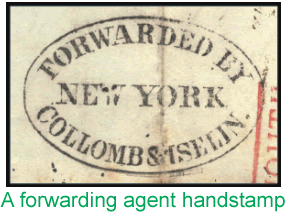
Before the Universal Postal Union was formed in 1874, the postal systems of countries around the world did not cooperate to deliver each other's mail. Communicating with family members and conducting business with foreign countries was virtually impossible. Merchants, bankers, and other individuals came to the rescue as forwarding agents. They facilitated the forward progress of mail by arranging for its transfer from one postal system to another.
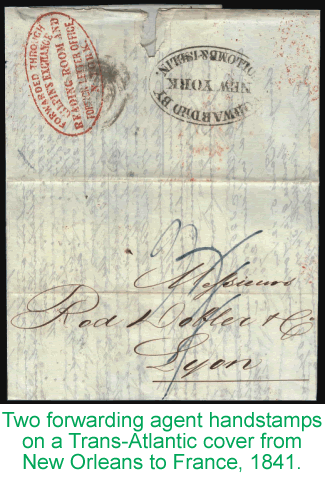
An amazing network developed. You could take your international mail to a
forwarding agent who was familiar with all of the possible overland and water routes.
Agents knew the shipping lines and their schedules so that they could forward overseas
mail to the proper port to sail on the next ship that was heading in the right direction. Letters were often signed or handstamped by the agent before they were passed on
to the next leg of their journey.
The formation of the UPU and improvements in postal services made forwarding agents unnecessary by the 1870’s, but they had provided a valuable service. A great
deal of information on the subject of forwarding agents is available thanks to British philatelist Kenneth Rowe. He first published the reference book The Forwarding Agents
in 1966 with subsequent editions in 1984 and 1996. Ken Rowe was a prominent collector living in Toronto, and I always enjoyed meeting him at our booth at stamp shows. His painstaking research on the subject of forwarding agents continues to benefit philatelists.
In our sales you will find many fascinating covers that
were carried by sailing ships, some with forwarding agent handstamps. The markings on each cover tell the story of its trip from one side of the Atlantic Ocean to the other. To make it easy for you to find these covers throughout our auctions, we have added a ‘Trans-Atlantic Mail’ button in the green section of the Searches page.
|
|
Canada's Bluenose
|
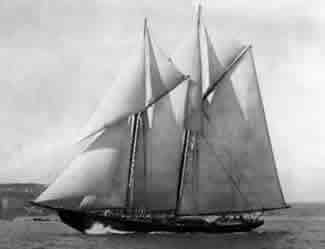
The most famous and most beloved ship in Canadian history is the Bluenose.
The schooner was designed for fishing, but the builders also had their eyes on another prize. Schooners from the fishing ports of Lunenburg Nova Scotia and Gloucester Massachusetts had raced against each other for generations to reach fishing grounds, and the rivalry had become a formal race. The Bluenose first competed in 1921 for the coveted 'Fisherman's Trophy' which was decided by a series of races between working schooners, one Canadian and one American. With Captain Angus Walters at the helm, her crew of 20 fishermen, and 10,000 square feet of sails, the Bluenose sailed her way to victory. She continued to race and to fish, doing both of her jobs with great success.
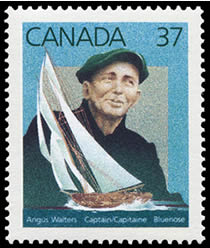
The Bluenose sailed to the Chicago World’s Fair in 1933, gathering crowds at stops along the way. In 1935
she crossed the Atlantic to England to take part in Silver Jubilee celebrations of King George V.
After two decades of glory, changes in the fishing industry lead to the Bluenose being sold to a trading company in 1942. Sadly her last years were spent hauling cargo. In 1946 she struck a reef off of Haiti and broke apart.
During the 1920's and 1930's the Bluenose had become a symbol of Maritime and Canadian spirit that remained strong. In 1963 her successor, Bluenose II, was built in the same shipyard in Lunenburg from the same plans. Angus Walters, at the age of 82, was aboard her maiden voyage. Now an elderly vessel herself, Bluenose II has undergone a rebuild but still sails out of Lunenburg on tours and cruises. She promotes Nova Scotia tourism and reminds us of the days when the original Bluenose and her crew sailed their way into the hearts of Canadians.
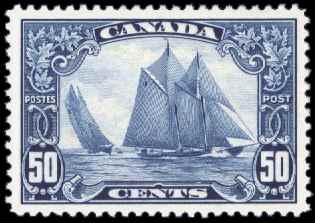
In 1929, the Bluenose adorned one of my favourite stamps, the 50¢ value in the 'Scroll' definitive series (Scott #158). Her skipper Angus Walters and her designer William James Roué have both been depicted on stamps with the Bluenose. From 1937 to this day, she can
be seen on our Canadian dime.
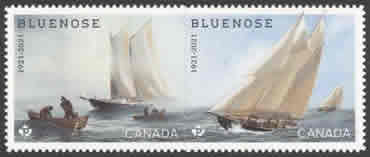
2021 marked the Bluenose’s 100th Anniversary, and Canada Post celebrated her first fishing season and her first racing victory with this beautiful pair of stamps.

|
|
USA Postage and Fractional Currency
|
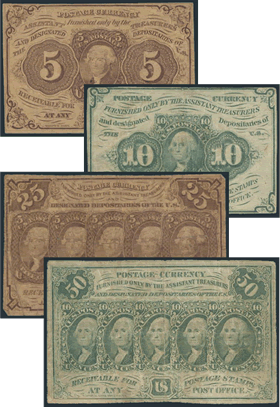 During the American Civil War there was a shortage of coins in circulation. The
US Mint was producing fewer coins because metal was needed for military purposes
and coins that already existed were being hoarded. Merchants and their customers
had a big problem. There were no coins to make change for purchases of less than $1. Postage stamps came to the rescue. They already existed in small denominations, so people started paying with postage stamps, and taking their change in postage stamps. During the American Civil War there was a shortage of coins in circulation. The
US Mint was producing fewer coins because metal was needed for military purposes
and coins that already existed were being hoarded. Merchants and their customers
had a big problem. There were no coins to make change for purchases of less than $1. Postage stamps came to the rescue. They already existed in small denominations, so people started paying with postage stamps, and taking their change in postage stamps.

Francis E. Spinner, Treasurer of the United States under Abraham Lincoln, addressed the coin shortage by printing "postage currency" notes depicting current postage stamps.
A note worth 5¢ depicted one 5¢ stamp, and the 50¢ note depicted five 10¢ stamps. The notes worked as small currency.
Subsequently "fractional currency" notes were issued which did not depict postage stamps, but still served as "paper coins".
The fractional currency notes depicted portraits that included Washington and Jefferson. Some notes bearing the portraits of
living Treasury officials (including Spinner himself) were less well received resulting in a law being passed forbidding the portrayal of any living person on federal coins or currency.
Between 1862 and 1876, there were several different series of postage currency and fractional currency notes.
The most common denominations were 5¢, 10¢, 25¢ and 50¢, but 3¢ and 15¢ notes were also issued.
In 1876, silver coins were minted for the redemption of outstanding fractional currency notes. Naturally a high percentage of the notes were traded in for "hard" currency. The notes that have survived are much sought after by collectors. It is interesting to think that the notes pictured above were carried in pockets during the Civil War. |
|
Niagara Falls
|

Every year millions of people flock to Niagara Falls from every corner of the world, and we are lucky enough to live within an hour’s drive.
There are actually two waterfalls, the Canadian Horseshoe Falls, and the American Falls. The twin cataracts terrified explorers in the 1600’s, and by the 1800’s they were a tourist attraction.
The Falls have inspired painters and photographers to capture their beauty, and challenged daredevils to conquer their power. They have starred in movies such as Niagara with Marilyn Monroe and Joseph Cotten, as well as countless commercials.
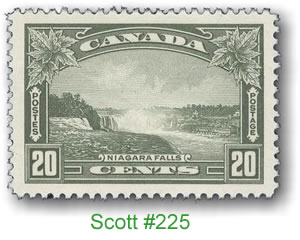
Along with Charles Dickens, Abraham Lincoln and Mark Twain, you may
be one of
the visitors who have enjoyed the majesty of Niagara Falls. Your albums may include photographs and postcards of the Maid of the Mist, the Rainbow Bridge, and Table Rock.
You may have soared 3,500 feet above the Niagara Gorge in the antique cable car. You
may even have honeymooned there.
If you collect Canadian stamps, the one on the right is probably already in
your album.
|
|
The Covers of Karl Lewis
|
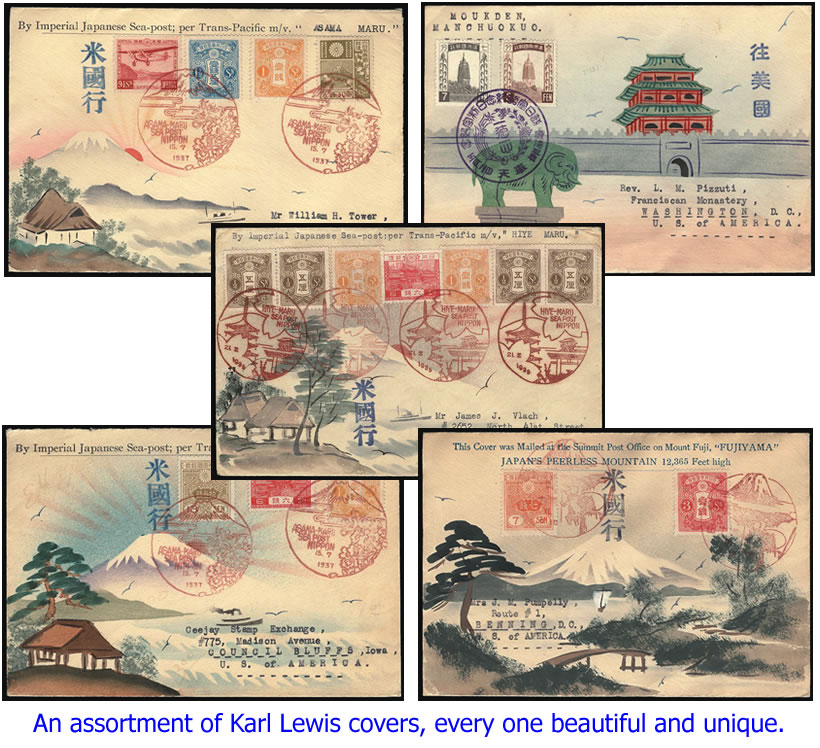
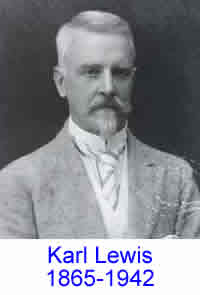 We have offered many Karl Lewis illustrated covers
over the years. We have offered many Karl Lewis illustrated covers
over the years.
Karl Lewis led a very interesting life. The man who was responsible for some of the most beautiful hand-painted covers ever produced was born in Kentucky in 1865. By the age of 13 he had made his way to San Francisco with his father, and for the next 23 years he travelled the world as a merchant seaman. In 1900 he settled in Yokohama, Japan where he pursued a number of careers. He was an artist, a photographer, a teacher, a musician, a writer, a lecturer, and a printer, as well as a philatelist.
His covers were sold by mail around the world. The variety of exotic scenes depicted were no doubt inspired by his travels. He arranged for covers franked with foreign stamps to be mailed from the Pacific islands, Japan, and other countries in Asia. Many covers would be created with the same art, but each
was individually hand-painted and then addressed, usually with a typewriter.
Karl Lewis covers are lasting pieces of philatelic history. He would no doubt be surprised to know that envelopes he prepared and mailed are now worth hundreds of dollars each.
|
|
The Red Cross
|
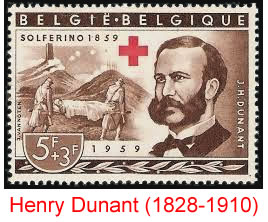
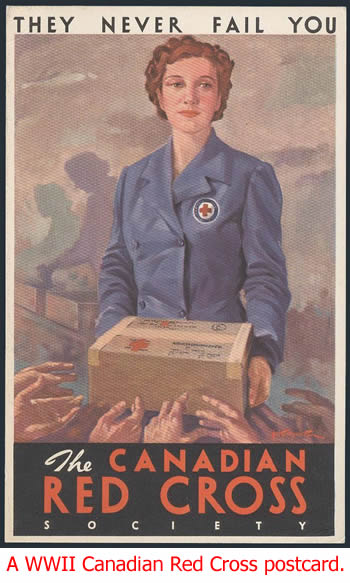
Red Cross Societies exist today in nearly every country in the world. They can all trace their roots back to the day in 1859 when a Swiss businessman named Henry Dunant witnessed the bloody aftermath of a battle in Italy. A few years later, Dunant's crusade for organized medical relief resulted in the first Geneva Convention that outlined the code of ethics on which the Red Cross was founded. For the first time in history, medical aid was available on battlefields. Neutrality and protection were guaranteed to wounded soldiers and the trained volunteers who helped them.
The symbol adopted by the organization of volunteers was a red cross on a white background, the inverse of
the flag of Switzerland. White armbands with red crosses identified medical workers on the battlefield.
The distinctive symbol has appeared on almost 2,200 stamps since 1889 when Portugal issued the first Red Cross stamp. Many beautiful issues with medical designs have spread the message of the Red Cross to the public.
During WWI, Red Cross stamps were issued in 47 countries. These early 'semi-postal' stamps served two purposes, acting as postage stamps as well as helping to raise much needed funds for the Red Cross.
The postal systems of countries around the world have always been important partners of the Red Cross. Exemptions granted by various postal administrations during times of conflict have facilitated the flow of Red
Cross mail including messages and parcels containing humanitarian aid. Postal stationery bearing the red cross
has opened lines of communication and provided help and comfort to many, including Prisoners of War.
In 1901, Henry Dunant was the recipient of the very first Nobel Peace Prize. Since the first society was formed
in Wurttemberg in 1863, the movement that he started has grown to almost 200 national Red Cross societies.
The Red Cross symbol continues to instill hope and confidence wherever help is needed, and the philatelic
world will keep doing its part.
|
|
Fred Jarrett
|
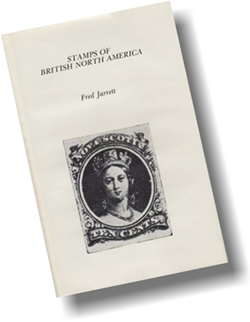
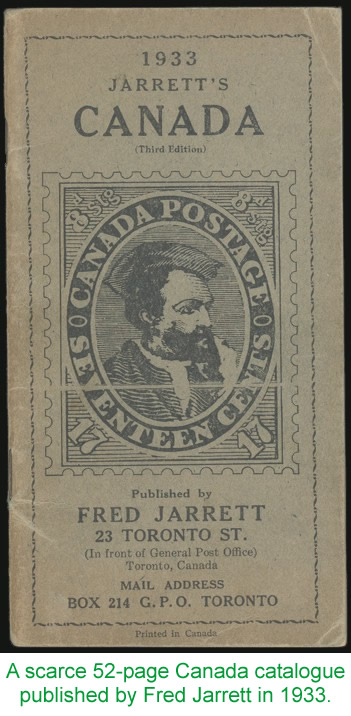
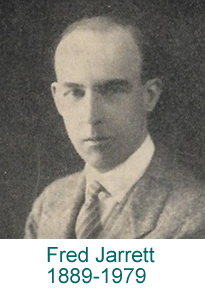 Like many philatelists, I use my library every single day. One book that I often
reach for is Stamps of British North America by Fred Jarrett. Like many philatelists, I use my library every single day. One book that I often
reach for is Stamps of British North America by Fred Jarrett.
Considered the 'Dean' of Canadian philately, Fred Jarrett began collecting stamps
in 1904 at the age of 15. As a teenager he became an expert speed typist, an ability
that must have served him well during the First World War in his position as special secretary to Canada's Minister of Overseas Military Forces.
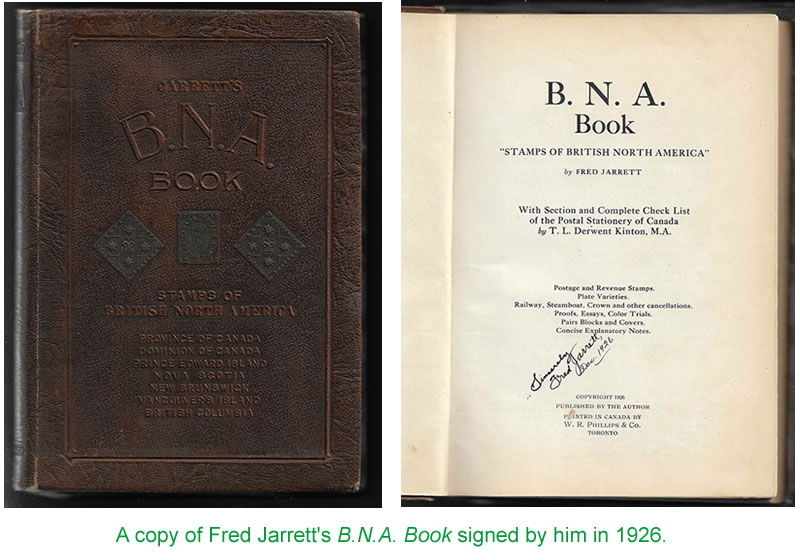
 During the 1920's, Fred pursued his philatelic career as a dealer and writer. He studied and gathered extensive knowledge about During the 1920's, Fred pursued his philatelic career as a dealer and writer. He studied and gathered extensive knowledge about
the early stamps of Canada and its provinces including printing processes, cancellations, varieties, papers, quantities issued, watermarks, specimens and more. He published the Stamps of British North America in 1929. The book became an essential reference work including a wealth of information that might otherwise have been lost forever. The fact that it was reprinted in 1975 by Quarterman Publications and is still considered a definitive resource is an indication of the value of the detail that it contains.
Jarrett travelled extensively across North America, holding lectures for stamp collectors and also speaking to dealers about the business of philately. In addition to his writings he published Canadian stamp albums.
So extensive was Jarrett's contribution that his name was added to the "Roll of Distinguished Philatelists" in 1935, a list of internationally recognized individuals sponsored by King George V. He was awarded the Order of Canada in 1974, one of Canada's highest civilian honours, at the age of 85.
A resident of Toronto, he was a regular participant at area stamp shows. During the early 1960's I was
a youngster starting to work in my family's stamp store. One of my most vivid memories was visiting Fred Jarrett's table at a North Toronto stamp show. I will never forget flipping through page after page of used Canada 50¢ Bluenoses priced at $1 each. I emptied my pockets to buy three of them.
|
|
Vance Auctions Purchases Maddy's Philatelic Service Stock
|

Recently, we purchased the entire dealer's stock of Maddy's Philatelic Service of Niagara-On-The-Lake, Ontario. Maddy's was run by Ed and Maddy Yonelinas who had been in the stamp business since the 1970's. They were familiar faces on the Ontario show circuit and attended hundreds of shows over the years. They also travelled to stamp exhibitions in upstate New York and Michigan. They have now retired from the stamp business.
Their stock consisted of British Commonwealth from A-Z, extensive Canada, Germany and Europe plus other countries. It required three van loads to move it all back to our office. There were well over 400 stockbooks, and tens of thousands of '102' cards along with cartons and file drawers full.
I have known Ed and Maddy since the 1970's and had many dealings with them over the years. They were always well liked by their customers and friendly people to deal with. We wish them well in retirement.
The stock is now being lotted for our upcoming auctions and will provide our bidders with the opportunity to acquire lots of nice material.
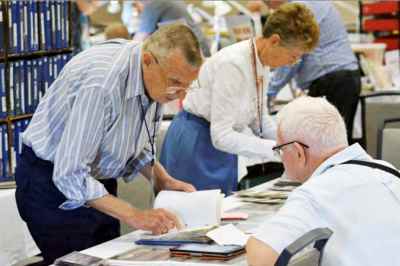
Photos Courtesy Canadian Stamp News. |
|
The 1935 KGV Silver Jubilee Omnibus
|
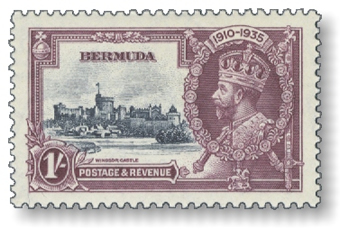
The year 1935 marked the 25th anniversary of the reign of King George V of England. The Silver Jubilee sparked celebrations around the British Commonwealth, and it also left its mark on the philatelic world. For the first time, every colony in the Commonwealth issued stamps of the same design to commemorate an event.
While Great Britain and her Dominions (including Canada) designed and
issued their own commemoratives for the Silver Jubilee, forty-four colonies
shared what became the first 'Omnibus' issue. Many designs were considered, but
the submission of Hugo Fleury, a designer at Waterlow & Son, was chosen for the colonial commemoratives.
The now iconic design features King George's profile and a view of Windsor Castle. For forty-three colonies, the engraved stamps were printed in attractive two-colour combinations. Only the Newfoundland issues were printed in one colour. There were four stamps for each colony, each printed with its name and appropriate denominations whether pence, cents, shillings, or rupees. It was a complex undertaking that involved
all three of the major philatelic printing companies (Waterlow & Son, Bradbury Wilkinson & Co., and De La Rue & Co.).
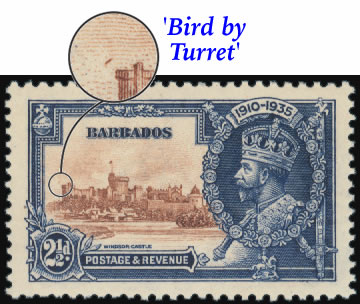
A great many printing plates were used, and the resulting printing varieties
have become a very popular area of study. There are varieties in the frame designs, but much of the attention is focused on the vignette of the castle. When I was a teenager, my father taught me what to look for when I handled Silver Jubilees in
our family’s stamp and coin store. It is still exciting to spot an 'Extra Flagstaff' or
a 'Bird by Turret'. It is possible to find the same variety on stamps from many different colonies.
A page of Silver Jubilee issues is an impressive sight, and the collection of all 250 stamps (which includes
those of different designs issued by Great Britain and the Dominions) is a major accomplishment. I admit to having a soft spot for this beautiful set of stamps, partly because my father was a stamp dealer in the 1930's. I remember him telling me that he had ordered Silver Jubilees from postal agencies as new issues!
|
|
The First Official Airmail Stamp
|
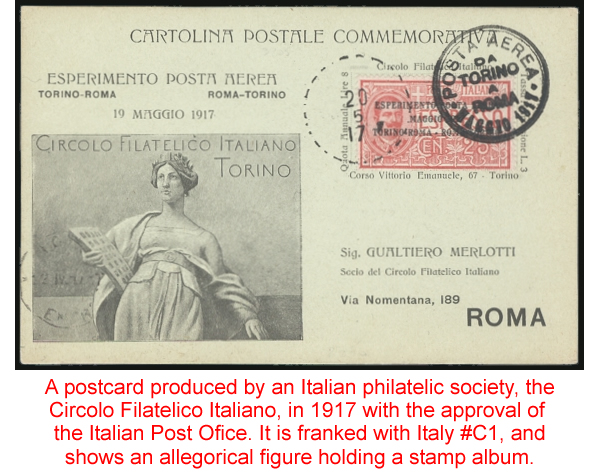
In 1917, at the height of WWI, Italy became the first country to officially issue an airmail stamp.
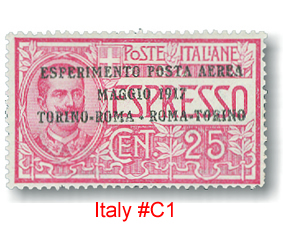
In anticipation of experimental mail flights between Turin and Rome, the Italian government overprinted a special delivery stamp that had been issued in 1903. The translation of the overprint is ‘Air post experiment, May 1917, Turin-Rome, Rome-Turin’. Over 400 pounds of mail were carried on the round trip, and the experiment was considered to be a success.
Once flight was proven to be a viable way to transport mail, other countries began issuing stamps for airmail services. Airmail reached its destination far faster than surface mail but at a much higher cost, so airmail stamps were issued in larger denominations to cover the higher airmail rates.
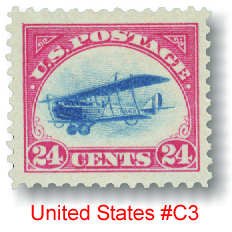
While there are a number of examples where regular stamps were overprinted for airmail use, many beautiful issues were specifically designed with aviation and ‘winged’ motifs. The first stamps issued for airmail use by the United States in
1918 did not include the word ‘Air’ in the design, but their depiction of the famous Curtiss JN-4 airplane known as the ‘Jenny’ made their use clear.
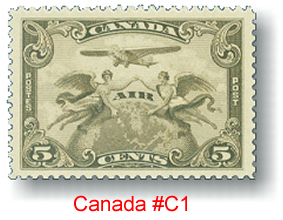
Canada did not issue its first official airmail until 1928. At that time the postage rate for a regular letter was 2¢ an ounce, and the airmail rate was 5¢ for the first ounce and 10¢ for each additional ounce.
Special stamps are no longer required for airmail service since a high percentage of first class mail is now routinely transported by air. The collection of airmail stamps and the mail that they carried is a fascinating branch of philately that offers endless opportunities for study and research.
|
|
Wilfrid "Wop" May
|
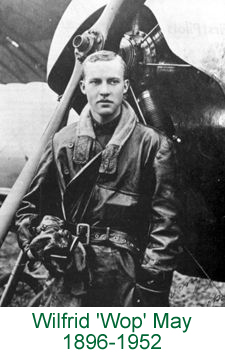 During WWI, a young Canadian from Manitoba named Wilfrid "Wop" May joined the Air Force, and a legendary career in aviation began. During WWI, a young Canadian from Manitoba named Wilfrid "Wop" May joined the Air Force, and a legendary career in aviation began.
On his first combat mission on April 21, 1918, May found himself in the fray while flying his Sopwith Camel. May's guns jammed and he headed back to the British lines with a red Fokker in pursuit. May evaded gunfire long enough for
the Fokker to be shot down killing the pilot, Manfred von Richthofen, the famous “Red Baron”. May served until the end of the war, and was credited with shooting down 13 enemy aircraft.
After the war, May and many other young Canadians were not ready to give up flying. War surplus planes and Canada's vast North provided them with new horizons
as "bush pilots". May was among the pioneers who opened up Canada's farthest reaches. Even though they no longer faced enemy gunfire, there was no shortage of danger delivering provisions and medical supplies to remote settlements that had no airfields.
Thanks to the bush pilots, communities that had been isolated were now able to receive mail.
May answered an SOS from northern Alberta in 1929, and risked his life flying through extreme winter weather to Fort Vermilion to deliver a vaccine for diphtheria. It became known as ‘The Mercy Flight’.
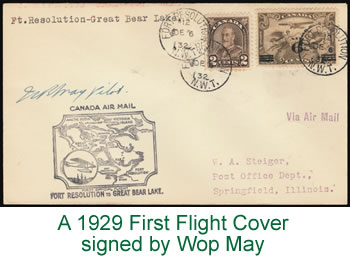
In 1932, a fugitive called Albert Johnson evaded the RCMP on a massive manhunt that covered 150 miles of mountainous terrain in the Northwest Territories and Yukon. With Wop May’s help tracking Johnson from the air,
the Mounties were able to close in on Johnson who was killed in the ensuing
gunfight. May flew a severely wounded officer to the hospital, saving his life.
Wop's later achievements included the formation and operation of a Search and Rescue team for the RCAF in World War II.
A mild-mannered man on the ground, Wop May was fearless in the air. Some of his many adventures and acts of bravery have been recorded in a song by the late Stompin' Tom Connors:
"Wop May. Wop May. You're the top Canadian pilot of the day."
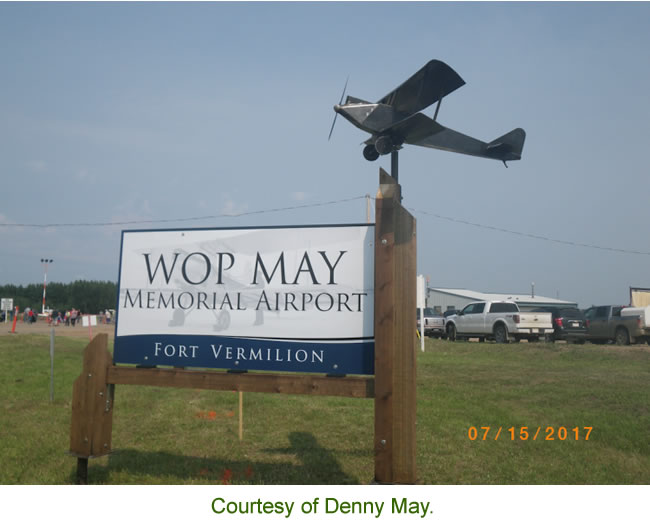
Following the publication of this article about Wop May in our October 2020 newsletter, we were very pleased to receive an email from Denny May, Wop's son. It was great to hear from him that all of the information was accurate. Denny was kind enough to share this photo that he took in Fort Vermilion Alberta in July of 2017 at the official renaming of the airport where his father delivered the lifesaving diphtheria vaccine in 1929.
For many more interesting Wop May stories and photos you can visit www.wopmay.com.
|
|
Yousuf Karsh
|
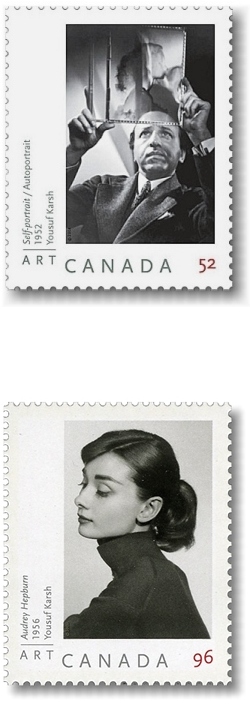 Canada has issued many beautiful stamps over the
years, but none are more striking
than those bearing the photographs of Yousuf Karsh (1908-2002). Canada has issued many beautiful stamps over the
years, but none are more striking
than those bearing the photographs of Yousuf Karsh (1908-2002).
Of Armenian descent, Karsh came to Canada in 1925
at the age of 17 to escape persecution in Turkey. Karsh learned the art of photography from his uncle, a successful photographer in Quebec, and later in Boston as an apprentice in the studio of a prominent society photographer. When he moved to Ottawa in 1932, Karsh’s own style emerged.
He became a master of light, shadow, and composition as
he captured the images of visiting dignitaries and celebrities in iconic portraits.
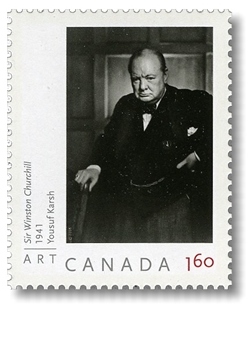
By 1941, Karsh's reputation had grown in Canada, and he was chosen to photograph Winston Churchill on his visit to Ottawa
during WWII. Karsh remained undaunted during the brief photo shoot with his very impatient subject. Churchill refused to remove his cigar, so Karsh politely took the cigar from Churchill’s mouth and stepped back to study the light. At that moment he clicked
the shutter, capturing the expression on Churchill's face that came to represent the
strength and resolve of Britain. The portrait became famous worldwide, appearing on
the cover of Life magazine and launching Karsh into international prominence.
Over his sixty year career, Karsh produced photographic portraits of hundreds of the 20th Century’s most influential people including royalty, scientists, politicians, artists, and entertainers. Albert Einstein, Nelson Mandela, Ernest Hemingway, Mother Teresa, Helen Keller, Picasso and hundreds of other famous people sat in front of Karsh’s lens.
My father once met Karsh when he happened to visit our family’s stamp and coin
store in Toronto in the 1960’s. Many countries have used Karsh’s portraits on their
stamps and
I think that he would have been pleased to know that his portraits of Churchill, Audrey Hepburn, and a self portrait would be featured on a set of Canadian stamps in 2008 to celebrate the 100th anniversary of his birth.
|
|
The Sea Floor Post Office
|
For one hundred years after the Penny Black was introduced, letters were mailed at
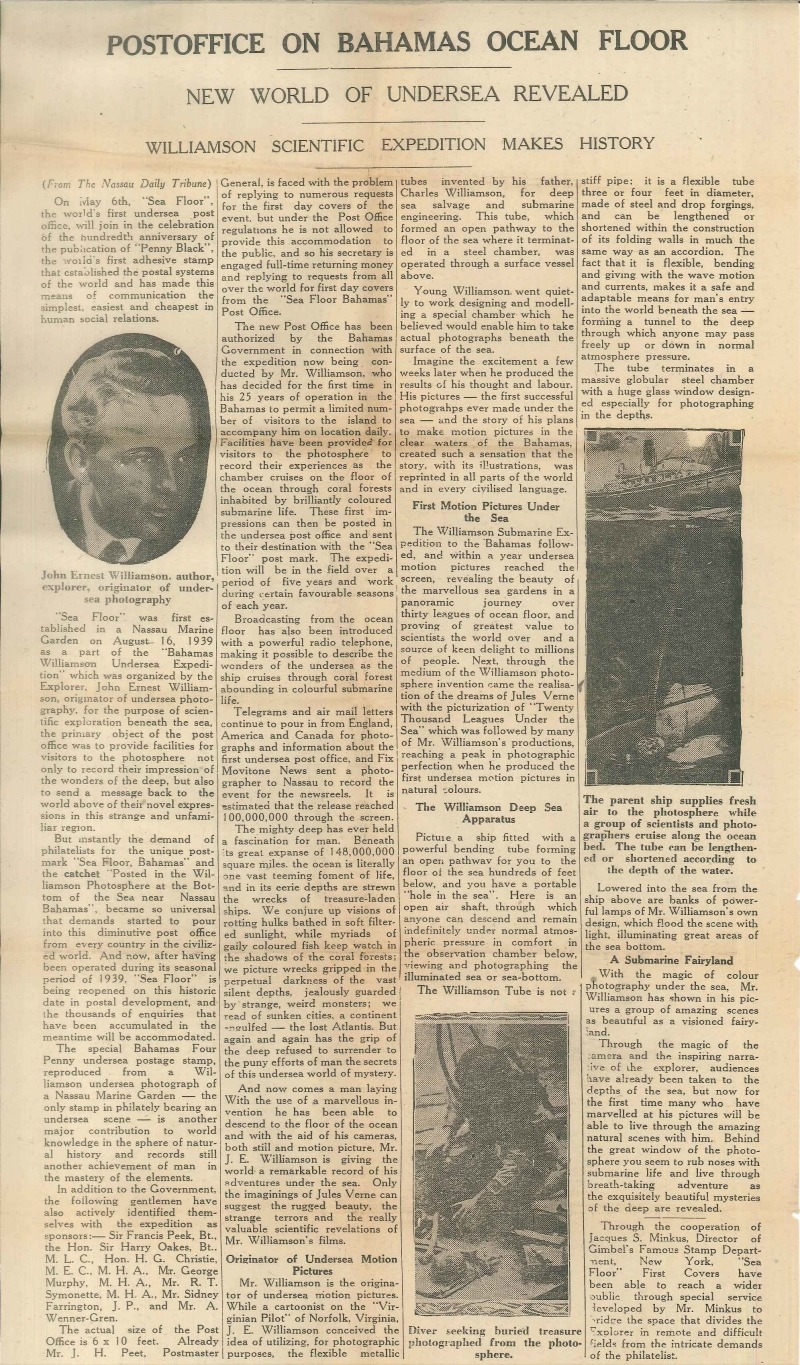
post offices, on trains, and aboard ships. All letters ever mailed had one thing in common: they were mailed above sea level. That changed in 1939, when the world's first underwater post office was established near Nassau in the Bahamas.
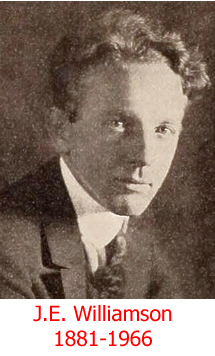
In 1914, John Ernest Williamson had built a submersible chamber called the Williamson Photosphere. It cruised along the ocean floor, connected to a ship above by a flexible metal tube. From within the chamber through heavy glass windows, Williamson took the world's first underwater photographs. Soon he was making undersea motion pictures that were shown in movie theatres around the world, suddenly putting the Bahamas in the spotlight. Among a number of famous visitors eager to view the ocean floor for themselves was Alexander Graham Bell. He descended to the Photosphere in the early 1920’s when
he was over the age of 70. In addition to attracting global attention to the Bahamas,
the Photosphere and Williamson's photography served to advance scientific exploration beneath the sea.
 In 1939, the Photosphere's claim to fame grew when the Bahamian Government authorized its use as a
post office. The first two letters were mailed to the world's most famous philatelists, King George VI and Franklin Delano Roosevelt. The Duke of Windsor (Edward VIII) who was the Governor of the Bahamas at that time, made a visit to Sea Floor Post Office. In 1939, the Photosphere's claim to fame grew when the Bahamian Government authorized its use as a
post office. The first two letters were mailed to the world's most famous philatelists, King George VI and Franklin Delano Roosevelt. The Duke of Windsor (Edward VIII) who was the Governor of the Bahamas at that time, made a visit to Sea Floor Post Office.
Williamson permitted a limited number of visitors to accompany him down to
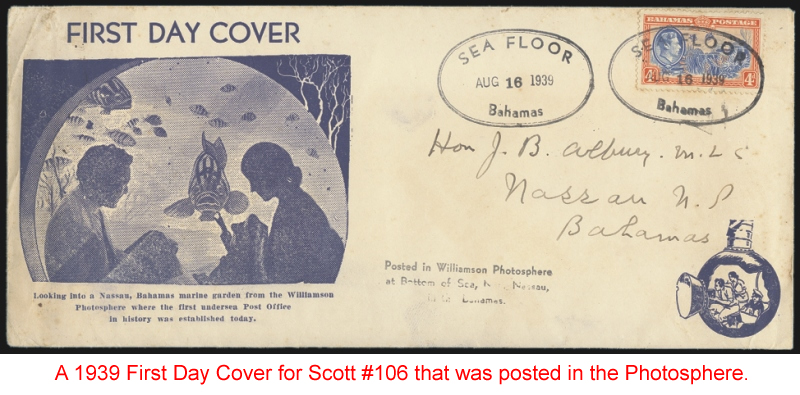
the 6 by 10 foot post office each day where they could mail letters that were cancelled
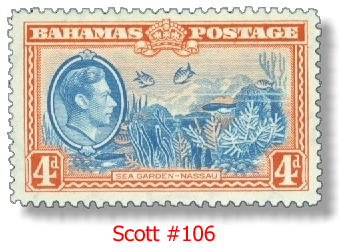
'SEA FLOOR - BAHAMAS'. Many of the letters were franked with a 4 Penny stamp depicting an underwater scene that was based on one of Williamson's photographs. Letters mailed with the special cancel were very popular with stamp collectors.
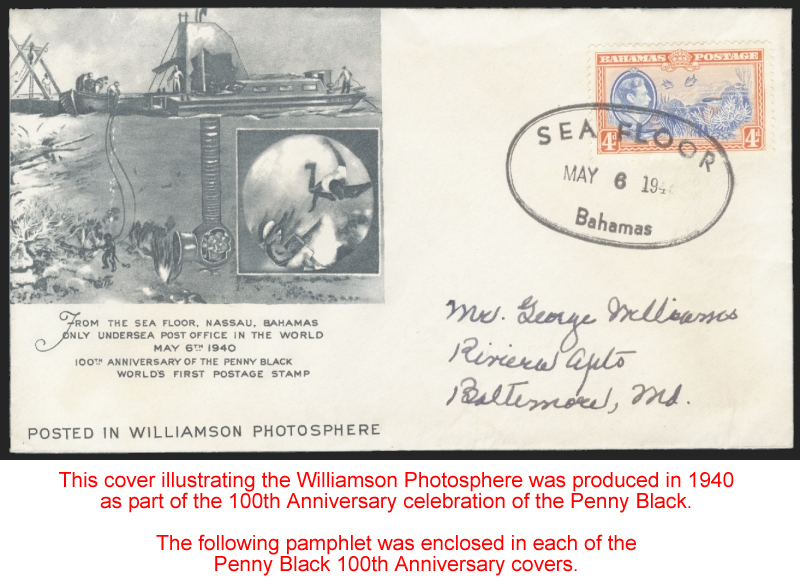
In May of 1940, Sea Floor Post Office
joined in the celebration of a historic philatelic event. Special covers illustrating the Photosphere and inscribed for the 100th Anniversary of
the Penny Black were mailed from Sea Floor with its special postmark. John Ernest Williamson had himself inspired a historic philatelic event by turning the mailing of a letter into an unforgettable underwater adventure.
|
|
General Balbo's Flying Armada
|
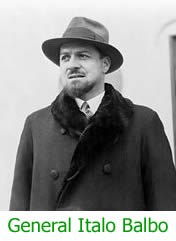
In 1933 Italy issued a very interesting set of airmails in anticipation of a special Trans-Atlantic flight. A daring and unprecedented feat was planned by General Italo Balbo,
the flamboyant Italian Air Minister, to fly an armada of
twenty-four Flying Boats from Rome to Chicago where the “Century of Progress” World's Fair was being held.
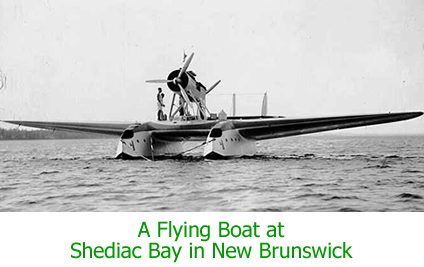
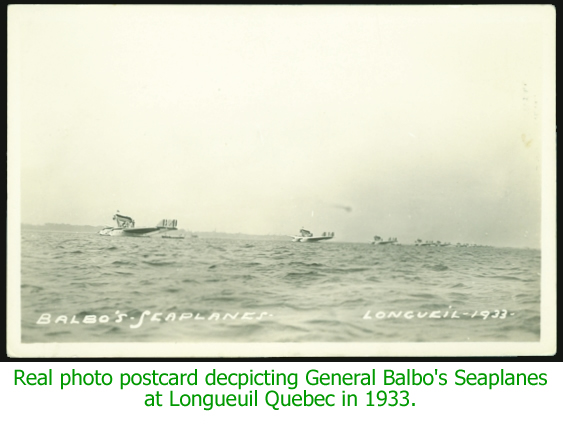
Flying in formation, the “Italian Air Armada” drew huge crowds all along its route. The flight lasted from July 1st to August 12th with many stopovers, including Shediac New Brunswick, Montreal Quebec, and Shoal Harbour Newfoundland.
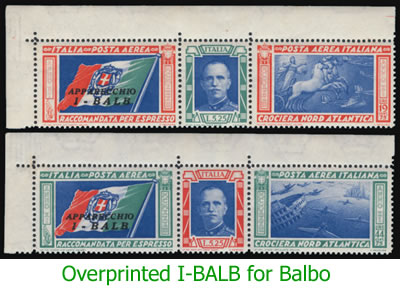 The stamps were prepared for use on airmail letters carried from Rome to Chicago by the armada. The set of two triptychs each consisted of an air registration label, a regular stamp, and an airmail stamp attached together (Scott #C48-9). The set was made even more interesting when the abbreviated names of twenty of the flight's pilots were printed on the label portions. If you are lucky enough to find a cover from the historic flight, you will know who piloted the Flying Boat that carried it.
It is a real challenge to collect all twenty pilots. Here is a check list of the
twenty overprints that
constitute a complete collection of Italy #C48-9:
| I. ARAM |
I. CALO |
I. MIGL |
I. RANI |
| I. BALB |
I. DINI |
I. NANN |
I. RECA |
| I. BIAN |
I. GIOR |
I. NAPO |
I. ROVI |
| I. BISE |
I. LEON |
I. PELL |
I. TEUC |
| I. BORG |
I. LONG |
I. QUES |
I. VERC |
|
|
Grace Kelly
|
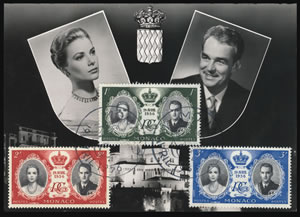
November 12, 2019 marked the 90th anniversary of the birth of Grace Kelly. She was born in Philadelphia in 1929.
After working in commercials and TV in the early 1950's, she got her big break in movies when she appeared with Gary Cooper in High Noon. She made ten more movies including The Country Girl (for which she won an Academy Award), and three of my favourite Alfred Hitchcock movies: Rear Window,
Dial M for Murder, and To Catch a Thief. The last was made on location in France and Monaco where she met Prince Rainer of Monaco. 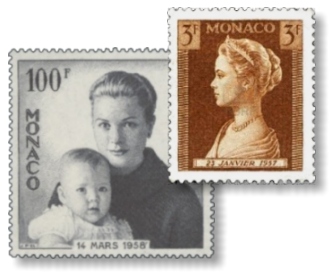
In 1956 the world’s attention was focussed on the tiny country of Monaco when she married Prince Rainier and became Princess Grace. The elaborate nuptials were described as "the wedding of the century". Sadly for fans who had become enchanted by her beauty and elegance, she gave up her acting career and became the leading lady of Monaco. She devoted herself to her family, her new country, and charity work.
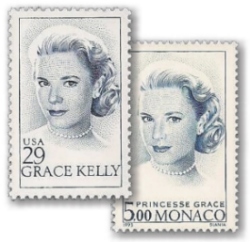
The world mourned when a car accident ended her life on September 14, 1982. She was only 52.
Grace's image has appeared on stamps both because she was a fine actress and because she was a princess. Monaco produced a beautiful set of eight stamps to celebrate the royal marriage, as well as a number of subsequent issues featuring her likeness. In 1993, the United States and Monaco collaborated on a joint issue to celebrate this very special lady.
The next time you are looking for something good to watch, I recommend a Grace Kelly movie.
|
|
Dr. Hugo Eckener and the Graf Zeppelin
|
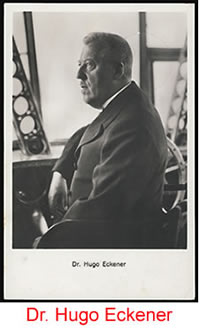 'Zeppelin fever' broke out in 1928 when the hydrogen-filled Graf Zeppelin airship defied gravity and took to the skies. Built in Germany by the Zeppelin Company, it weighed 74 tons! Longer than two football fields and one hundred feet in diameter,
it is no wonder that the Graf Zeppelin and its commander, Dr. Hugo Eckener, became front page news around the world. 'Zeppelin fever' broke out in 1928 when the hydrogen-filled Graf Zeppelin airship defied gravity and took to the skies. Built in Germany by the Zeppelin Company, it weighed 74 tons! Longer than two football fields and one hundred feet in diameter,
it is no wonder that the Graf Zeppelin and its commander, Dr. Hugo Eckener, became front page news around the world.
In October of 1928, the airship left Friedrichshafen Germany with 20 passengers, 40 crew members, and thousands of pieces of mail on board. When it landed
in Lakehurst New Jersey 111 hours later, it had made
the first commercial passenger flight to cross an ocean. There was a ticker-tape parade in New York City.
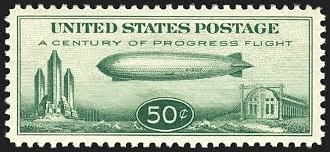
In 1929, the Graf Zeppelin continued to capture the world's attention with its Round-the-World Flight. Between July 27th and September 4th, the Graf Zeppelin circumvented the globe in five legs: Lakehurst to Friedrichshafen to Tokyo to Los Angeles to Lakehurst, and then back to Friedrichshafen.
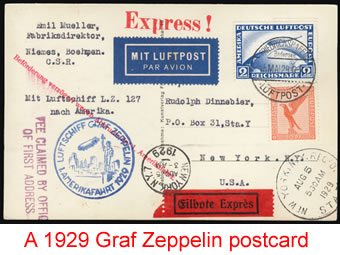
During its illustrious nine-year career, the Graf Zeppelin carried thousands of passengers and covered over a million miles on 590 flights. It took an exploratory trip to the North Pole, and made an appearance at the 1933 World's Fair in Chicago. Wherever it went, it created a spectacle that no observer could ever forget.
Mail carried on the Graf Zeppelin had special postmarks and cachets, and some even had special stamps. Details of flights and the mail that they carried can be found in the Frost and Sieger catalogues. Zeppelin mail is still very popular
because each letter or postcard is a piece of history. |
|
Admiral Richard Byrd
|
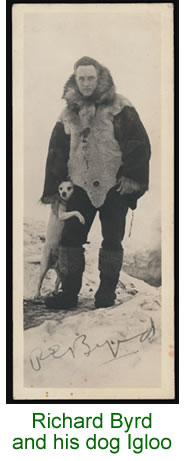
The name 'Admiral Byrd' conjures up images of cold, snowy, remote places. Even though Richard E. Byrd served in the American Navy in both World Wars and made significant contributions as an aviation pioneer and a scientist, he is primarily remembered as a polar explorer.
In the late 1920's when long distance aviation was still new, Byrd led aerial expeditions to both the North and South Poles. Although there is some question as to whether his plane actually reached the North Pole, his remarkable exploits made him a national hero
in America and a celebrity around the world.
His fame allowed Byrd to pursue his quest
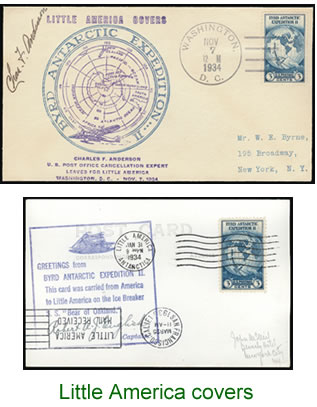
for more knowledge, and with the financial help of a number of influential Americans including members of the Rockefeller, Astor and Ford families, he made several more expeditions to Antarctica. The first of a series of base camps named "Little America" was established on the Ross Ice Shelf in 1929. Byrd’s untiring efforts resulted in a wealth of new geographic and meteorological information.
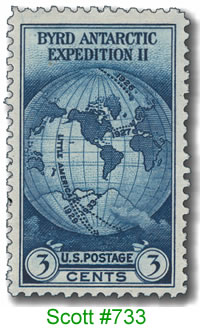
In 1933, the United States Postal Service issued a
3¢ stamp to commemorate the second of Byrd's Antarctic expeditions. The stamp was primarily for the interest of philatelists who could pay to have a letter mailed from "Little America". The Post Office was actually a tent where
the US postal representative Charles F. Anderson huddled
in extremely cold and cramped conditions to apply special postmarks to the letters franked with Scott #733. Having visited Antarctica early this year, I can imagine how difficult his task was.
Over the years we have had the opportunity to offer fascinating polar expedition items that relate to the explorations of Byrd, Nansen, Shackleton, Peary and others in our auctions.
|
|
Amelia Earhart
|
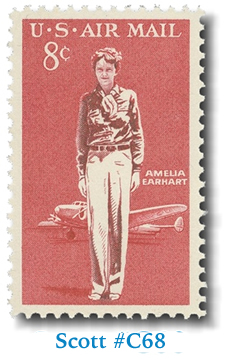
Like many people, I have always been fascinated by the life of the famous American aviator, Amelia Earhart. It is not widely known that she had a very special Canadian connection. While visiting her sister in Toronto during World War I, Amelia was moved by the large numbers of wounded soldiers that she saw in the streets. In 1918, she volunteered with the Red Cross as a nurse's aide and worked at the Spadina Military Hospital. While in Toronto she had the opportunity to watch the Royal Flying Corps training at their aerodrome, and her love of flying was born.
Before long she took her first lesson, and in December of 1921 she earned her U.S. flying license. She established many flying records and aviation "firsts" during the 1920's and 1930's, including being the first woman to cross the Atlantic Ocean in a solo flight in 1932. Her public life was managed by her husband George Putnam. To help finance her flying career, she had a busy schedule of appearances and flying demonstrations, all the while using her celebrity to promote opportunities for women.
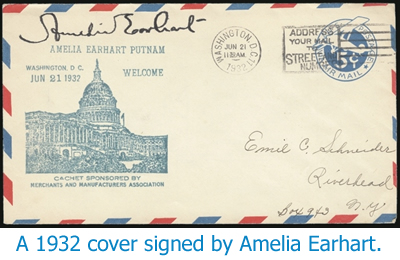
At the height of her career, Amelia and her navigator Frank Noonan disappeared over the Pacific Ocean while attempting to fly around the world.
She was last heard from on July 2nd, 1937, and whether she died that day
is a mystery that remains the subject of much speculation over eighty years later. In 1963, on what would have been Amelia’s 65th birthday, the United States Postal Service issued an 8¢ Air Mail stamp to celebrate her.
Amelia carried mail on some of her flights, and autographed covers exist from various events throughout her career. We have been lucky enough to offer a few signed covers over the years. |
|
Canada's Map Stamp
|
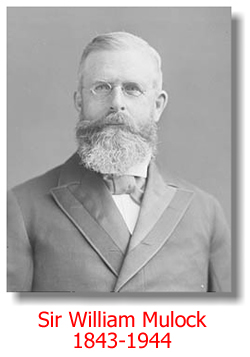
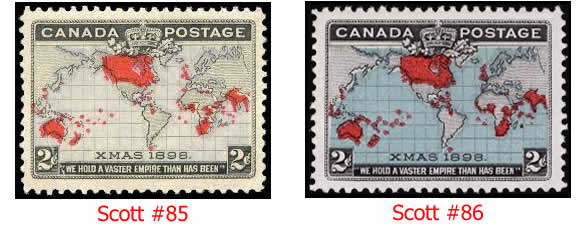
Sir Rowland Hill changed postal history in 1840 when he introduced prepaid postage and the Penny Black. In 1898, a Canadian changed it again. William Mulock, an accomplished lawyer, judge, businessman and politician, was Canada’s Postmaster General at the time. At the Imperial Postal Conference in London England, he lobbied for lower, consistent postal rates so that a letter could be sent anywhere in the British Empire for a British penny. ‘Penny Postage’ was passed, so Canada needed a stamp of the equivalent value. Mulock was personally involved in the design of the 2¢ stamp that we know as ‘The Map Stamp’.
Combining three colours and two printing methods, it was the most elaborate stamp that had ever been produced in Canada. All parts
of the British Empire were highlighted in red,
with Canada prominently placed in the centre. Scott #85 (with lavender/grey oceans) and #86
(with the oceans in various shades of blue) were printed from five different plates providing collectors with endless interesting areas to study. A good magnifying glass adds tremendously to the enjoyment of this issue.
The stamp was actually released early in December, but since the 2¢ service began on Christmas day, ‘XMAS 1898' was included in the design. William Mulock did not know it at the time, but he had helped design the world’s first Christmas stamp.
|
|
The Stamps of the Ryukyu Islands
|
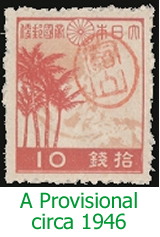 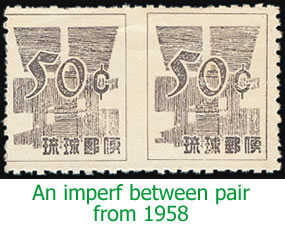
Many people had never heard of the Ryukyu Islands before 1945 when American troops fought their way ashore on the chain of Pacific Islands.
The name of the main island, Okinawa, may be more familiar to you.
From 1945 to 1948 a local mail system used provisional handstamps and overprinted Japanese stamps. In 1948, the Ryukyu Islands started their own postal system and issued their own stamps that were valid on international mail. All of this was done under the authority of the United States military until the islands reverted back to Japan in 1972.
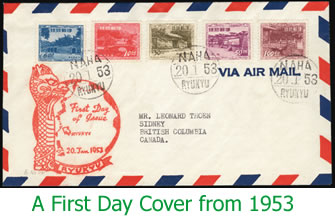 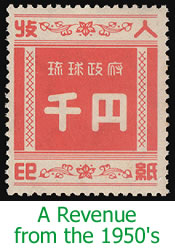
Some 259 stamps, along with overprinted varieties, forerunners, provisionals, and
postal stationery make the Ryukyu Islands an interesting and finite area to collect. These stamps have always been listed in the Scott catalogues at the back of the USA section rather than under ‘R’ in the alphabetical listings. Our auctions regularly include Ryukyu Islands lots.
|
|
Newfoundland's 400th Anniversary Set
|
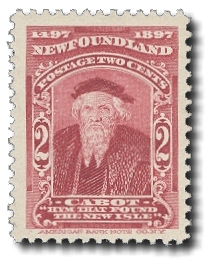 John Cabot was an Italian merchant seaman who was sailing under the English flag when he discovered Newfoundland in 1497. When he returned to England with tales of abundant fishing off the Grand Banks,
King Henry VII laid claim to this “new found land” and rewarded Cabot with the princely sum of £10. John Cabot was an Italian merchant seaman who was sailing under the English flag when he discovered Newfoundland in 1497. When he returned to England with tales of abundant fishing off the Grand Banks,
King Henry VII laid claim to this “new found land” and rewarded Cabot with the princely sum of £10.
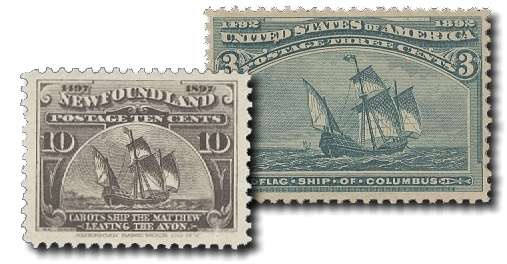
Newfoundland issued 14 beautiful stamps in 1897 to mark the 400th anniversary of its discovery by Cabot. They were printed by the American Bank Note Co. of New York. The set (Scott #’s 61-74) has always been popular, and it is even more interesting when you know the stories behind it. The image on the 2¢ stamp was supposedly John Cabot, but it is actually John’s son, Sebastian, who was also an explorer. Apparently there were no authentic images of John, so a Holbein portrait
of Sebastian was used instead.
Similarly, the 10¢ value was supposed to depict Cabot’s ship the Matthew. No likeness of the ship could be found, so why not borrow the vignette of Christopher Columbus’ flagship Santa Maria that had just been used in 1893 on the 3¢ value of the USA Columbian issue? The next time that you look at these stamps, you will be in on their secrets.
|
|
Ballon Monté Covers
|
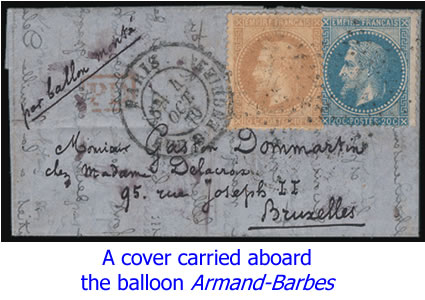
Necessity has always been the mother of invention when carrying the mail has been concerned. Near the end of the Franco-Prussian War of 1870-1, the citizens of Paris found themselves under siege. Unable to communicate with the outside world, hot air balloons
were pressed into service to carry the mail.
Over 60 flights, mostly manned, were made out of the beleaguered city carrying mail and passengers. At the mercy of the wind, they landed (or crashed) in many different locations, so the pilots were among the bravest mailmen in history.
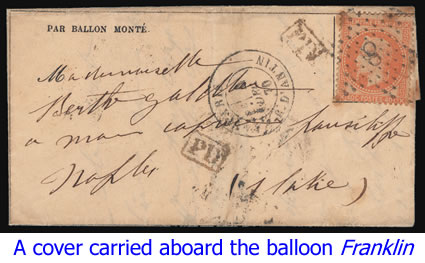
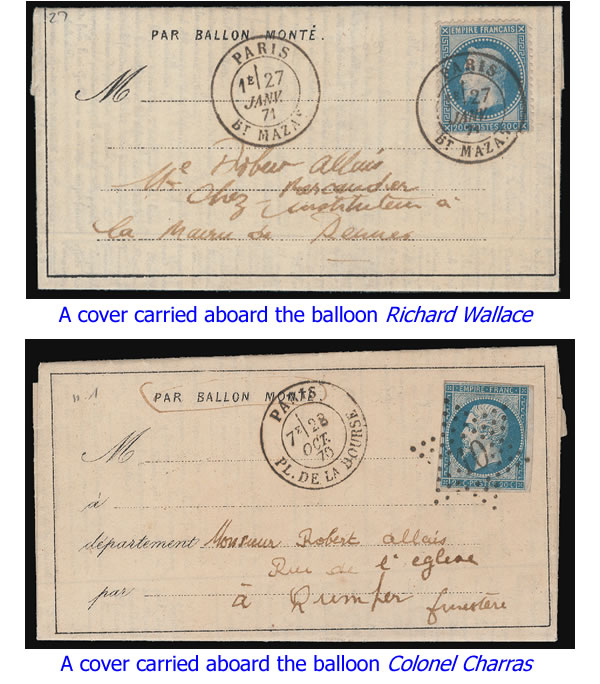
Covers carried on these flights are called 'Ballon Monté' meaning ‘mounted balloon’. Ordinary letters were sent with hand-written endorsements 'PAR BALLON MONTÉ', and
special stationery was also produced with a printed endorsement.
The study of these covers has become so popular that the Scott Classic Catalogue contains a detailed listing of the Ballon Monté flights with dates and the names of the balloons. It is amazing to think that these covers flew high above Paris almost 150 years ago.
|
|
The White Plains Sheet
|
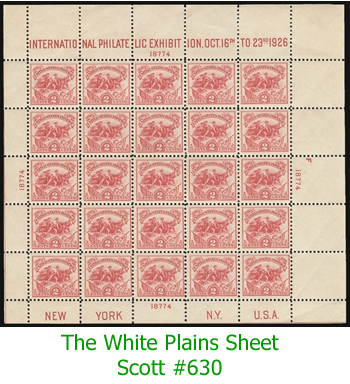
We tend to think of souvenir sheets as a more modern format for stamps, but they have been around for a long time. Almost a hundred years ago it became a popular practice to issue a small sheet of stamps
in conjunction with a stamp show, literally as a souvenir of the show. Attendees could buy the sheet with the show’s name, dates, and the location inscribed in the selvedges.
The very first United States souvenir sheet was issued to mark the 150th Anniversary of the Battle of White Plains in the Revolutionary
War. The sheet was unveiled at the International Philatelic Exhibition held in New York City in October of 1926. The sheet is commonly referred to by collectors as simply ‘the White Plains sheet’. It consists of twenty-five 2¢ stamps depicting Alexander Hamilton’s Battery. The selvedges include Plate Numbers as well as the information about the exhibition.
The White Plains sheet has long been a favourite with collectors and regularly appears in our auction sales. |
|
|
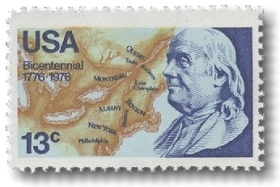
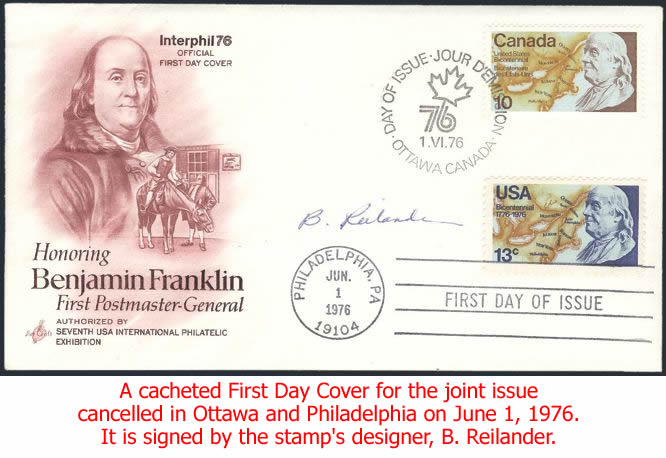
It surprises many people to discover that Benjamin Franklin played an important role in the development of Canada's early postal system. A British subject at the time, Franklin was already the Deputy Postmaster General of the Thirteen Colonies to the south when his territory was expanded to include all of British North America in 1753. He was responsible for major improvements to the postal system including the opening of post offices, the establishment of regular mail routes between major cities, and better accounting practices.
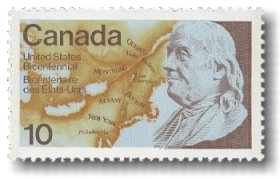
Franklin's services were terminated with the start of the American Revolution. On the occasion of the American Bicentennial in 1976, Canada and the United States issued joint stamps featuring Franklin’s image.
|
|
|
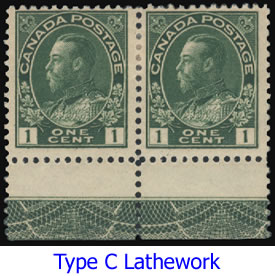 The Admiral series was
so named because King George is depicted in his full dress uniform as Admiral
of the Fleet of the Royal Navy. This series lasted from 1911 until 1928, making it one of Canada’s longest running series of definitive stamps. Admiral issues have provided collectors with all kinds of specialized areas to study such as colour shades, printings, plate varieties, plate imprints, re-entries, and booklets. The Admiral series was
so named because King George is depicted in his full dress uniform as Admiral
of the Fleet of the Royal Navy. This series lasted from 1911 until 1928, making it one of Canada’s longest running series of definitive stamps. Admiral issues have provided collectors with all kinds of specialized areas to study such as colour shades, printings, plate varieties, plate imprints, re-entries, and booklets.
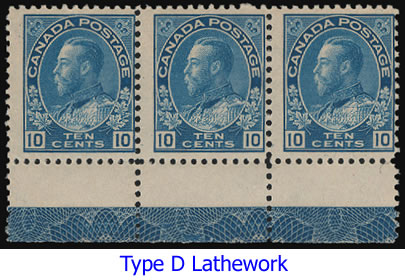
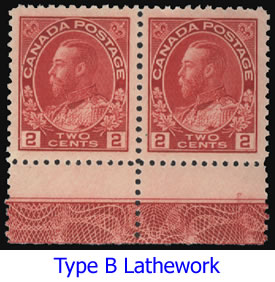 Some of the most sought after Admirals are those with lathework designs in the sheet margins. In 1916, the fancy lattice designs were added to the bottom margins of the engraved sheets of Admiral issues. Its purpose has never been absolutely clear, but printers may have used lathework to monitor the quality of the printing. If the lathework grew faint and less detailed, it could be a signal that the plate was worn. Another theory is that printing near the bottom edge of the sheet kept the paper in place on the cylindrical printing plate while the stamps were being printed. Some of the most sought after Admirals are those with lathework designs in the sheet margins. In 1916, the fancy lattice designs were added to the bottom margins of the engraved sheets of Admiral issues. Its purpose has never been absolutely clear, but printers may have used lathework to monitor the quality of the printing. If the lathework grew faint and less detailed, it could be a signal that the plate was worn. Another theory is that printing near the bottom edge of the sheet kept the paper in place on the cylindrical printing plate while the stamps were being printed.
Naturally collectors noticed the beautiful patterns in the margins of Admiral sheets, and a collecting craze was born that is still popular over 100 years later!
Six different lathework patterns and four different inverted patterns have been identified. Lathework items can be collected as singles, pairs, blocks, or multiples.
|
|
|
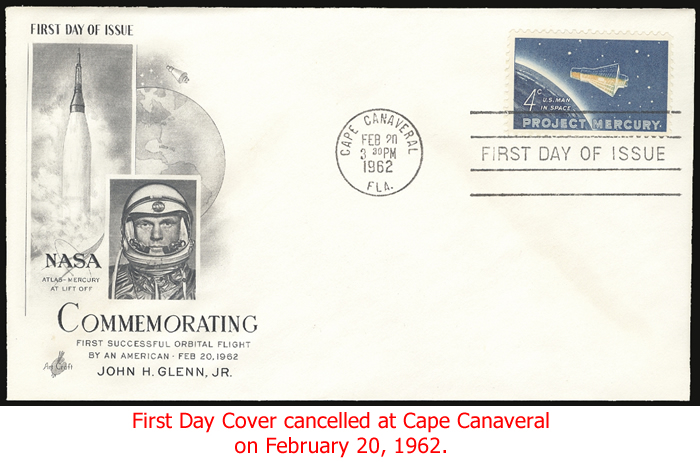
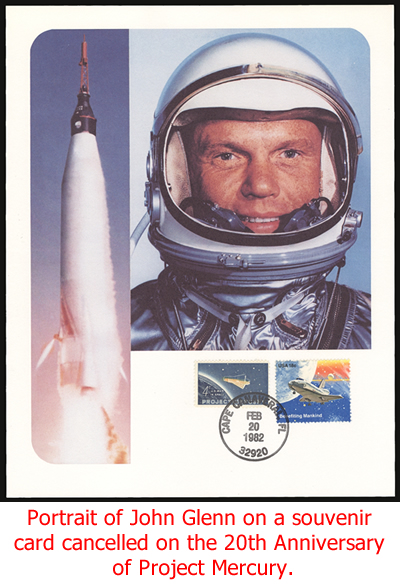
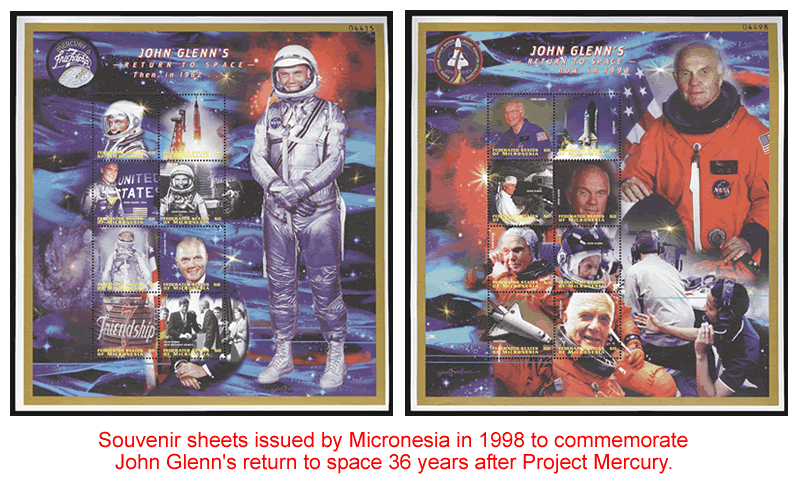
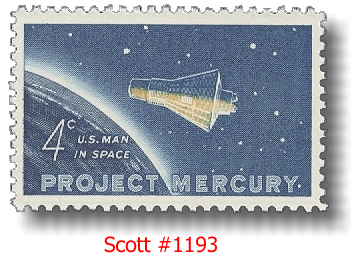 As a youngster, I was captivated by the thought of space travel. I followed the news closely when John Glenn attempted to become the first American to orbit the earth in 1962. After eleven delays due to equipment problems and bad weather, Glenn took off from Cape Canaveral and orbited the earth three times in the Project Mercury spacecraft, the Friendship 7. As a youngster, I was captivated by the thought of space travel. I followed the news closely when John Glenn attempted to become the first American to orbit the earth in 1962. After eleven delays due to equipment problems and bad weather, Glenn took off from Cape Canaveral and orbited the earth three times in the Project Mercury spacecraft, the Friendship 7.
Space history was made on February 20, 1962, and postal history was made as well. The 4¢ Project Mercury stamp had been designed, printed, and shipped to 305 Post Offices around the United States in great secrecy. Less than one hour after the Friendship 7 splashed down, those Post Offices received calls from Washington to open the packages marked “Classified - Do Not Open” and the secret was out. News of the new stamp spread quickly by TV and radio, and stamp collectors started lining up to mail First Day Covers bearing the surprise issue. For the first time, an unannounced stamp was made available to the public within one hour of the event that it commemorated.
|
|
|
When I hear the name 'Wells Fargo', I immediately think of
the stagecoaches that I have seen in so many Western movies.
Back in 1852 when travel on the west coast of America was slow
and dangerous, it was very difficult to do business. Henry Wells
and William Fargo saw the need for safe, fast financial services,
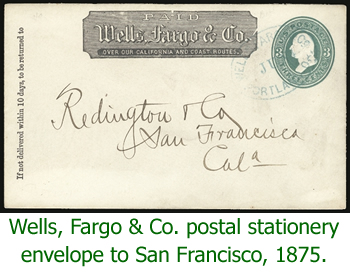
and Wells, Fargo & Co. was born. In the early days passengers, freight, and mail were carried by steamer, stagecoach, Pony Express, and railroad. Wells Fargo specialized in shipping gold and silver
from western mines, and by 1866 they became the largest Express Company in the American West.
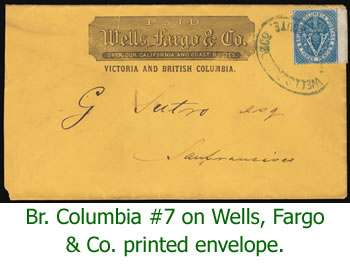
Wells, Fargo & Co. also played an important role in the Canadian West in the 19th Century, particularly in colonial British Columbia. Pioneers, miners, and merchants all depended on them to communicate and conduct commerce with the outside world.
Over the years, Wells Fargo produced a wide variety of postal stationery. Their covers with printed franks, corner cards, and illustrations are very popular with collectors. Our auctions frequently offer Wells Fargo material.
|
|
|
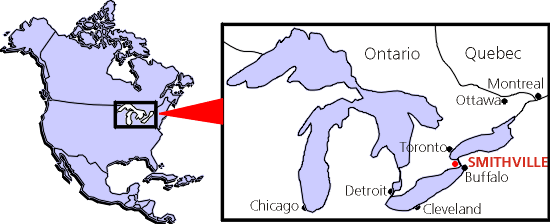
Our auctions, both the printed and web versions, are read by stamp and postal history collectors all around the world, so it is not surprising that we are often asked "Where is Smithville?"
As you can see, we are located in the Niagara Peninsula not far from Niagara Falls. Since we are only about an hour's drive from the major centres of Toronto Ontario and Buffalo New York, a number of our bidders have included our little town of Smithville in their travel itineraries over the years. We have welcomed visitors from all over Canada and the United States as well as England, Macau, Germany, Brazil, Australia and Japan among others.
The Niagara region is well known for its vineyards and winemaking, but we like to think that philately has put Smithville on the map. |
|
|
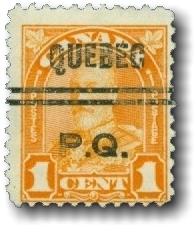 When adhesive postage stamps came into use in 1840, every letter was cancelled by hand to prevent the stamps from being used again. Hand cancelling was possible in small Post Offices that handled low volumes of mail, but some time in the mid to late 1800’s postal clerks in busy Post Offices started ‘precancelling’ stamps by writing bars across them before they were sold to save time after the stamps were stuck to letters. When adhesive postage stamps came into use in 1840, every letter was cancelled by hand to prevent the stamps from being used again. Hand cancelling was possible in small Post Offices that handled low volumes of mail, but some time in the mid to late 1800’s postal clerks in busy Post Offices started ‘precancelling’ stamps by writing bars across them before they were sold to save time after the stamps were stuck to letters.
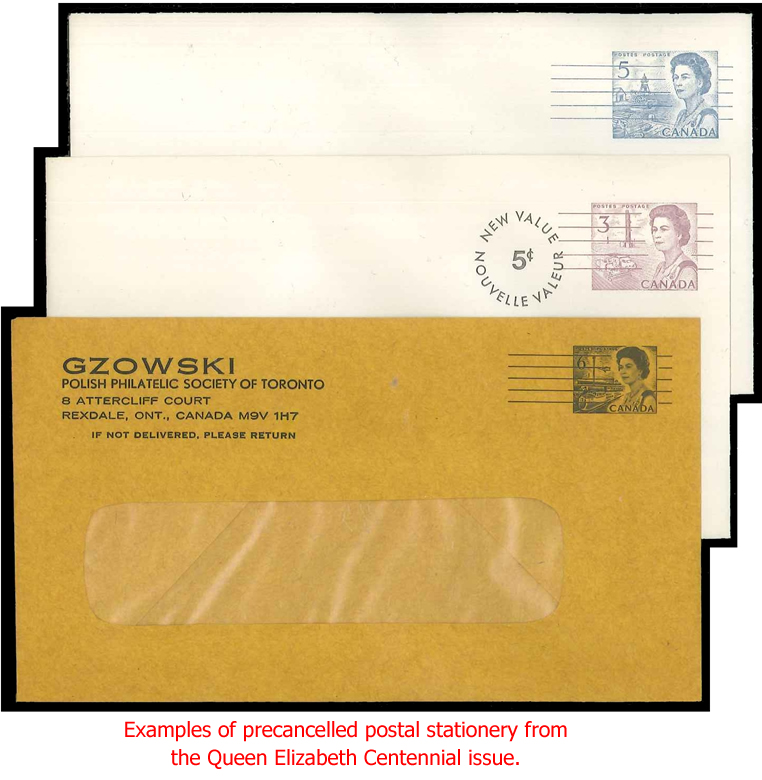
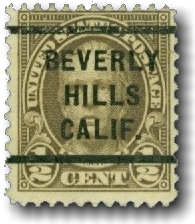 When bulk mailing became a popular way for businesses to reach their customers, unmechanized Post Offices did not have the resources to cancel the huge quantities of letters in a timely manner. To solve this problem, companies could register to use stamps that had been preprinted with cancels that often included bars, town names or numbers. The company benefitted by paying lower rates on bulk mail, and the Post Office saved a step in the processing of large volumes of mail. When bulk mailing became a popular way for businesses to reach their customers, unmechanized Post Offices did not have the resources to cancel the huge quantities of letters in a timely manner. To solve this problem, companies could register to use stamps that had been preprinted with cancels that often included bars, town names or numbers. The company benefitted by paying lower rates on bulk mail, and the Post Office saved a step in the processing of large volumes of mail.
Over the years, precancelled stamps and postal stationery have been available in many countries. The best known are stamps from the USA and Canada. Thousands of different types, styles, and varieties exist. The vast array of town names and numbers used on different stamp issues has provided a whole realm of interesting items to collect and study. Our auction sales regularly offer precancelled stamps including collections.
|
|
|
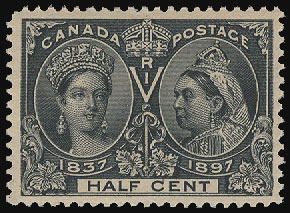 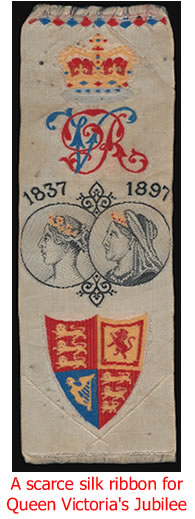
Canada issued its very first stamp in 1851, but it was not until 1897 that our first commemorative stamps were issued. The event being commemorated was the Diamond Jubilee of Queen Victoria. The engraved Jubilee issue was appropriately designed to celebrate her 60 years on the throne, combining the famous Chalon portrait
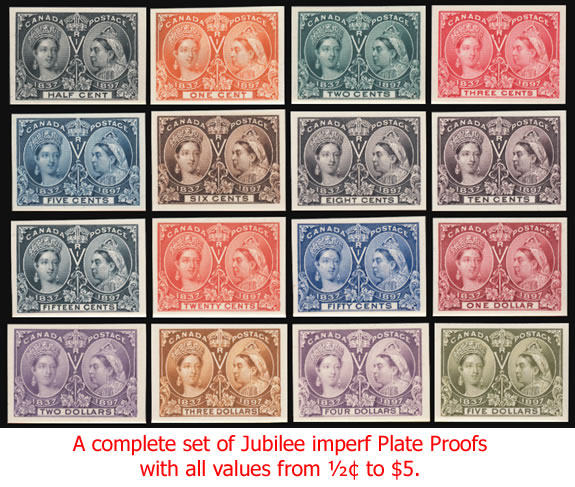
of young Victoria with the Alexander Bassano portrait of the mature Victoria in one of Canada’s most beautiful sets. A total of 16 stamps with values from ½¢ to $5 were printed by the American Bank Note Co.
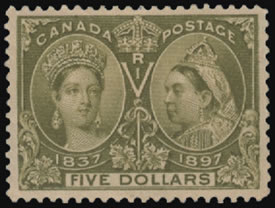
A little known fact about the Jubilee issue is that the higher values (10¢ to $5) were printed in a different format than the lower values (½¢ to 8¢). There was expected to be less demand for the higher values so they were only printed in sheets of 50 stamps (5 across
by 10 down), and the lower values were printed in sheets of 100 (10 by 10). If you compare a lower value to
a higher value, you will find that the higher value’s image is slightly narrower.
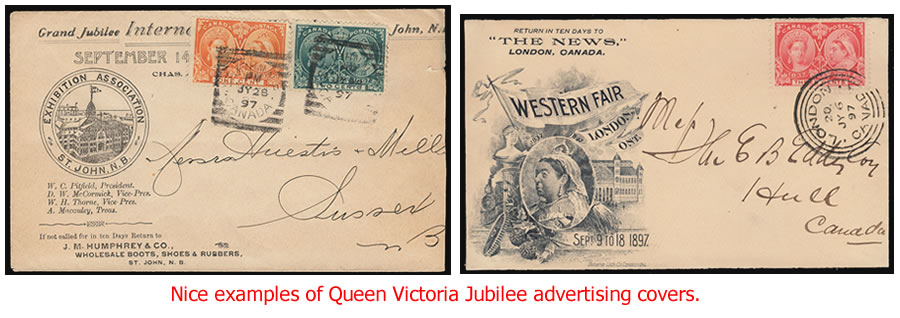
It is quite an accomplishment to collect mint or used copies of all 16 Jubilees, and there is no end of additional areas to study. Our auctions always contain a nice selection of singles, blocks, plate imprints, varieties and proofs, as well as postmarks and Jubilees on cover.
|
|
|
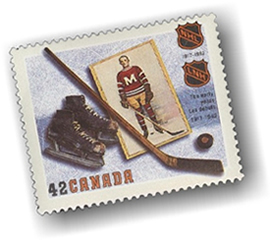 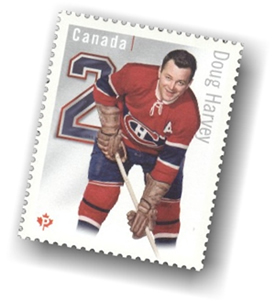 Without a doubt, the most popular winter sport here in Canada is hockey. There are outdoor and indoor rinks in virtually every community across the country. Whenever a pond freezes, kids run to get their skates, sticks, and nets. From those rinks came Canadian hockey legends like Gordie Howe, Bobby Hull, Bobby Orr, Wayne Gretzky, and Sidney Crosby. Without a doubt, the most popular winter sport here in Canada is hockey. There are outdoor and indoor rinks in virtually every community across the country. Whenever a pond freezes, kids run to get their skates, sticks, and nets. From those rinks came Canadian hockey legends like Gordie Howe, Bobby Hull, Bobby Orr, Wayne Gretzky, and Sidney Crosby.
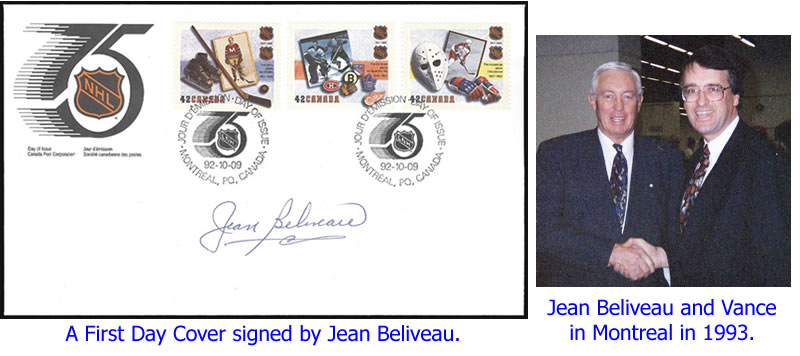
I played many years of organized hockey as a youth, and grew up cheering for the Toronto Maple Leafs. Even though they were our rivals, I could not help liking the Montreal Canadiens - one of the most fabled sports franchises in North America. The Canadiens have won more Stanley Cup championships than any other club in hockey history. Montreal has had many great players over the years including Maurice “The Rocket” Richard, Yvon Cournoyer, Doug Harvey, and Guy Lafleur. At a stamp show in Montreal in 1993, I had the honour of meeting the late Jean Beliveau who played from 1950
to 1971 and was one of their all time greats.
Canada Post has issued dozens of hockey stamps over the years honouring hockey teams and famous players. These stamps and their First Day Covers can make a very nice topical collection.
|
|
|
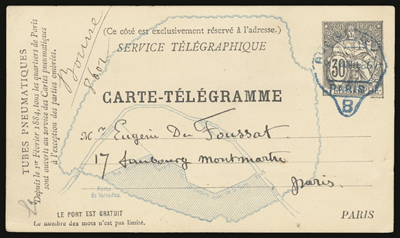 The speed with which we communicate has changed dramatically over the years. My grandparents rarely used the telephone, and wrote letters instead. It was considered quite normal to mail a letter and wait days or weeks for the answers to your questions by return mail. It is human nature to want to speed things up, and progressive individuals in the mid 1800's began building underground systems of tubes through which canisters of mail could be hurled between post offices in localized areas. The speed with which we communicate has changed dramatically over the years. My grandparents rarely used the telephone, and wrote letters instead. It was considered quite normal to mail a letter and wait days or weeks for the answers to your questions by return mail. It is human nature to want to speed things up, and progressive individuals in the mid 1800's began building underground systems of tubes through which canisters of mail could be hurled between post offices in localized areas.
Canisters containing up to 600 pieces of mail were propelled by air pressure through pneumatic tubes in cities like Paris and New York with some success, though the canisters could become jammed which may have given rise to the phrase 'stuck in the mail'. There are still very effective pneumatic systems that facilitate deliveries within hospitals and corporate buildings, but pneumatic mail delivery declined with the advent of trucks that could move large amounts mail quickly over much greater areas.
The French postal stationery card pictured here was specially issued for pneumatic mail. It is illustrated with a map of the pneumatic service area. It is amazing to think that this card travelled in a canister under Paris over 130 years ago in 1886! |
|
|
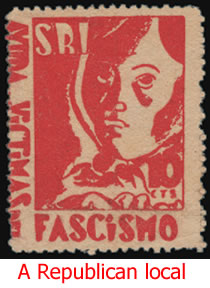 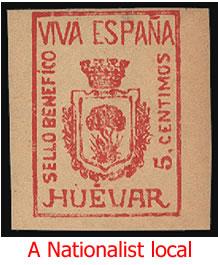 In
1936, Spain was suffering from the effects of the great depression,
and there was widespread political unrest. The left-leaning Second
Spanish Republic was in power when a coup was carried out by the
Nationalists, a fascist group led by General Francisco Franco.
When the coup failed in some important cities and regions, the
country was left divided and a bitter civil war began. Over 500,000
people died before the Nationalists won the war in 1939. In
1936, Spain was suffering from the effects of the great depression,
and there was widespread political unrest. The left-leaning Second
Spanish Republic was in power when a coup was carried out by the
Nationalists, a fascist group led by General Francisco Franco.
When the coup failed in some important cities and regions, the
country was left divided and a bitter civil war began. Over 500,000
people died before the Nationalists won the war in 1939.
During the war, many provinces and
communities on both sides of the conflict issued locals for propaganda
and fund-raising purposes. Letters were required to carry these
locals in addition to the normal postage stamps.
Whether a local
was issued by the Republicans or the Nationalists can usually
be determined by the local’s colours, designs, and phrases. Spanish Civil War locals tell the story of a tragic time in Spain's history. They are regularly offered in our auctions. |
|
|
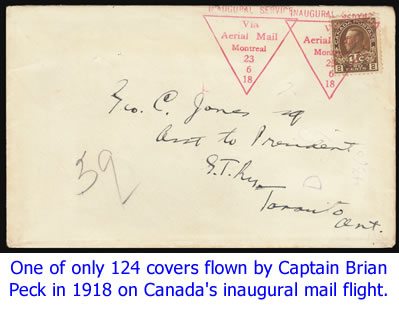 In 1918, airplanes were playing an
important role in World War I, and their potential to carry mail
was recognized by The Aerial League of the British Empire. Members of the Montreal branch petitioned Canada’s Postmaster General to approve an air mail flight. As a result, 124
letters stamped with special red triangular cachets reading ‘Inaugural
Service Via Aerial Mail - Montreal 23.6.18’ were given to Captain
Brian Peck, an RAF pilot who was planning to fly from Montreal
to Toronto on June 23rd. In 1918, airplanes were playing an
important role in World War I, and their potential to carry mail
was recognized by The Aerial League of the British Empire. Members of the Montreal branch petitioned Canada’s Postmaster General to approve an air mail flight. As a result, 124
letters stamped with special red triangular cachets reading ‘Inaugural
Service Via Aerial Mail - Montreal 23.6.18’ were given to Captain
Brian Peck, an RAF pilot who was planning to fly from Montreal
to Toronto on June 23rd.
The flight was delayed by bad weather
but Peck took off from Montreal the next day in a Curtiss two-seater
‘Jenny’ biplane with a mailbag on his passenger’s lap. It was
a bumpy flight with a couple of refueling stops on the way, but
Peck delivered Canada’s very first bag of air mail letters to
the Leaside Aerodrome in Toronto on June 24, 1918.
The Leaside Aerodrome was built by the Canadian government in 1917 as a training facility for pilots, mechanics and crews of the Royal Flying Corps. After the War, it was acquired for use by the Toronto Flying Club which operated the airfield until it was closed in 1931.
The role that the Aerodrome played in Canadian postal history is commemorated by a special plaque near the site of the historic 1918 landing.
I grew up in Leaside, and the Aerodrome was a part of our local history.
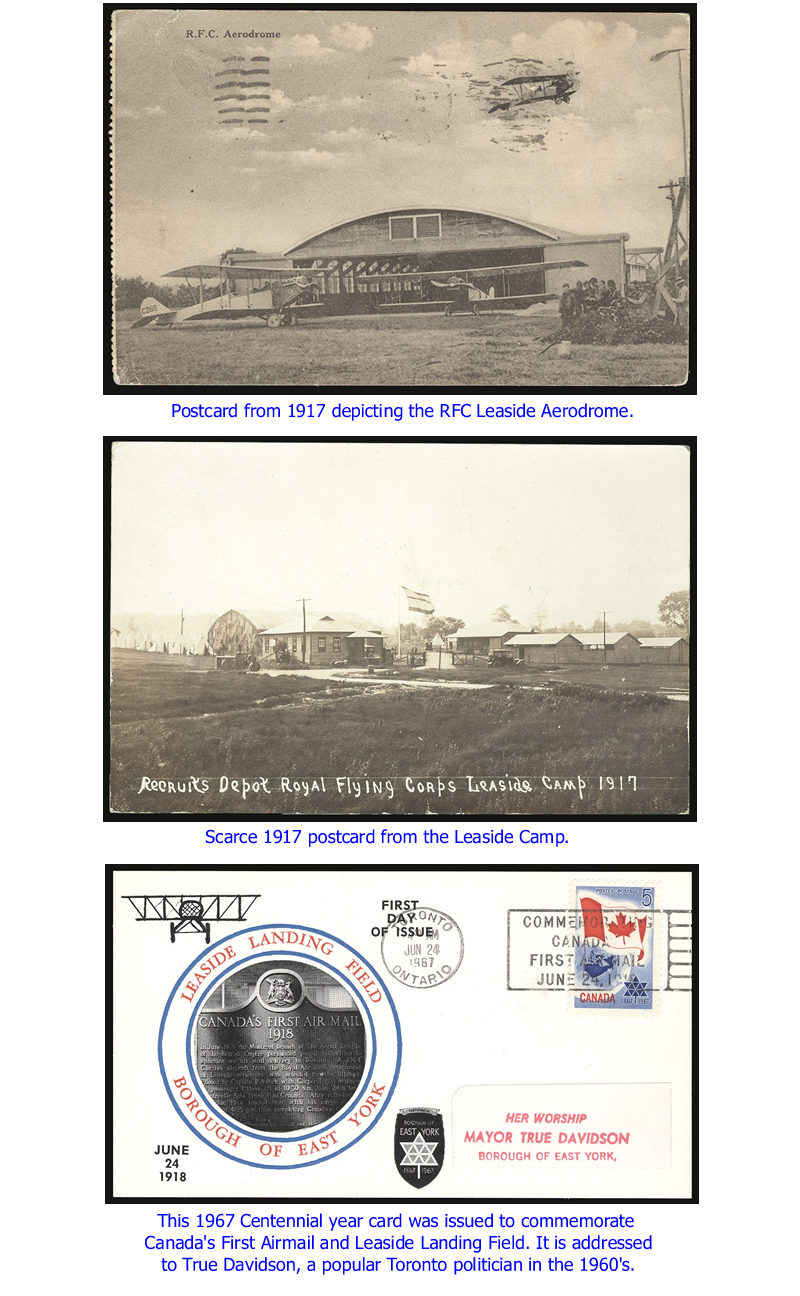
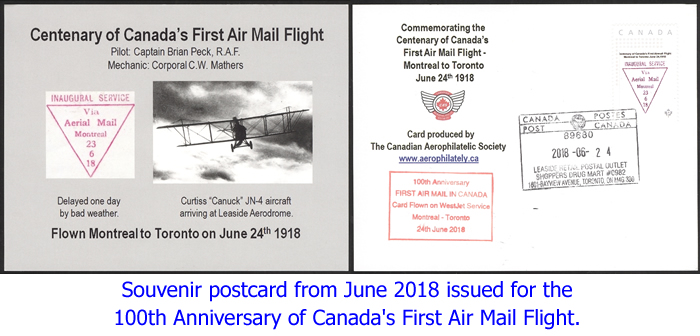
|
|
Great Britain Penny Reds
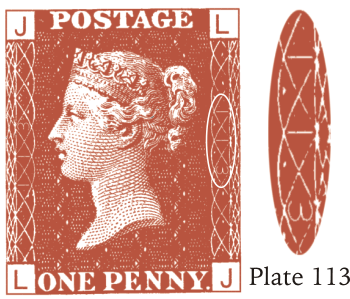 The stamps of Great Britain have always been very popular among collectors. One popular area of specialization is the ‘plating’ of the One Penny Red of 1864. This stamp (Scott #33) was printed from 152 different plates ranging from #71 to #225. The stamps of Great Britain have always been very popular among collectors. One popular area of specialization is the ‘plating’ of the One Penny Red of 1864. This stamp (Scott #33) was printed from 152 different plates ranging from #71 to #225.
With help of a magnifying glass, one can identify the plate number of the stamp by looking in the
scrollwork at either side of Queen Victoria’s portrait. The plate number can make a big difference to the catalogue value, ranging
from $3 for common plates up to $500,000 for the rare Plate #77! Just collecting one copy from each plate would be an accomplishment, but many collectors take it even further and try to reconstruct full sheets of 240 stamps of each plate.
Each sheet is 12 stamps across and 20 stamps down. The stamps across the top row of each sheet have
the initials A-A to A-L in their bottom two corners, and the stamps in the bottom row run from T-A to T-L. Just like the coordinates on a map, the initials identify each stamp’s location on the sheet.
Plate reconstruction is a fascinating pursuit. |
|
|
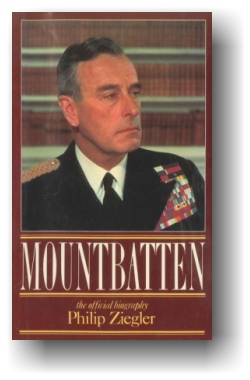 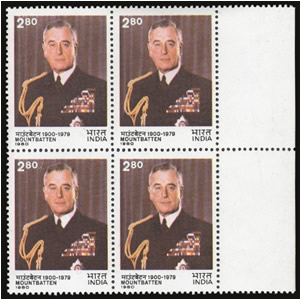 I have always considered Lord Louis Mountbatten I have always considered Lord Louis Mountbatten
to be one of the most interesting men of the 20th Century.
Born into the Royal Family in 1900 (Queen Victoria was his great-grandmother) Mountbatten was handed what seemed to be a charmed life. As a child he spent many holidays with his Royal cousins, including the children of Czar Nicholas of Russia. The future Edward VIII was his best man when he married wealthy heiress Edwina Ashley. He was handsome and charming, played polo, and was equally comfortable with politicians and movie stars. Nevertheless he forged a distinguished naval and military career that placed him at the scene of many important historical events. During WWII he served as Captain of the HMS Kelly, and he later became Supreme Commander South East Asia. From 1947-8 he presided as the last Viceroy and the first Governor-General of India and played a critical part in the events leading to the independence of India and Pakistan. Later he resumed his naval career and became First Sea Lord (1955-9). Mountbatten was killed by an IRA bomb in 1979 while boating in Ireland.
I highly recommend the biography by Philip Ziegler to anyone who wants more details about this intriguing man. It is an unbiased,
in-depth study of the numerous (and sometimes controversial) military and political events in which he played a part.
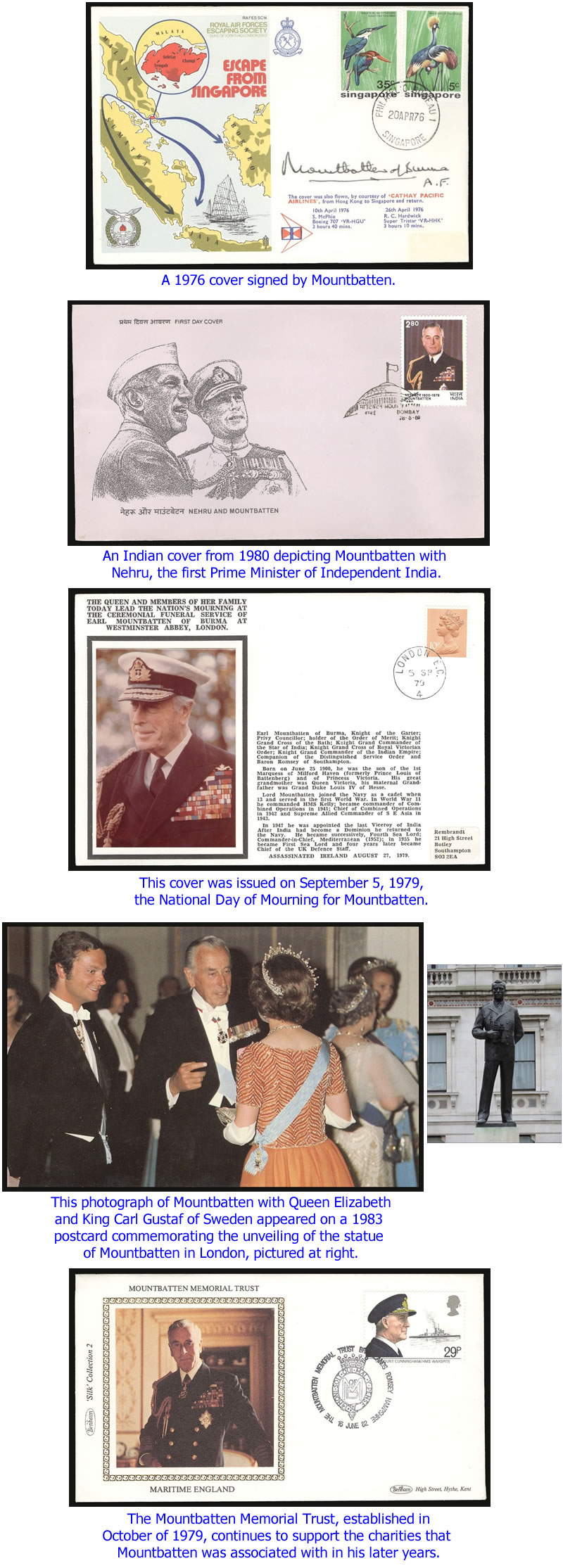
|
|
|
On a quick glance, which of these images depicts a real stamp? The one on the left, or the one on the right?
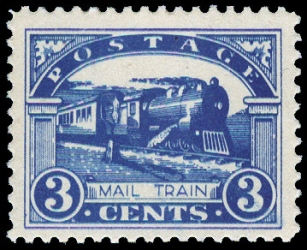 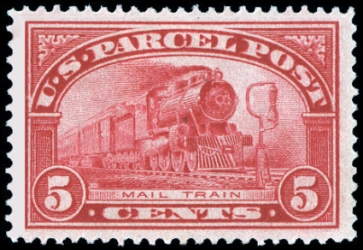
A movie producer in the 1930's was hoping that it would be hard to tell. As the story goes, he broke the law by picturing an actual U.S. stamp in a movie, and he was warned by the Secret Service not to do it again. A studio employee came up with the idea of printing their own stamp that did not actually say 'U.S. Postage'. The result was the blue 'movie stamp' on the left which was printed in three colours - blue, green and red.
Apparently the movie stamps were still not acceptable because they bore too strong a resemblance to the U.S. 5¢ Parcel Post Stamp of 1912 (Scott #Q5, pictured on the right) on which they were no doubt based.
I have seen the movie stamps both perforated and imperforate. They still turn up from time to time, and they make an interesting conversation piece for any collection. |
|
|
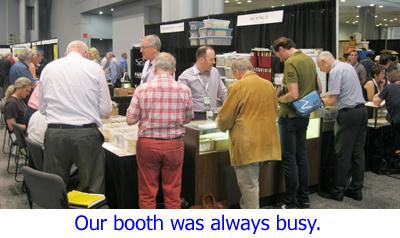
The World Stamp Show that was held in New York in May was a smashing success! Tens of thousands of collectors and dealers from all over the world visited this once-in-a-decade event. From all indications it was the most successful international event ever held in North America.
We were very proud to represent Canada as one of only five Canadian dealers at this major event. We have been booth holders for over 35 years at various philatelic shows and this exhibition was the best and most successful one we have ever attended.

Our booth was busy from start to finish with very active buying and selling. It was a pleasure to meet many of our bidders and renew old acquaintances. We thank all those who stopped by our booth.
When I had a few moments to spare, I particularly enjoyed viewing some of the 4,000+ exhibits (including some submitted by our bidders!) and seeing the fabulous 'Court of Honor' which included the rarest stamp in the world - the famous British Guiana One Penny Magenta. Other highlights included seeing John Lennon's stamp collection and an original 'Jenny' biplane in the lobby of the Javits Center. This was the same type of airplane that is pictured on the USA 24¢ Airmail of 1918. An 'Inverted Jenny' sold at the show auction for $1.3 million.
Plans are already underway for the next 'International' show to be held in Boston in 2026.
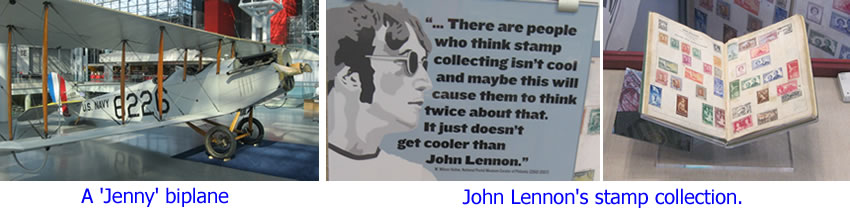
|
|
|
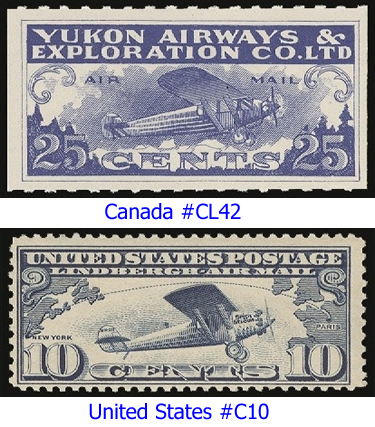 Between
the years of 1924 and 1934, a very interesting chapter of Canadian
philatelic history was written. During this brief period, Canada's
"Semi-Official Airmail Stamps" were issued. Between
the years of 1924 and 1934, a very interesting chapter of Canadian
philatelic history was written. During this brief period, Canada's
"Semi-Official Airmail Stamps" were issued.
Canada is a very large
country with lots of wilderness, and the Canadian Post Office
could not effectively deliver mail to remote areas. It therefore
permitted thirteen private airline companies to print their own
stamps and collect a fee for delivering mail. Many of the pilots
had flown in WWI and were seeking adventure. In places where it
was too difficult to land, the pilot might just throw the mail
bag out of the window.
One of these private companies was
Yukon Airways and Exploration Co. Ltd which had offices in the
Yukon Territory. Their plane, ‘Queen of the Yukon’, was the same
type as Charles Lindbergh had just flown across the Atlantic.
The company issued one blue 25¢ stamp which bears a striking resemblance
to the United States #C10 airmail stamp of 1927 which depicts
Lindbergh’s ‘Spirit of St. Louis’.
In all, the thirteen companies issued
over 50 different stamps, often in very small quantities. Our
auctions always feature Canadian Semi-Official Airmails, on and
off cover. These highly collectible issues are listed in Scott’s 1840-1940 Classic Specialized Catalogue, and in Unitrade’s Specialized
Catalogue of Canadian Stamps with “CL” numbers.
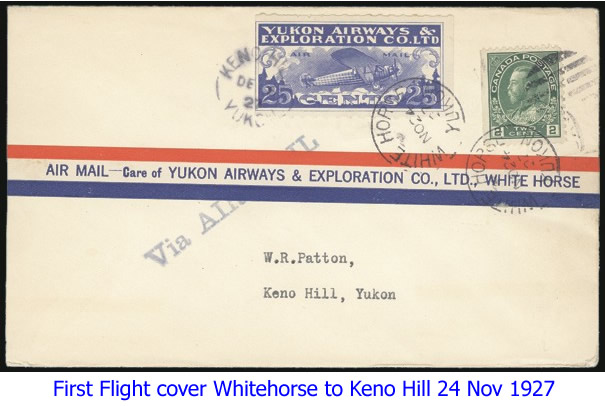
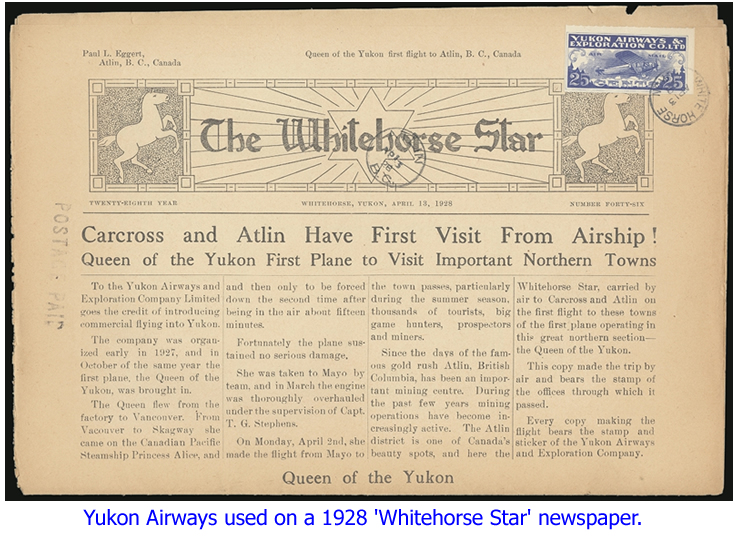
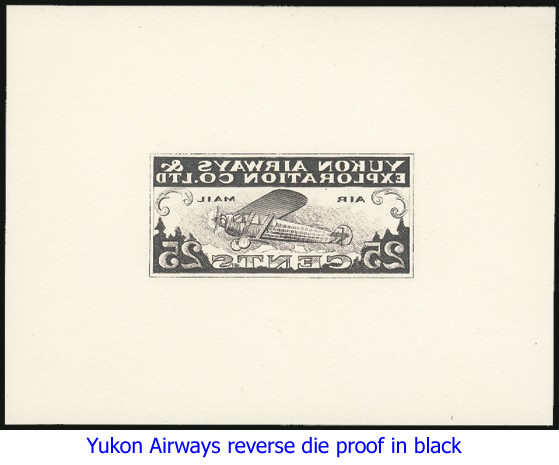
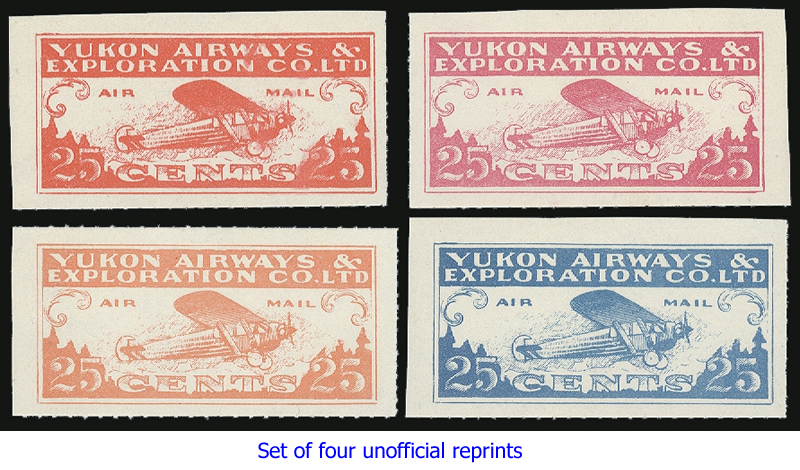
|
|
Herman Herst, Jr.
|
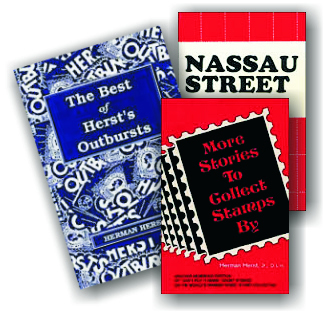 For
any philatelist or stamp dealer, I recommend the writings of Herman
Herst, Jr. (1909-1999). A collector in his youth, and a prominent
stamp dealer and writer from the 1930’s to the 1990’s, Herst wrote
about the hobby we love in thousands of articles and columns as
well as a number of books. He shared his extensive knowledge and
his experiences as a dealer in a most entertaining way. His newsletter
was called Herst’s Outbursts. For
any philatelist or stamp dealer, I recommend the writings of Herman
Herst, Jr. (1909-1999). A collector in his youth, and a prominent
stamp dealer and writer from the 1930’s to the 1990’s, Herst wrote
about the hobby we love in thousands of articles and columns as
well as a number of books. He shared his extensive knowledge and
his experiences as a dealer in a most entertaining way. His newsletter
was called Herst’s Outbursts.
Herst attended hundreds of stamp
shows, and was a popular guest speaker at many a philatelic gathering.
I first met Herman Herst in London England at the 1980 International
Show. I still remember buying a choice cover from him. In his
later years he was an occasional bidder in our auctions. He had
a keen eye for nice USA stamps and covers.
Herst’s most famous book is Nassau
Street, which refers to the location of his first stamp office
in New York City. At one time Nassau Street was called ‘The Street
of Stamps’ because dozens of stamp dealers were located there.
The book’s dedication is a good example of Herst’s humour: “To
my ‘competitors’. God bless every one of them.”
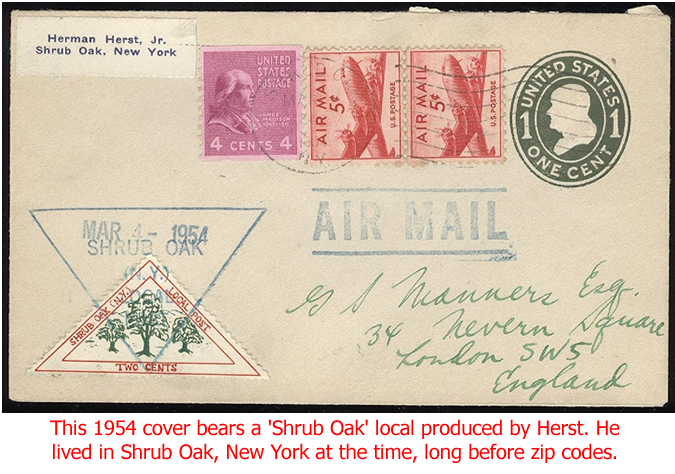
|
|
The Mail Must Be Delivered!
|
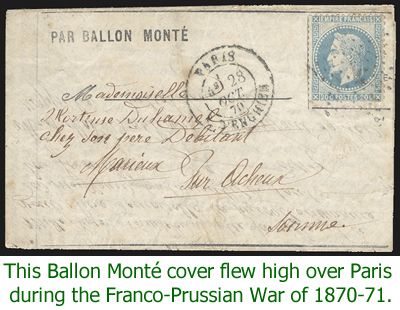
Over
the years, mail has been transported in many different ways. The
traditional methods have made use of horses, trains, ships and
airplanes, but there have also been a number of more unusual modes.
Dogs and pigeons have taken their turns as letter carriers, and
letters mailed from Tonga used to be floated out to waiting ships
in big tin cans. As far back as the 1860’s, some large cities
used pneumatic postal systems that propelled local mail through
underground tubes!
During the Franco-Prussian War of 1870-1, the
city of Paris was under seige, and a couple of unusual methods
were used to get mail in and out of the city. Over 60 flights
were made by piloted balloons which carried mail and passengers.
Covers carried on these flights are called “Ballon Monté”. Mail
was also sent into Paris in large metal balls which were floated
along the Seine River. These scarce covers are referred to as
“Boule De Moulin” covers.
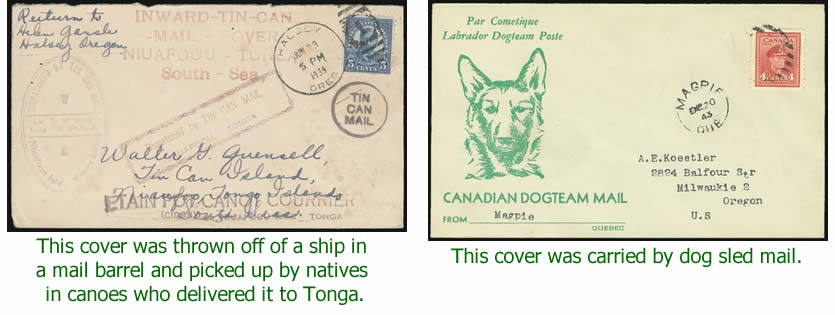
|
|
Mahatma Gandhi
|
Mahatma Gandhi (1869-1948) has long been considered
the father of modern day India. During the era when India was
ruled by the British, he was the preeminent leader of the Indian
independence movement. Gandhi eventually led India to independence
in 1947. His non-violent means of protest became legendary and
inspired movements for civil rights and freedom around the world.
Gandhi has the distinction of being
the first Indian person to be depicted on the stamps of India.
A beautiful set of four different stamps up to the 10 Rupee was
issued in 1948 (Scott #203-6) depicting his image. At the top
left of each stamp is the Hindi word for ‘father’, and on the
right is the Urdu equivalent.
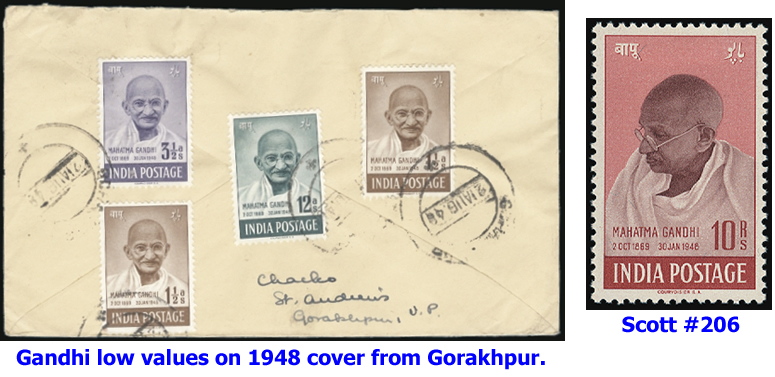
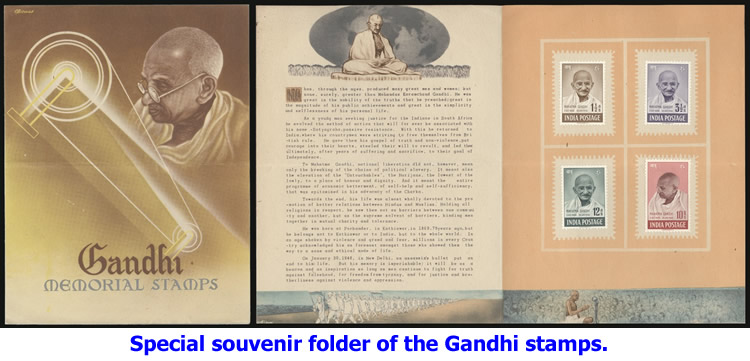
|
|
Canada's Squared Circle Cancels
|
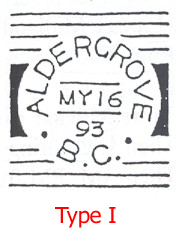 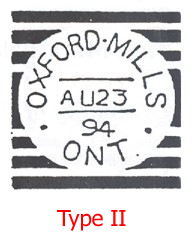 These days more and more collectors seem to specialize in one area or country. One field of philately that has always been popular is that of cancellations. There is a myriad of different cancel types that one can put together to form a very nice specialized collection. These days more and more collectors seem to specialize in one area or country. One field of philately that has always been popular is that of cancellations. There is a myriad of different cancel types that one can put together to form a very nice specialized collection.
In Canada, there has always been a strong interest in Squared Circle postmarks. Squared Circles were used right across Canada from the 1890’s into the 20th Century.
There are two different styles, one with thin bars known as Type I, and the other with thick bars known as Type II. Over 300 towns are known, and these range from common ones like Toronto to rarities like Fonthill and Coleman. The BNAPS book “The Squared Circle Cancellations of Canada” is the definitive handbook on the subject. It illustrates all of the cancels, and lists their rarity factors (RF) and the Canadian stamps they have been found on.
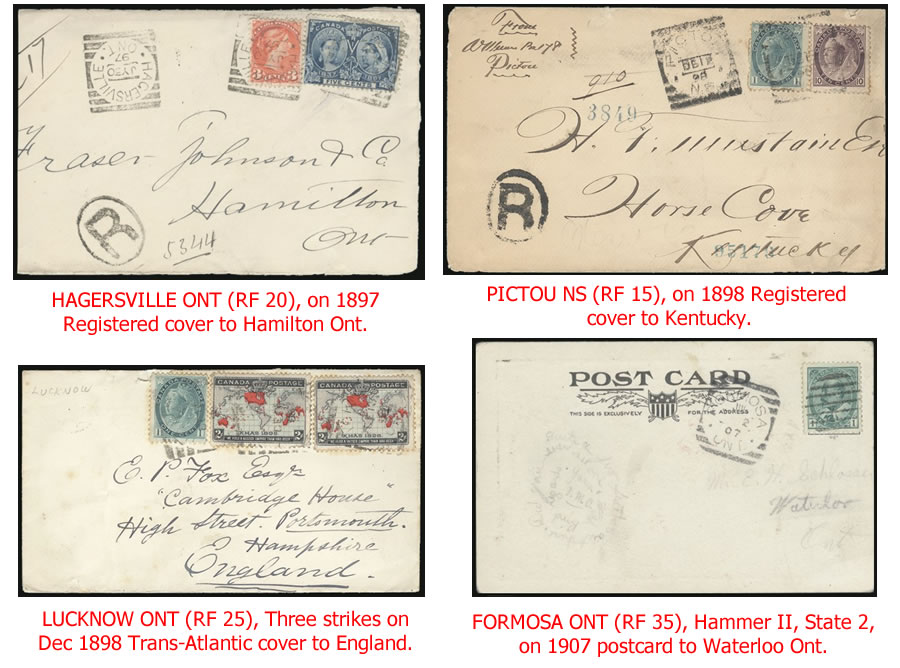
|
|
How Did They Do That?
|
Postal history items from Niger Coast Protectorate are quite scarce because this British Protectorate on the west coast of Africa only issued 63 different stamps from 1892-98. (In 1900, Niger Coast Protectorate stamps were replaced by those of Northern and Southern Nigeria.)
The attractive Niger Coast Protectorate cover pictured here has a remarkable story to tell.
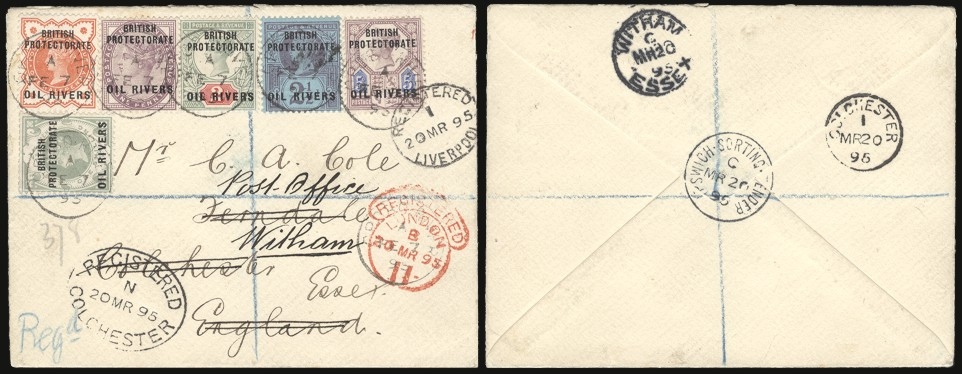
This letter was sent by Registered Mail to Colchester England. It is franked with a complete first set of issues Scott #1-6 that were cancelled at Opobo River on 7 Feb 1895 when the letter began its 40-day voyage to England. The markings on the cover tell the story of what happened once the cover arrived in England.
The cover came ashore in a mail bag at Liverpool on 20 March 1895 and was promptly put on the mail train to London. At the capital it received the Registration handstamp of the same day and was transferred to another London terminal where it was put aboard the Eastern mail train.The Ipswich Sorting Tender backstamp shows that no time was lost - the date is still March 20th.
The Colchester authorities did their duty with another Registration handstamp and attempted to make delivery, however the addressee, Mr. A. Cole, had moved! His new address was found and the cover returned to the Colchester Post Office where it was backstamped again, still on March 20th.
Somehow the mailman got the redirected letter to Witham Essex (about 15 miles away) before the Post Office closed for the day ON MARCH 20TH!
This letter was taken from one side of England to the other, then redirected, and was still delivered the same day! This strikes me as an incredible feat of efficiency in the days long before motorized delivery vans and automated sorting machines. How did they do that?
|
|
Royal 2015 Stamp Convention
|

We
very much enjoyed meeting many of our bidders at the annual Royal
Philatelic Society of Canada Convention which was held in London
Ontario in May 2015.
Stamp collectors and dealers came
from across Canada, the United States and overseas to attend.
Our booth was very busy all three days of the bourse. The convention was a first class event and was bustling with activity
from the opening hour to the closing. I particularly enjoyed viewing
the many fine exhibits on display.
|
|
German Colonials
|
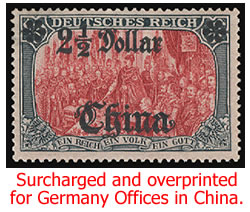 A
country’s history is told through its stamps. Much can be learned
about an interesting era of Colonialism by studying the philatelic
history of Germany’s colonies and the post offices that it established
abroad in China, Morocco, and the Turkish Empire. A
country’s history is told through its stamps. Much can be learned
about an interesting era of Colonialism by studying the philatelic
history of Germany’s colonies and the post offices that it established
abroad in China, Morocco, and the Turkish Empire.
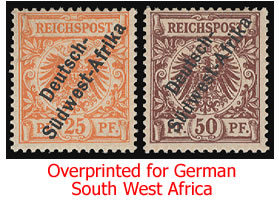 Like
other European countries, Germany had colonies located in Africa,
the South Pacific, and Asia. Before official stamps were issued
for these overseas territories, German definitives were used.
These stamps were known as forerunners or “Vorlaufer”, and can
only be identified by clear town cancels indicating their point
of origin. In the late 19th Century, overprinted stamps for individual
colonies were issued. Like
other European countries, Germany had colonies located in Africa,
the South Pacific, and Asia. Before official stamps were issued
for these overseas territories, German definitives were used.
These stamps were known as forerunners or “Vorlaufer”, and can
only be identified by clear town cancels indicating their point
of origin. In the late 19th Century, overprinted stamps for individual
colonies were issued.
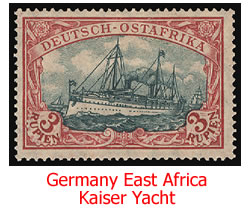 By
about 1900, the Yacht series (commonly called the Kaiser Yacht)
was introduced. These stamps were printed with individual colony
names, and all had the same design depicting the Imperial Yacht
SMY HOHENZOLLERN. A smaller size was used for the lower values,
and a larger one for the higher values. Interestingly, some of
the Yacht stamps would later be overprinted during and after WWI
when some German colonies came under the control of other nations
such as Britain, France, and Belgium. By
about 1900, the Yacht series (commonly called the Kaiser Yacht)
was introduced. These stamps were printed with individual colony
names, and all had the same design depicting the Imperial Yacht
SMY HOHENZOLLERN. A smaller size was used for the lower values,
and a larger one for the higher values. Interestingly, some of
the Yacht stamps would later be overprinted during and after WWI
when some German colonies came under the control of other nations
such as Britain, France, and Belgium.
|
|
New Zealand Advertising Stamps
|
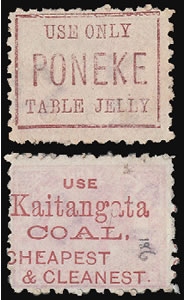 Sometimes the back of a stamp is even more interesting than the front. For example, Latvia’s first stamps were printed on the backs of old German military maps. From 1915-17, Russia put inscriptions on the backs of stamps and used them as paper money. Sometimes the back of a stamp is even more interesting than the front. For example, Latvia’s first stamps were printed on the backs of old German military maps. From 1915-17, Russia put inscriptions on the backs of stamps and used them as paper money.
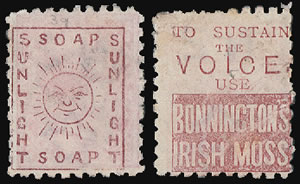 Probably the most interesting stamps in this area are the advertisement stamps of New Zealand.
During the 1890’s, the New Zealand Post Office sold advertising space on the backs of various Queen Victoria issues. This was an enterprising idea that generated revenue from both sides of the stamps! Probably the most interesting stamps in this area are the advertisement stamps of New Zealand.
During the 1890’s, the New Zealand Post Office sold advertising space on the backs of various Queen Victoria issues. This was an enterprising idea that generated revenue from both sides of the stamps!
The advertisements offer a fascinating insight into the social history of the colonial past with ads for things like soap, pills, tea, jelly, sewing machines, coal, coffee, and pickles.
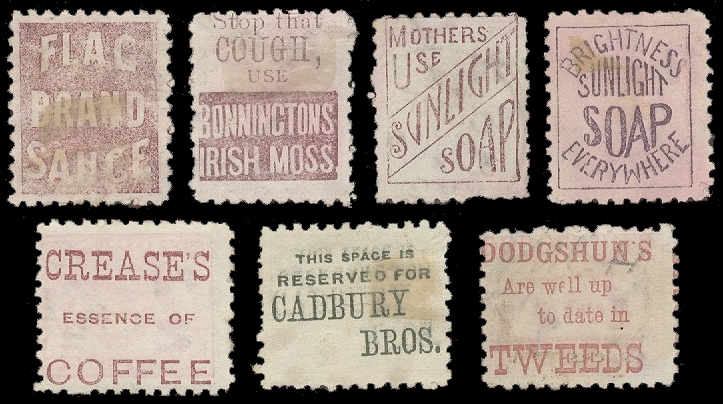
|
|
The United States Kansas-Nebraska Issue
|
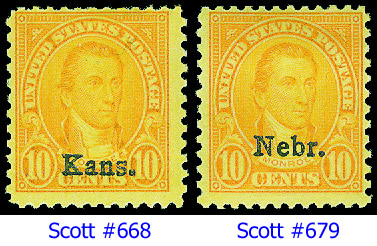
There is an interesting story behind the Kansas-Nebraska overprinted stamps of the United States.
In the late 1920’s, many small mid-west post offices were being plagued by burglaries. Stolen mint stamps were being transported to other states where they were sold to unsuspecting buyers. In hopes of curtailing these illegal activities, United States Postal Officials considered a plan to overprint stamps of the existing 48 states with the name of the state in which they were sold.
1n 1929, Kansas and Nebraska were chosen as the test states. Eleven different definitive values from 1¢ to 10¢ were overprinted “Kans.” and “Nebr.” and shipped to post offices in those states. Unfortunately the plan never really worked out because the burglars quickly figured out that they would not raise suspicion if they sold the stolen stamps within the same state.
The idea of state overprinted stamps was dropped, but the Nebraska and Kansas overprinted sets became popular among collectors.
Ironically, the stamps at the heart of a plan to thwart burglars became the target of counterfeiters. Because of the relative scarcity of some of the denominations, forged overprints started showing up as early as 1930.
Here are a few quick checks to make sure that the overprints on these issues are genuine:
- The stamps should all be perforated 11 x 10½. If anything other than this perf, you have a fake.
- The genuine Kansas overprints measure 9.2mm wide, while the genuine Nebraska overprint is 9mm wide.
- The genuine mint stamps have 14 vertical gum ridges which were applied after printing to control the amount of gum flow. There is also a single horizontal gum breaker on the genuine issues. These breaker bars were applied 21mm apart to help prevent the sheets from curling. It is possible to have two of the horizontal breakers on the genuine stamps, but they must be at the extreme top and bottom, and 21mm apart. Multiple horizontal gum breakers indicate that the overpint is fake.
- An ultra-violet lamp can be very helpful. The ink of the genuine overprint is black and will not fluoresce in any other colour.
|
|
Dr. Norman Bethune
|
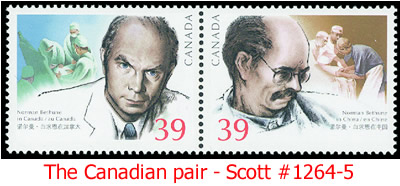 Norman Bethune was a Canadian doctor whose drive to improve the quality and availability of health care made him a hero in two countries. Born in 1890 in Gravenhurst, Ontario, Bethune practiced medicine in Canada until 1938. Heavily influenced by his own near-fatal bout of tuberculosis, he strove to make a difference by improving equipment and treatment techniques. Appalled that the medical system was available primarily to affluent members of society, he was an early advocate of socialized medicine. His motives were sometimes mistakenly labeled as political, but he was simply driven by a need to act and to help where help was needed. Norman Bethune was a Canadian doctor whose drive to improve the quality and availability of health care made him a hero in two countries. Born in 1890 in Gravenhurst, Ontario, Bethune practiced medicine in Canada until 1938. Heavily influenced by his own near-fatal bout of tuberculosis, he strove to make a difference by improving equipment and treatment techniques. Appalled that the medical system was available primarily to affluent members of society, he was an early advocate of socialized medicine. His motives were sometimes mistakenly labeled as political, but he was simply driven by a need to act and to help where help was needed.
 Bethune became a national hero in China because of his medical service there. He went to China in 1938 when China was at war with Japan. He organized hospitals in the field and served tirelesly as a battle surgeon at great personal risk. Bethune served in China for about 21 months and died there of blood poisoning. I recently enjoyed watching a fine move of his life starring Donald Sutherland. Bethune became a national hero in China because of his medical service there. He went to China in 1938 when China was at war with Japan. He organized hospitals in the field and served tirelesly as a battle surgeon at great personal risk. Bethune served in China for about 21 months and died there of blood poisoning. I recently enjoyed watching a fine move of his life starring Donald Sutherland.
A pair of stamps honouring Dr. Norman Bethune was issued by both Canada and the People's Republic of China on the centennial of his birth in 1990. The Canadian and Chinese stamps share the same designs and were printed se-tenant. The brown stamp of the pairs depicts Bethune in China, and the blue stamp shows him in Canada.
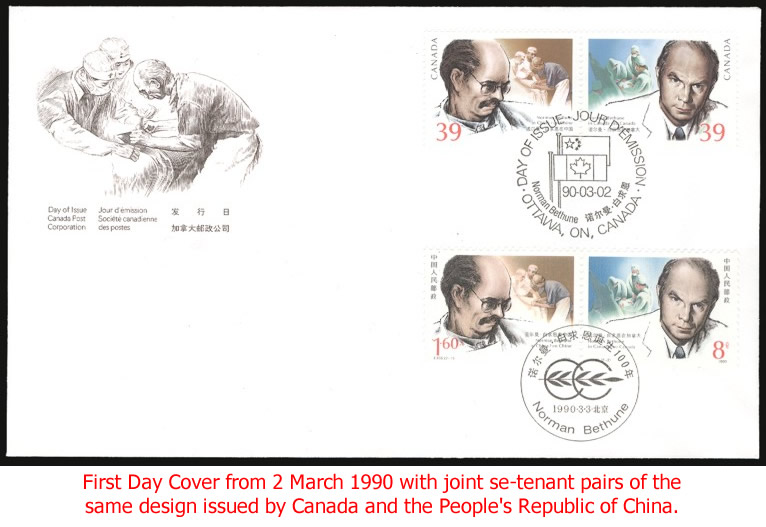
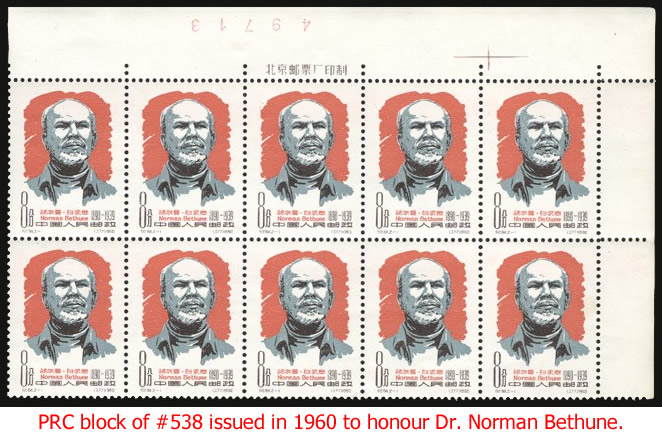
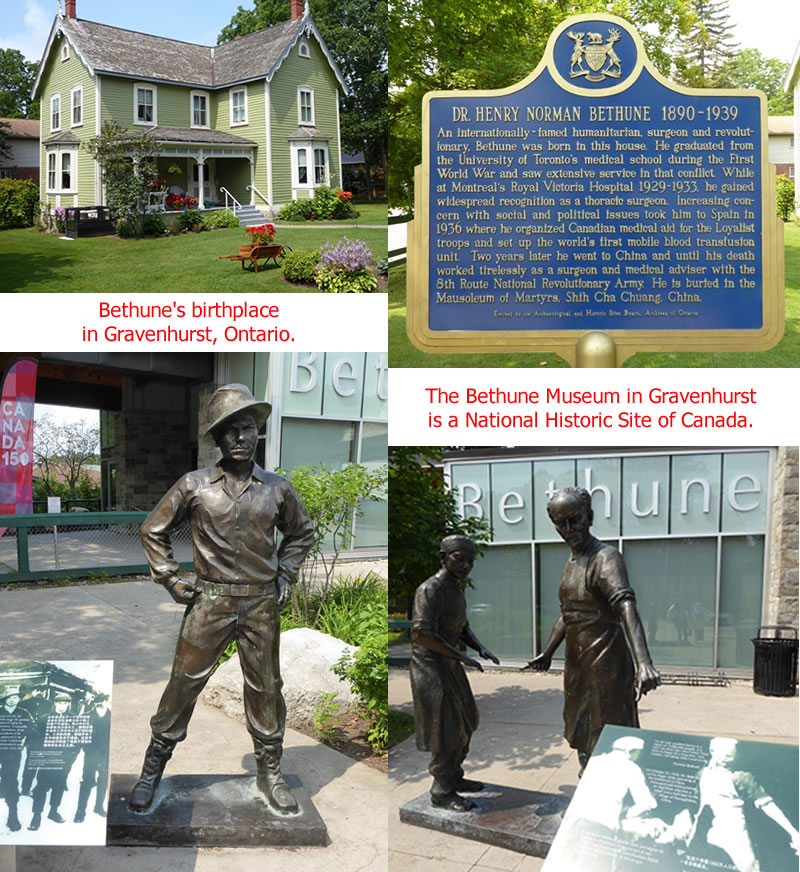
|
|
The 1939 Royal Visit of KGVI and Queen Elizabeth
|
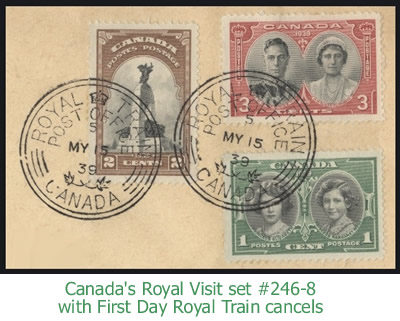
2014 marks the 75th Anniversary of the 1939 Royal Visit of King George VI and Queen Elizabeth to Canada and the United States. The four-week tour from May 17th to June 17th was ground-breaking
as it was the first time that a reigning British monarch set foot in North America.
After crossing the Atlantic in the famous passenger ship ‘Empress
of Australia’, the royal tour began in Quebec on May 17th where the couple was warmly received. The next day they boarded the deluxe
12-car Royal Train accompanied by Prime Minister W.L. Mackenzie
King, four Mounties, officials, and support staff. Crowds gathered wherever the train stopped for special events all across Canada.
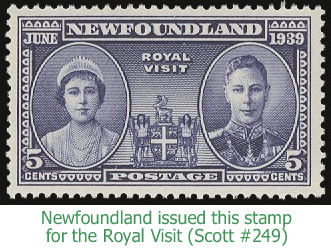
The
tour also took the royal couple to the United States where they met President Franklin D. Roosevelt and visited the New York World’s Fair.
The final stop of the tour was Newfoundland, which was still a British Colony at the time.
The Royal Train had its own postal unit on board. Letters and stamps bearing special Royal Train cancels are highly collectable and are regularly offered in our auctions.
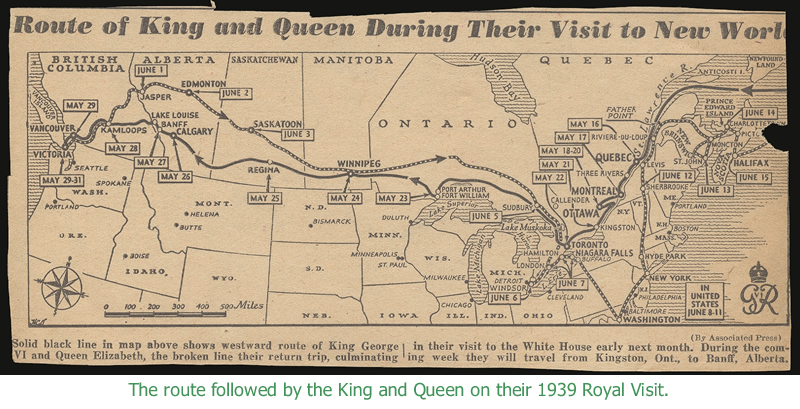
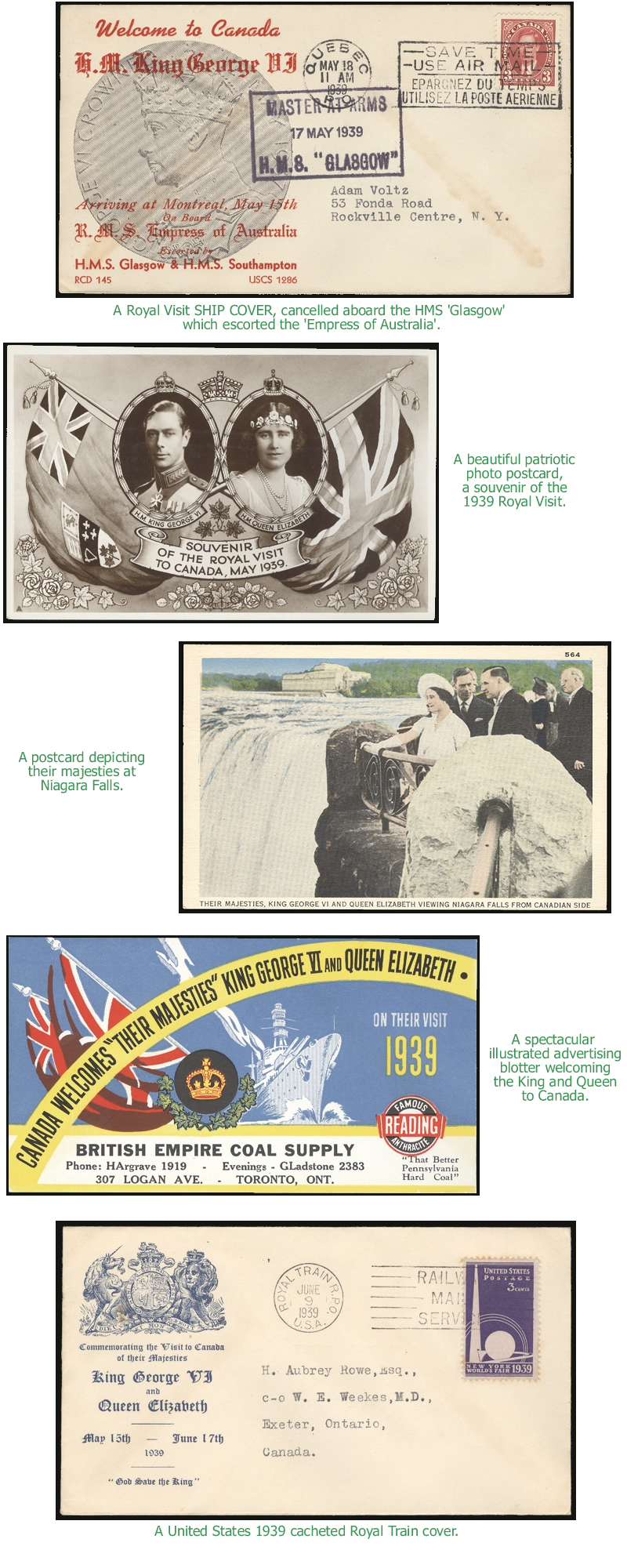
|
|
Famous Canadian Stamp Dealer K. Bileski
|
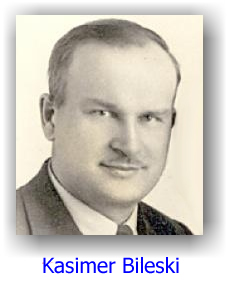 Over
the years I have had the good fortune to meet many famous Canadian
stamp dealers including J.N. Sissons, Jim Webb, Fred Jarrett,
Bill Maresch, Art Leggett, Harry Martin Jr., George Wegg, Allan Steinhart, and Dick Lamb.One of the most notable stamp dealers in all of Canada was Kasimer
Bileski of Winnipeg. Over
the years I have had the good fortune to meet many famous Canadian
stamp dealers including J.N. Sissons, Jim Webb, Fred Jarrett,
Bill Maresch, Art Leggett, Harry Martin Jr., George Wegg, Allan Steinhart, and Dick Lamb.One of the most notable stamp dealers in all of Canada was Kasimer
Bileski of Winnipeg.
Bileski first started selling stamps in the
1920’s and carried on right up to his death in 2005 at the age
of 96. His entertaining advertisements appeared everywhere, and
he sold stamps to tens of thousands of collectors in his lifetime.
His offerings were usually accompanied by an interesting typewritten
write-up that made it hard for potential customers to resist.
He attended many major auctions where he acquired parts of the
President Franklin D. Roosevelt collection, the accumulation of
King Farouk of Egypt, and the American Bank Note Archives.
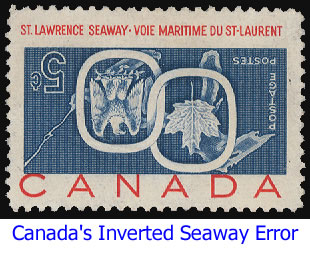
In 1959, Bileski was instrumental
in promoting the discovery of Canada’s most famous error - The
Inverted Seaway. He appeared on the popular CBC television show
“Front Page Challenge” and stumped the panel with news of this
error. In the early 1960’s, I remember Bileski coming into my
father’s Toronto stamp and coin store and offering the Seaway
Inverts for $1,000.00 each. The Seaway Invert now catalogues $16,000.00
for a VF mint single!
Over the past few years we have acquired
portions of the legendary Bileski stock as it has come up for
sale, and it has provided many interesting lots for our auctions.
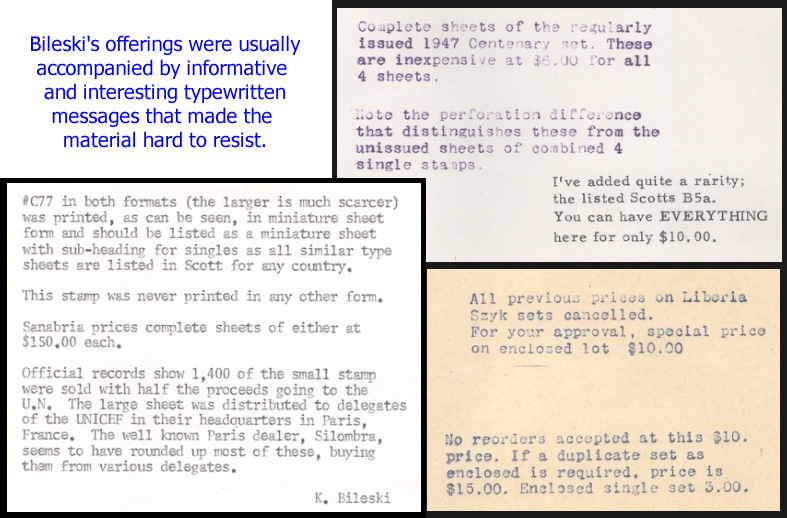
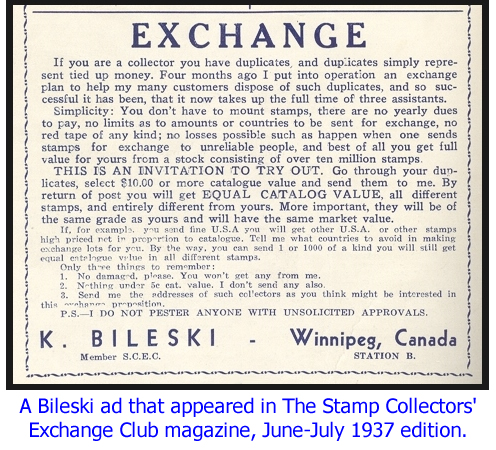
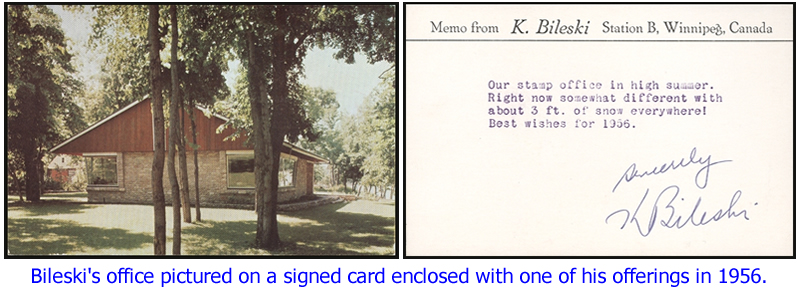
|
|
The Wilding and Machin Portraits of Queen Elizabeth
|
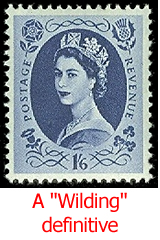 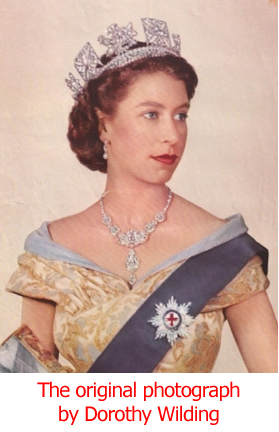
Queen
Elizabeth took over the throne of England in 1952. For the
first fifteen years of her reign, the country’s definitive issues
bore a portrait based on a famous photograph taken by Dorothy Wilding (1893-1976), a noted British society photograper.
In 1967, a new design by Arnold Machin was adopted.
Machin rendered the very intricate image from photographs of his
own sculpture. While the Queen’s image on Britain’s coins and
paper money has been updated from time to time, Machin’s image
still appears on the definitive stamps.
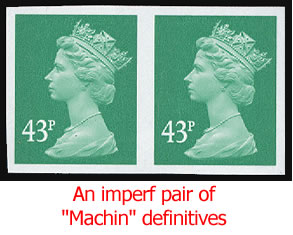 Possibly the most reproduced work of art in history,
the iconic Machin image has appeared on well over 500 stamps,
spanning the change from sterling currency to decimal currency.
For over 40 years, the Machin Head issues have been produced in
many different colours and denominations, with different perforations
and phosphor taggings. They have been issued as single stamps
and in booklets, as British issues and as Regional issues. The
subject has filled several specialized reference books and created a never ending source
of study and pleasure for the Machin collector. Possibly the most reproduced work of art in history,
the iconic Machin image has appeared on well over 500 stamps,
spanning the change from sterling currency to decimal currency.
For over 40 years, the Machin Head issues have been produced in
many different colours and denominations, with different perforations
and phosphor taggings. They have been issued as single stamps
and in booklets, as British issues and as Regional issues. The
subject has filled several specialized reference books and created a never ending source
of study and pleasure for the Machin collector.
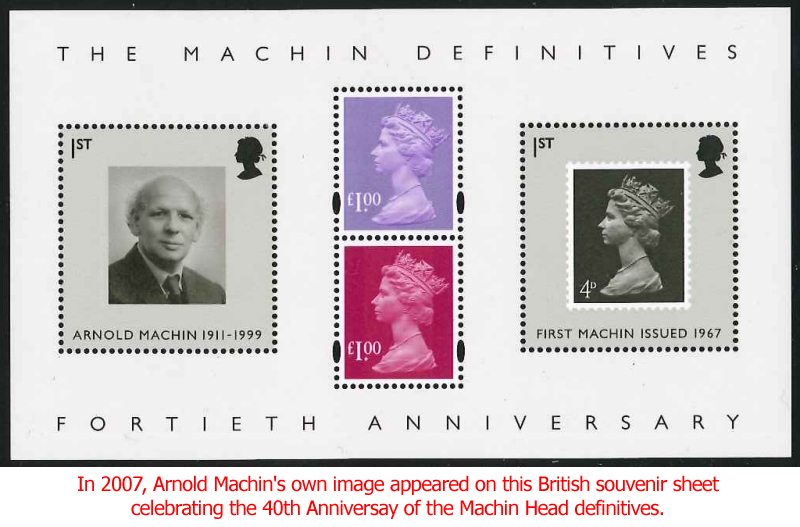
|
|
Little Norway
|
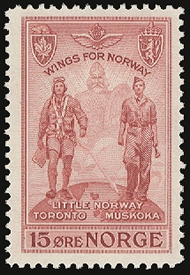
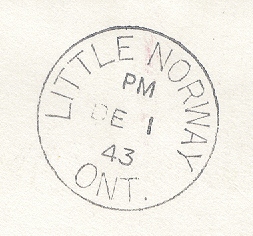 During World War II, Canada became home to thousands of Allied servicemen who received training here. During World War II, Canada became home to thousands of Allied servicemen who received training here.
More than 2,600 of these servicemen were Norwegians who had escaped from Nazi-occupied Norway. Their basic flight training camps, first in Toronto Ontario, and later in Muskoka Ontario near Gravenhurst, became known as "Little Norway".These camps even had their own postal cancellations.
The Norwegian Royal Family visited Camp Norway several times. Just a boy on his first
visit, King Harald returned in 2002 on a state visit to celebrate the special connection between Canada and Norway.
In 1946, Norway issued a stamp honouring the Little Norway training centres (Scott #274).
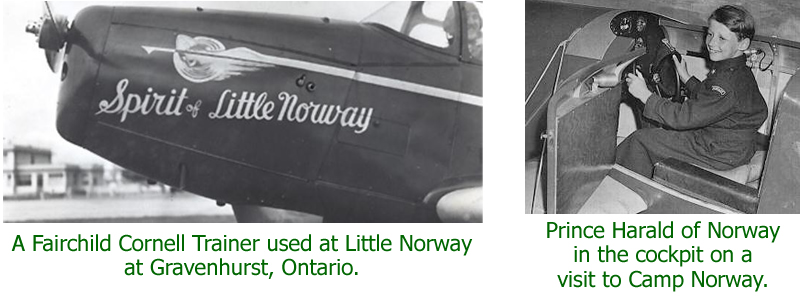
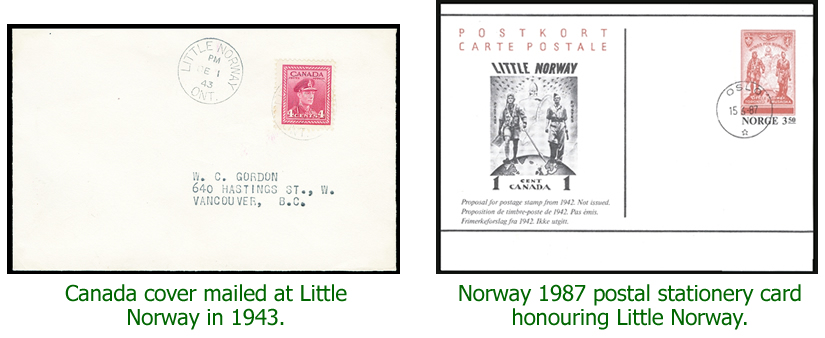
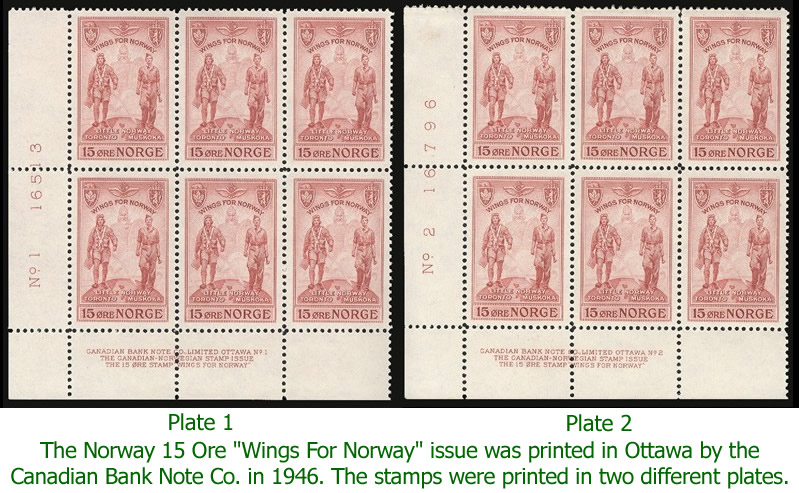
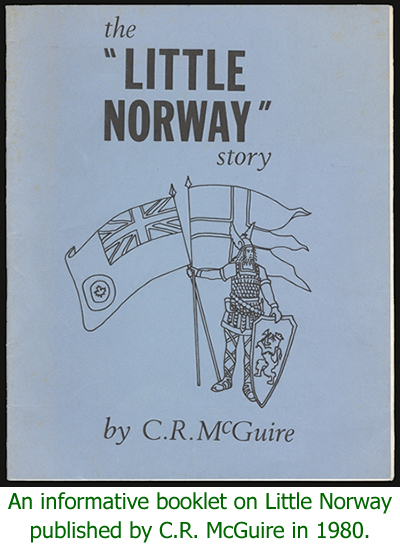
|
|
The Siege of Mafeking
|
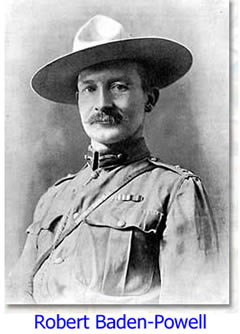  The
Siege of Mafeking in South Africa from 1899 to 1900 was one of
the most famous military actions of the Boer War. For 217 days
a Boer force of over 8,000 troops surrounded a much smaller British
garrison under the command of Colonel Robert Baden-Powell. Mafeking
was defended by only 1,500 men including local volunteers, but
to the enemy the force seemed much stronger because of Baden-Powell’s
brilliant military tactics. The
Siege of Mafeking in South Africa from 1899 to 1900 was one of
the most famous military actions of the Boer War. For 217 days
a Boer force of over 8,000 troops surrounded a much smaller British
garrison under the command of Colonel Robert Baden-Powell. Mafeking
was defended by only 1,500 men including local volunteers, but
to the enemy the force seemed much stronger because of Baden-Powell’s
brilliant military tactics.
Baden-Powell's snipers were sent out during the night to lay in wait near the enemy camp until almost sunset the next evening. With their targets well illuminated and the enemy blinded by the setting sun, the snipers could take their best shots from relative safety.
Baden-Powell's employed a number of 'bluffs' that made the Boers believe Mafeking was much better protected than it actually was. He sent residents to the outskirts of the town where they made a big show of burying hundreds of metal boxes. A 'test' was performed by igniting a stick of dynamite, and the Boers were convinced that Mafeking was surrounded by a mine field.
The town's only searchlight was moved regularly to give the impression that many existed. The illusion that the town was surrounded by searchlights discouraged the Boers from attacking at night.
When the supply of barbed wire ran out, Baden-Powell's men strung imaginary wire around new trenches, and then pretended to crawl under the non-existent obstacles. Watching from afar, the Boer scouts reported that the trenches were all protected by barbed wire.
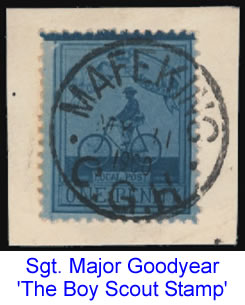
Men could not be spared to deliver
military messages and civilian mail, or to keep look-out, so Baden-Powell
formed a cadet corps of boys as young as 9 years old to perform
these and other important duties.
Defying the odds, the British
held out and the siege was lifted when the Boers retreated in
May of 1900. Following the siege Baden-Powell became a national
hero, and would later start the Boy Scout movement based on the
brave boys of the cadet corps of Mafeking who had literally served
as ‘scouts’.
Various stamps were issued for local use during the
siege, including two depicting Baden-Powell, and one depicting
Warren Goodyear, a 12-year old cadet, delivering mail on his bicyle.
Goodyear is considered to be the first Boy Scout.
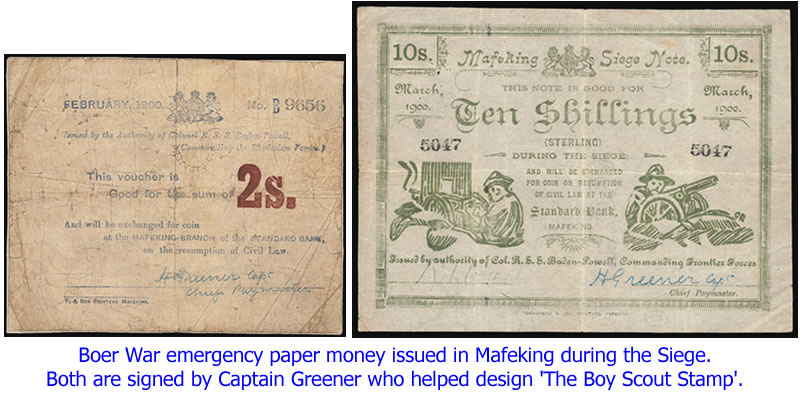
|
|
Newfoundland Trail of the Caribou
|
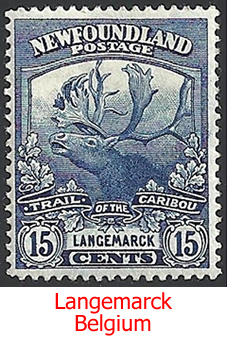 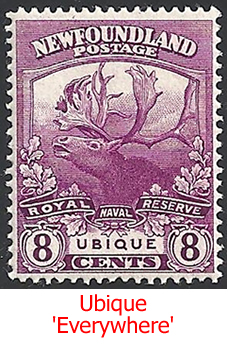 At
first glance, the Newfoundland “Trail of the Caribou” set of 1919
appears to be a standard set of twelve identical stamps. However,
when you look closer, the stamps tell you the story of the major
contribution made by Newfoundland during World War I. At
first glance, the Newfoundland “Trail of the Caribou” set of 1919
appears to be a standard set of twelve identical stamps. However,
when you look closer, the stamps tell you the story of the major
contribution made by Newfoundland during World War I.
Beneath
the caribou, which is actually a composite drawing of a moose
and a caribou, eight of the stamps bear the names of places in
Europe where Newfoundlanders fought. The other four stamps bear
the word ‘Ubique’ meaning ‘everywhere’ to honour the work of Newfoundland’s
Royal Naval Reserve. This majestic and historic set is listed in Scott as #115-26.
The six thousand men who joined the
Newfoundland Regiment went to war wearing a badge depicting the
head of the caribou on their uniforms.
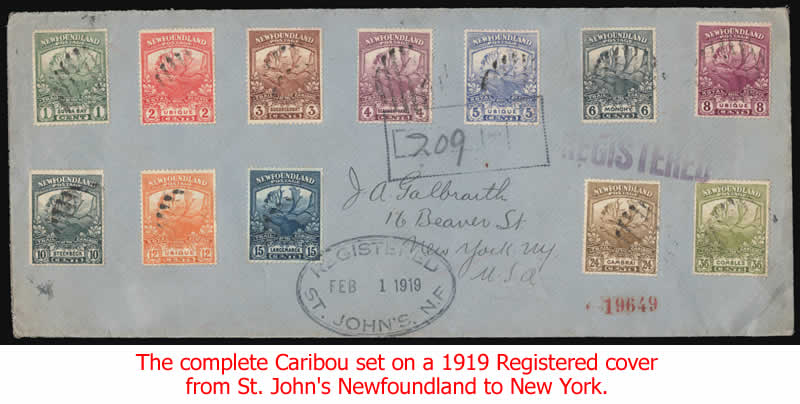
|
|
Canada's 1927 Special Delivery Stamp
|
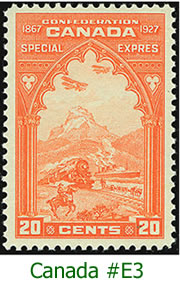
In 1927, the 60th Anniversary of Canadian Confederation saw the release of Canada’s only commemorative Special Delivery issue. The designer of this beautiful engraved stamp managed to depict five methods of mail transportation in a very small area - air, ship, train, horseback, and dog sled!
Canada #E3 is unusual for a number of reasons. No other Canadian stamp up to
that time had depicted a dog, an airplane, an ocean liner, or a horse. It is the only vertical Special Delivery stamp, and the only one without the word ‘Delivery’. If you get out your magnifying glass and look very closely at the horseman’s mail bag, you can see that it reads “Canada P.O.”, perhaps the tiniest lettering on any Canadian stamp.
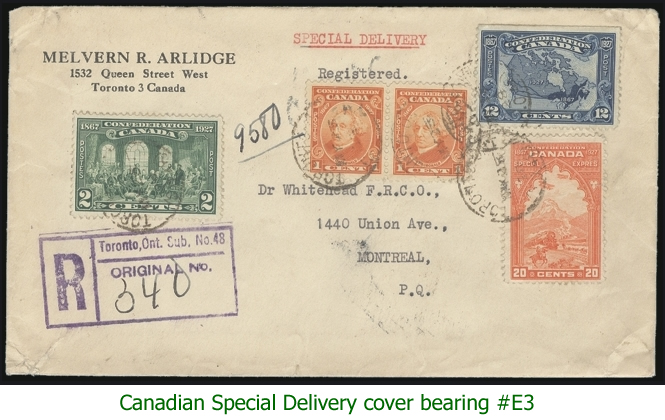
|
|
Newfoundland's Signal Hill and Marconi
|
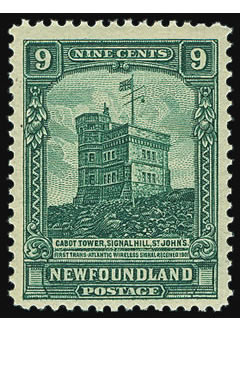
This Newfoundland stamp depicts Cabot Tower,
which was built in 1897 on Signal Hill high above the entrance to St. John’s harbour. The story of Signal Hill is a fascinating chapter in our maritime history.
For centuries, in war and peace, signalmen were stationed on the hill to scan the sea for approaching ships. When a ship was identified,
a signal flag would be run up one of the tall masts on the hill to notify the ship’s owner or agent in St. John’s of the ship’s arrival.
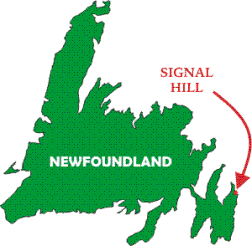 Having long played a significant role in communication with flags, the hill became the centre of a major event in a new type of communication in 1901. Because it was situated high on the eastern coast of North America, Guglielmo Marconi chose Signal Hill to be the receiving site for his experiments in Trans-Atlantic radio transmission. Though some scientists doubted that a radio signal could travel further than the horizon due to the Having long played a significant role in communication with flags, the hill became the centre of a major event in a new type of communication in 1901. Because it was situated high on the eastern coast of North America, Guglielmo Marconi chose Signal Hill to be the receiving site for his experiments in Trans-Atlantic radio transmission. Though some scientists doubted that a radio signal could travel further than the horizon due to the
earth’s curvature, Marconi persisted in his experiments and on December 12, 1901
radio signals from Cornwall England were received on Signal Hill.
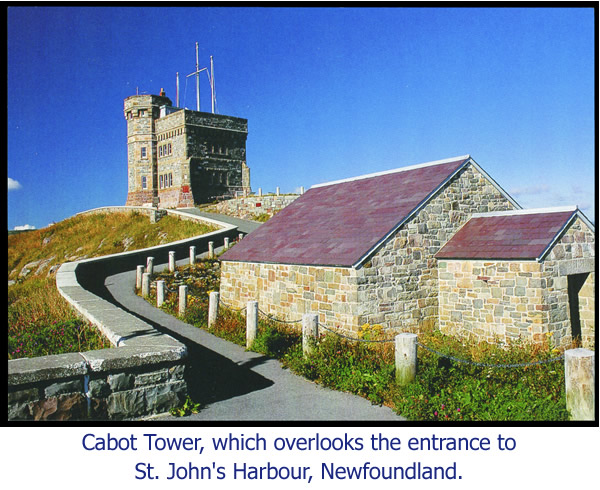
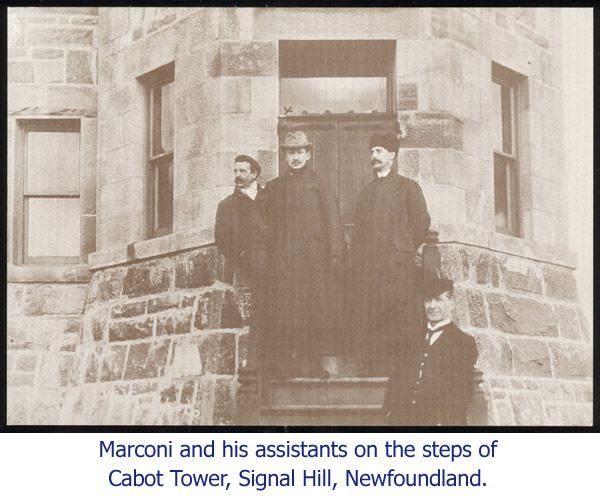
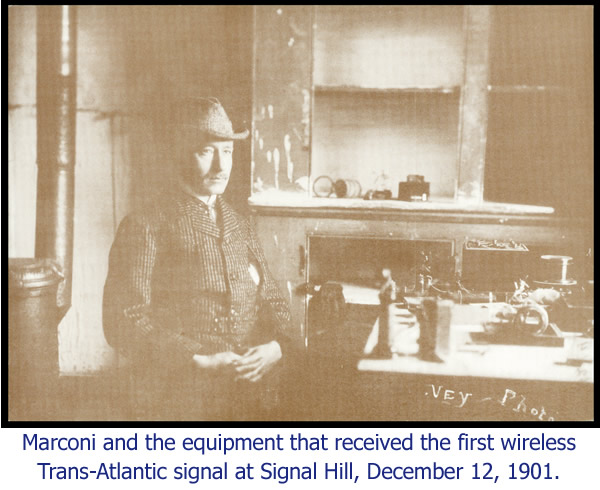
|
|
Stamp Collecting Documentary
|
Vance Auctions has just pledged $500 to assist in the creation of this worthwhile documentary by our friend Mark Cwiakala. Please visit http://kck.st/105ioIZ if you also feel this project is worthwhile. The trailer is fantastic and definitely worth watching. Here is the personal appeal from Mark:
Hello!
We are reaching out to the stamp collectors of the world to tell them about our film project, the first, feature-length documentary on stamp collectors.
Freaks & Errors: A Rare Collection, is a film that reveals this little known hobby to create excitement and awareness. In the film, we are searching out who collects stamps and more importantly ... why? In addition, we will reveal some of the legendary stories in the hobby. The film attempts to uncover the common influences that connect all stamp collectors and whether nurture, nature or both is the driving force behind a collectors “gene”. In addition, we’ll unveil the global world of philatelic business, including high-valued auctions, anonymous collectors, mysteries and scandals.
This film is extremely personal to me, this is a world I grew up in and I've always been fascinated on how much it impacted my life. We have been filming fpr the last year and have exhausted our funds. This lead us to Kickstarter, the crowd-sourced community fund raising site. By partnering with Kickstarter, we are pushing to raise awareness of the the film and the hobby, as well as raise additional funds we need to complete production and post-production.
Stamp collecting is not the hobby that it once was, this is in part to technological distractions and overload of other entertainment options, but we have seen the spark ignite in a non-collector's eye when we mention stamp collecting, the people involved and that we are making a film about it. At the least, we want this film to reach an audience that will leave the theatre with a curiosity and respect for a noble hobby, at the most, we would love to see the same audience become part of the hobby.
We are asking you to please spread the word about our fundraising efforts, our goal is $75,000, in 30 days. Become a part of the film by donating, or by being an ambassador and spreading the word, either way, we greatly any and all support and are available for any questions.
Attached is a link to Kickstarter: http://kck.st/105ioIZ
If you will, let as many collectors know about it as you can and we can bring stamp collecting to the masses!
Thanks,
Mark
Mark Cwiakala
Director
Freaks & Errors: A Rare Collection |
|
Why Tulips Have a Special Meaning to Canadians
|
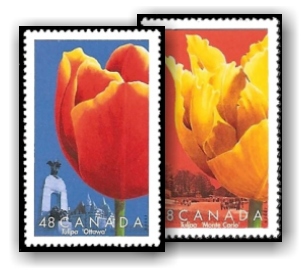 Tulips
have very special meaning to Canadians. It began during World
War II when a strong bond was formed between Canada and the Netherlands. Tulips
have very special meaning to Canadians. It began during World
War II when a strong bond was formed between Canada and the Netherlands.
Queen Wilhelmina was on the Dutch throne in 1940 when the German
Occupation of Holland began, and she sent her daughter, the Crown
Princess Juliana, and her family to Canada for safety.
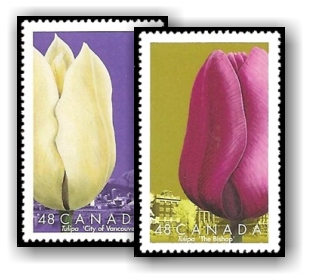 The Royal
family lived near Ottawa, and in January of 1943 Princess Juliana
gave birth to her third daughter, Margriet, in Ottawa Civic Hospital.
It is said that pots of earth from Holland were placed under the
bedposts so that the new princess would be born on Dutch soil. The Royal
family lived near Ottawa, and in January of 1943 Princess Juliana
gave birth to her third daughter, Margriet, in Ottawa Civic Hospital.
It is said that pots of earth from Holland were placed under the
bedposts so that the new princess would be born on Dutch soil.
After Princess Juliana’s family returned to Holland in 1945, Queen
Wilhelmina sent 100,000 tulip bulbs to Canada as a way of thanking
Canadians for Princess Juliana’s safe exile, and for the role
that Canadian soldiers played in the liberation of Holland.
A
gift of tulip bulbs has crossed the ocean from Holland every year
since then, and Princess Margriet has returned to visit Canada
many times.
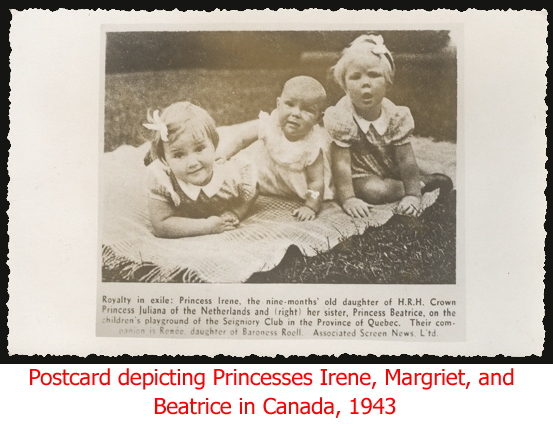
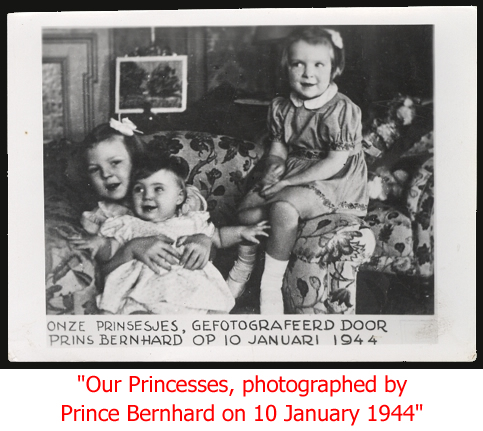
|
|
Richard M. Lamb (1923-2012)
|
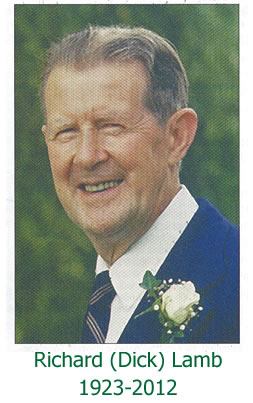 In December 2012 the stamp world lost one of its most respected dealers. Richard (Dick) Lamb of Kitchener Ontario passed away in his 90th year. He was a stamp dealer for over 60 years. In December 2012 the stamp world lost one of its most respected dealers. Richard (Dick) Lamb of Kitchener Ontario passed away in his 90th year. He was a stamp dealer for over 60 years.
Dick Lamb was born in Oxfordshire England in 1923 and came to Canada in 1950. He worked for many years at Mutual Life Assurance Co but was also active as a stamp dealer. After leaving Mutual Life, he became a full time stamp dealer in the 1970's.
I first met Dick at my father's stamp and coin store in Toronto in the 1960's where he was a regular visitor. Over the years Dick and I had hundreds of dealings, with both of us buying and selling. He was a frequent bidder in our auctions. He particularly liked nice cancellations as well as postal history from Canada and the British Commonwealth.
Dick had a strong connection to my family. Few people know that it was through my father's 'Stamp Collectors' Exchange Club' that Dick met his wife Kathryn to whom he was happily married for 58 years. He often reminded me of this fact and was very grateful to my father.
Over the years, Dick built a reputation for honesty and integrity. He became a very knowledgeable dealer with many contacts and customers all over Canada, the United States, and overseas. He was known to many of the biggest names in philately. Dick became a leading expert on BNA stamps and served for 10 years on the Greene Foundation Expert Committee in Toronto. A few years ago, Dick was made an honorary member of the Canadian Stamp Dealers' Association, a distinction that he shared with only a couple of others.
Outside of stamps, Dick's pastimes included bird watching and gardening. He had a massive vegetable garden behind his house where he seemed to grow enough vegetables to feed an army. Often when visiting other stamp dealers, Dick would take along a basket of fresh produce. I remember the late Toronto stamp dealer Jim Hennok telling me that Dick Lamb's tomatoes were the best he ever tasted.
Dick Lamb will be missed by his family as well as countless dealers and collectors. I consider it a privilege to have known him, and an honour to have called him my friend.
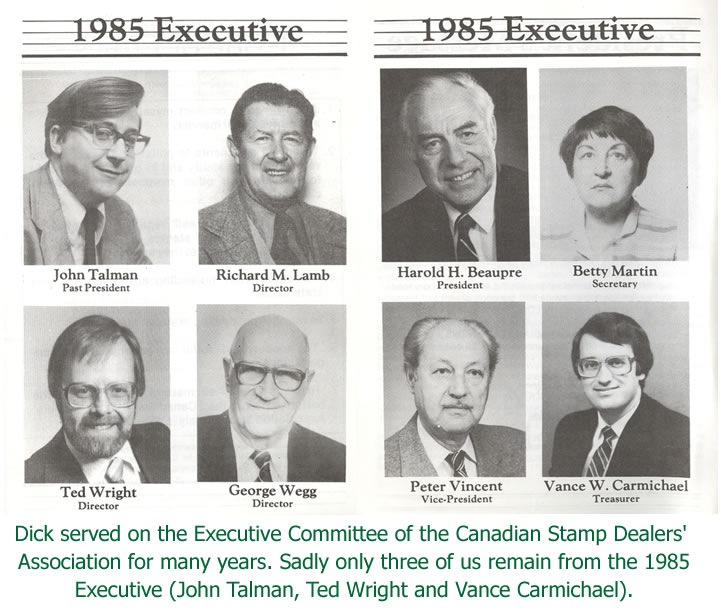
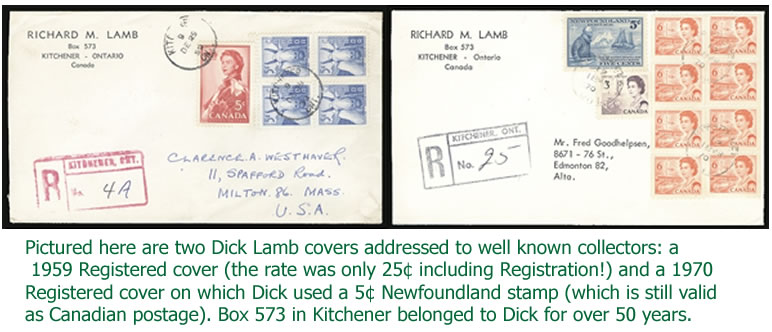
|
|
Alexander Graham Bell
|
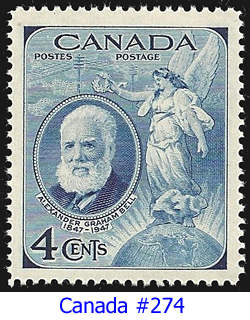 One
of the many positive effects of stamp collecting is the widening
of one’s knowledge. By studying a country’s stamps, you learn
about its history, its geography, and its culture, as well as
the people who shaped it. The contributions of royalty, military
leaders, politicians, musicians, artists, and inventors are commemorated
on thousands of stamps. One
of the many positive effects of stamp collecting is the widening
of one’s knowledge. By studying a country’s stamps, you learn
about its history, its geography, and its culture, as well as
the people who shaped it. The contributions of royalty, military
leaders, politicians, musicians, artists, and inventors are commemorated
on thousands of stamps.
In 1947 Canada issued a beautiful
stamp to mark the 100th anniversary of the birth of Alexander
Graham Bell. He was born in Edinburgh, Scotland in 1847 and emigrated
to Canada in 1870. In 1876 Bell first exhibited what eventually
evolved into the modern telephone.
This Canadian stamp depicts a portrait
of Bell with telephone poles in the background. The winged figure
to the right is reaching over to put a wreath on Bell’s portrait
while standing on a globe in which North America is prominently
displayed.
Bell is most noted as the inventor
of the telephone, but he made many more valuable contributions
both in Canada and in the United States. His intellectual curiosity
drove him to explore the complete realm of communications including
helping the deaf, and he did extensive research into such varied
fields as airplanes, animal breeding, artificial respiration,
and water desalinization.
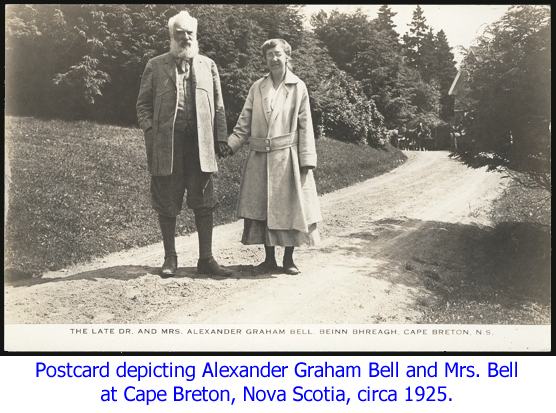
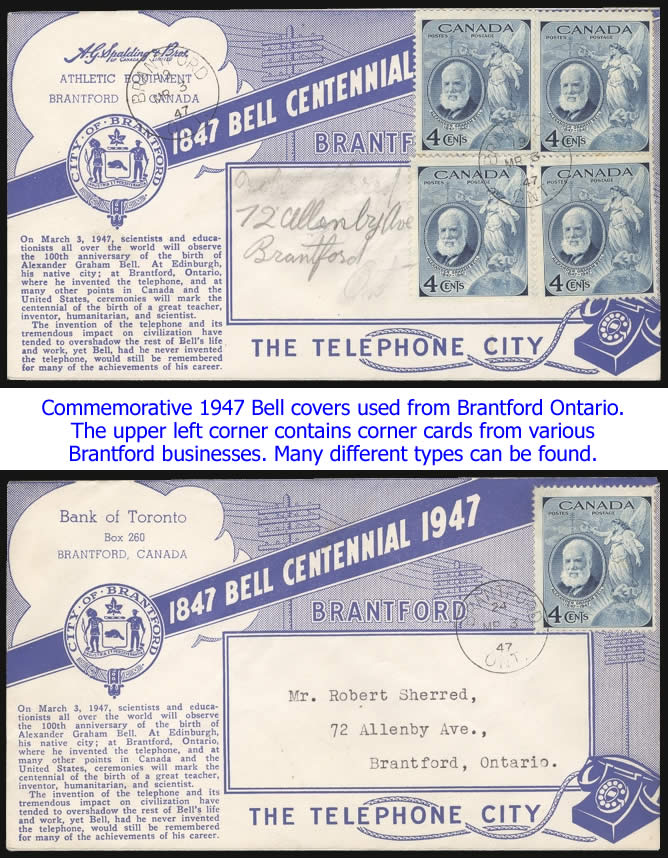
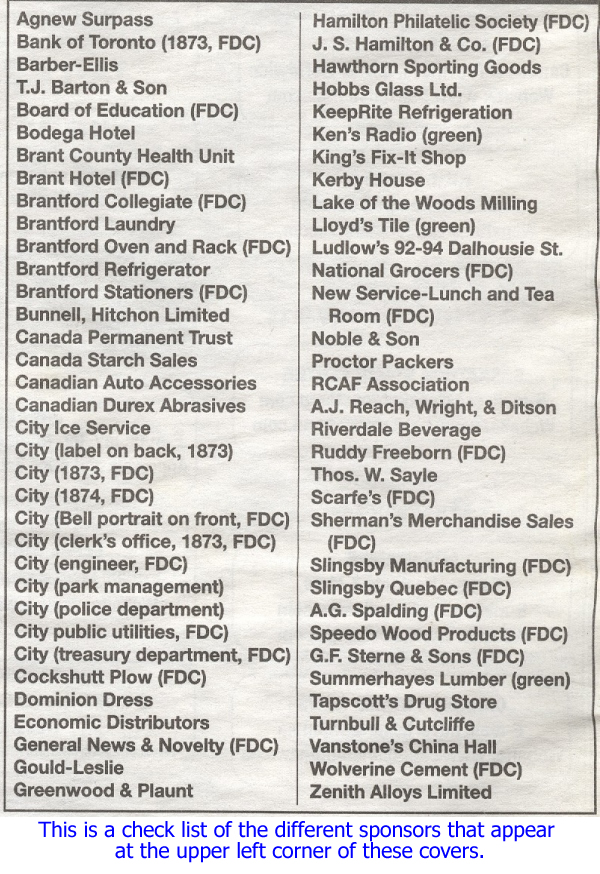
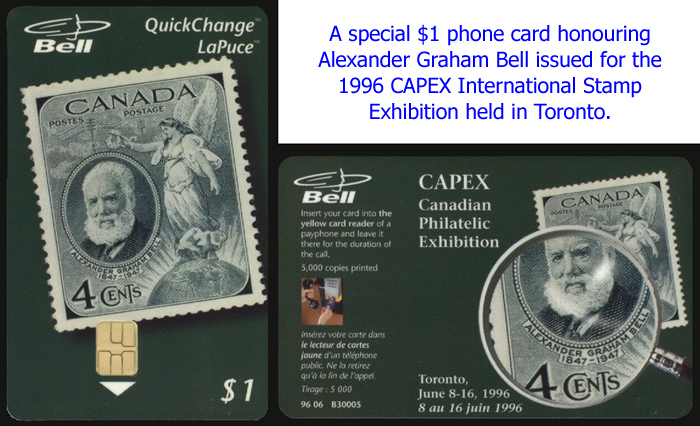
|
|
The S.S. Empress of Ireland
|
The cover depicted below tells an interesting but tragic story. It was mailed in Victoria, British Columbia on May 21, 1914. While on its way to Wales England, it became a part of the worst maritime disaster in Canada's peacetime history.
The ocean liner S.S. Empress of Ireland left Pointe-au-Père, Quebec and headed northeast on the St. Lawrence River in the early hours of May 29, 1914. The weather conditions were clear when the Empress sighted the lights of the Norwegian steamer SS Storstad about six miles away. Likewise, the Storstad sighted the Empress. Unfortunately the ships were shrouded in fog, and their courses collided at about 2:00 a.m. when the Storstad crashed into the starboard side of the Empress. The hull of the Empress sank out of sight about fifteen minutes later, and 1,012 lives were lost..
The wreck of the Empress of Ireland lay in about 130 feet of water, making it accessible to divers, but limited visibility and the strong currents of the St. Lawrence made recovery operations difficult. Bodies and valuables were salvaged, as well as 318 bags of waterlogged mail.
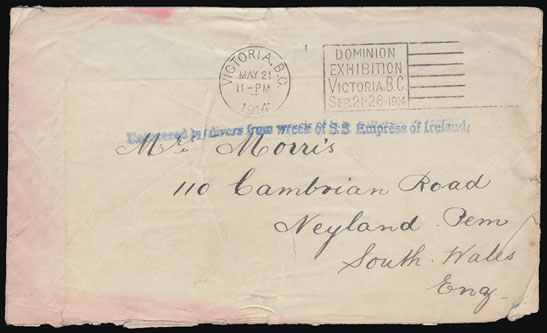
This cover was amongst the mail salvaged from the wreck. It bears the handstamp 'Recovered by divers from wreck of SS Empress of Ireland'. The stamp floated off in the waters of the St. Lawrence River.
A number of monuments were erected to mark the burial sites of those passengers and crew members whose bodies were recovered after the sinking of the S.S. Empress. The wreck is now designated as a site of historical importance and it is protected under Canada's Cultural Property Act.
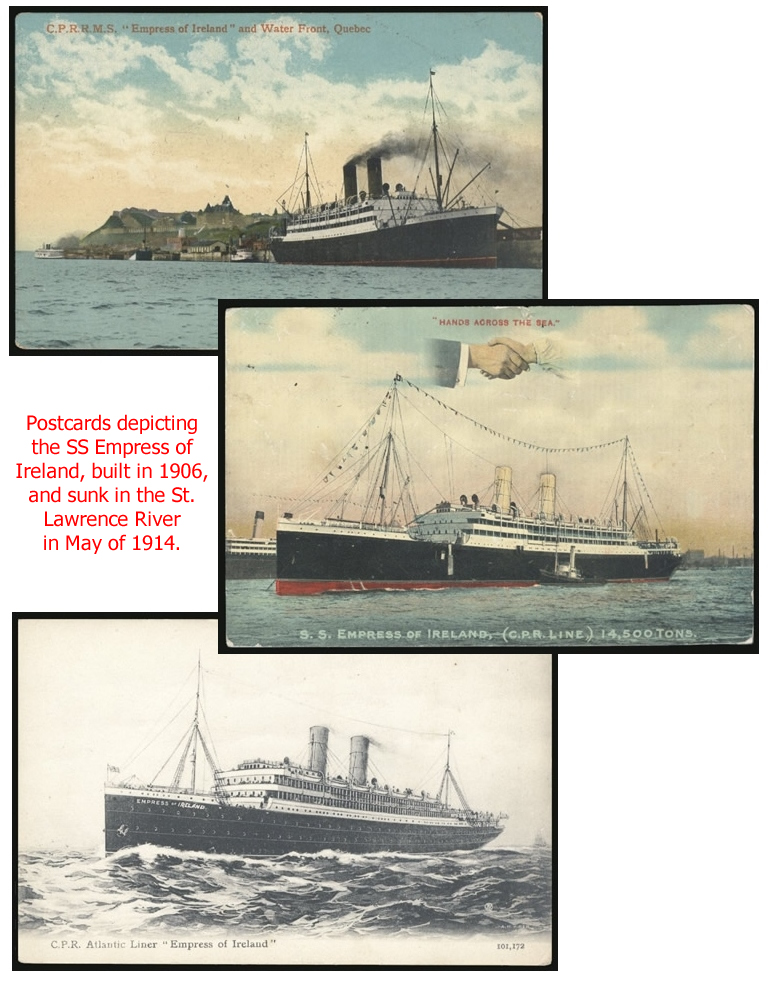
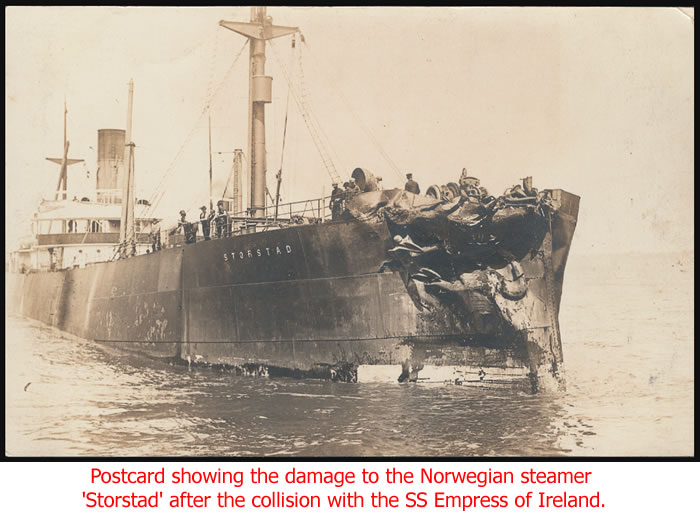
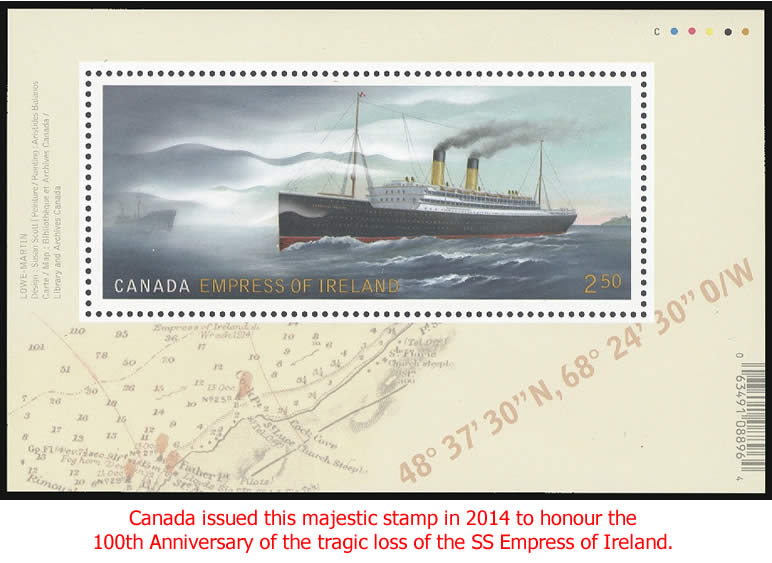
|
|
China 1932 Northwest Scientific Expedition
|
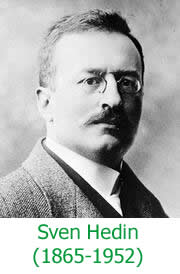 Chinese stamps are very "hot" on the market today. The Chinese lots that we offer in our auctions consistently attract large numbers of bids from active buyers. Chinese stamps are very "hot" on the market today. The Chinese lots that we offer in our auctions consistently attract large numbers of bids from active buyers.
One of the more interesting Chinese sets (Scott #307-10) was issued in 1932 when Swedish explorer Sven Hedin wanted to make a scientific expedition into Northwestern China. The Chinese government would only allow Hedin to make the journey if he took along 20 young Chinese students at his expense. The extra cost exceeded Hedin's budget, so 25,000 sets of four special stamps were printed to help finance the expedition. The stamps depicted camels at camp with the expedition flag.
Of the 25,000 sets, 4,000 sets were sold over the counters of Chinese Post Offices, and the rest were placed in Hedin's hands. He sold them for $5 per set to raise funds. The stamps were not popular at the time, but have now become extremetly collectible.
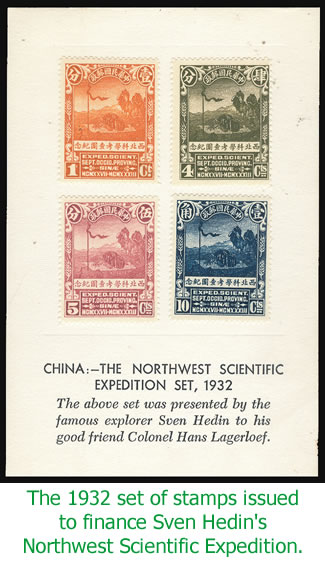
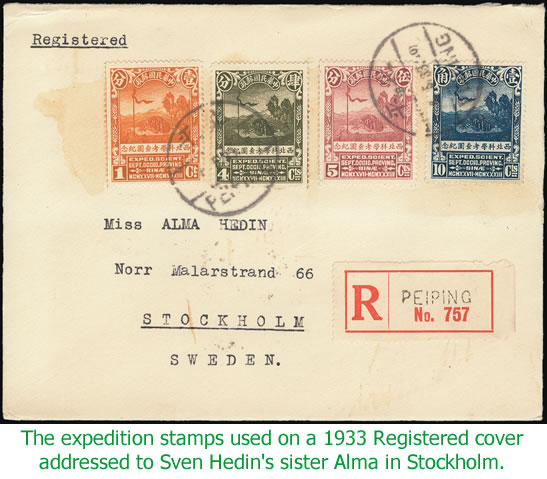
|
|
The First Animal Topical
|
 Few collectors know that Canada’s first stamp, the 3 Pence Beaver, was also the first official postage stamp in the world to portray an animal. The Beaver stamp was first issued in 1851 and was designed by Sandford Fleming, a young civil engineer who was later knighted for his work designing and surveying Canada’s railroad system. Though animals are frequently depicted on stamps today, Fleming’s design was rather untraditional at the time, a departure from the usual portraits of monarchs and coats of arms. Few collectors know that Canada’s first stamp, the 3 Pence Beaver, was also the first official postage stamp in the world to portray an animal. The Beaver stamp was first issued in 1851 and was designed by Sandford Fleming, a young civil engineer who was later knighted for his work designing and surveying Canada’s railroad system. Though animals are frequently depicted on stamps today, Fleming’s design was rather untraditional at the time, a departure from the usual portraits of monarchs and coats of arms.
The Beaver stamp design proved popular as it was used again in 1859 for Canada’s first perforated issue (Scott #12) and for the first Cents issue (Scott #15). Our sales regularly feature a good selection of Canada’s early Beaver stamps including shades, papers, cancels, and varieties. |
|
Antarctic Expeditions and Stamps
|
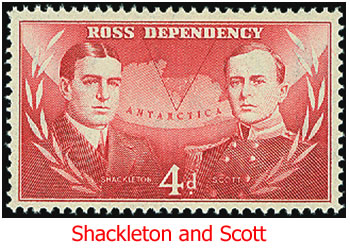
Antarctic exploration has always been of great interest to the public. Expeditions have been launched by a number of countries since the 1890’s. Over 100 years ago in December of 1911 Roald Amundsen raised the Norwegian flag at the South Pole following a dramatic race with the Englishman Captain Robert Scott.
Much has been written on early Antarctic expeditions and exploration. Movies have been made including one of my all time favourites ‘Shackleton’ starring Oscar winning actor Kenneth Branagh. It is the story of Ernest Shackleton’s 1914 expedition to Antarctica and is one of the most amazing and compelling adventure stories of all time.
Philately played a role in the early exploration of the Antarctic. In 1908 two New Zealand stamps were overprinted “KING EDWARD VII LAND” for the Shackleton Expedition. Then in 1911 two issues were overprinted “VICTORIA LAND” for the ill-fated Robert Scott Expedition. The stamps that were printed for these two Expeditions were made under the authority of the New Zealand Postal Department. They provided an ideal means to both publicize the Expeditions and raise money for them.
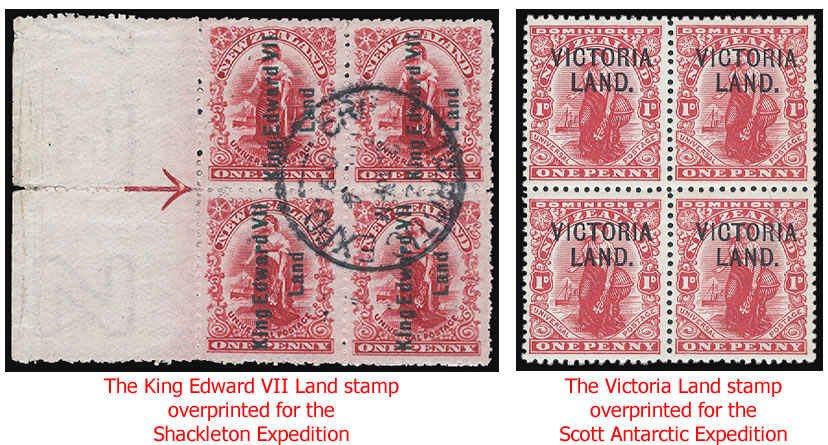
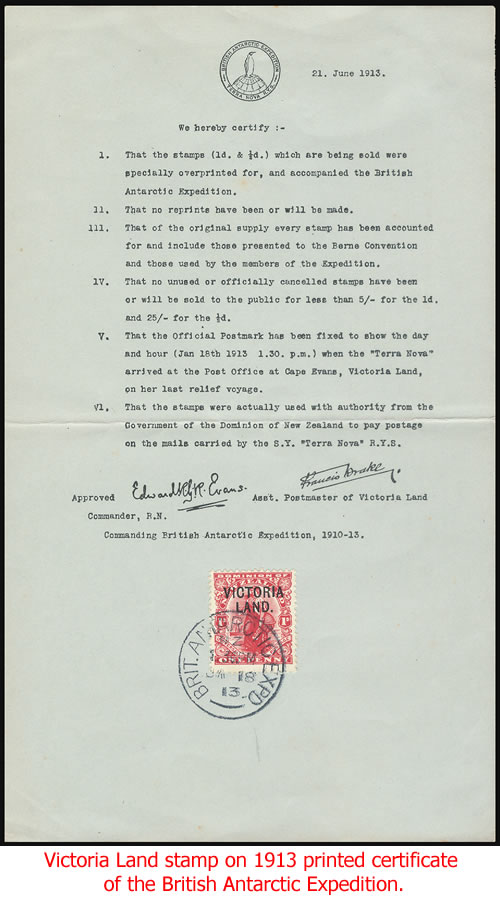
The set of stamps on the cover below was issued by Great Britain to honour British Polar
explorers James Clark Ross, Martin Frobisher, Henry Hudson, and Robert Falcon Scott. The cover is signed by Sir Charles Wright,
a member of Scott's 1910-13 Antarctic Expedition. Wright,
a Canadian who joined the Expedition as a physicist-navigator,
was a member of the search party that was sent out from Scott's
base camp when Scott and four others failed to return from the
South Pole. It was Wright who found the tent in which Scott and
two others had died on their return trip.
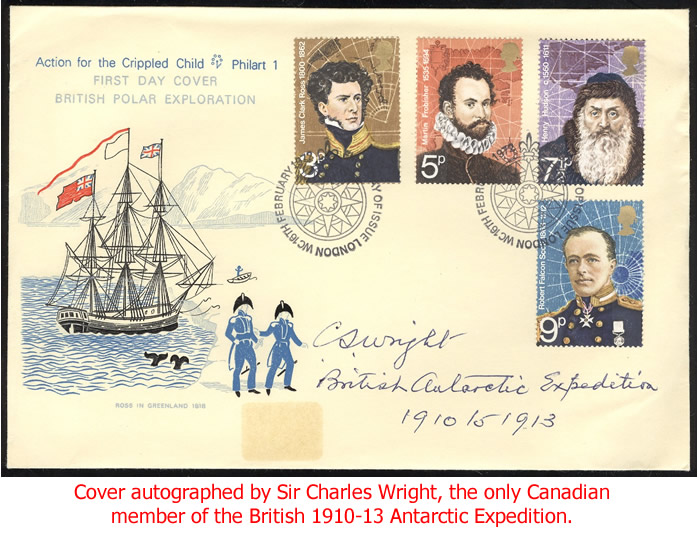
|
|
The Newfoundland $1 Wayzata Air Mail
|
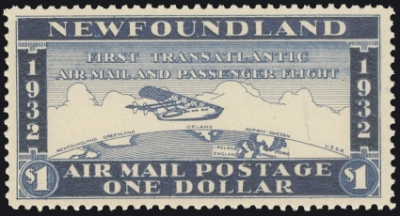
We are frequently asked questions about the 'stamp' pictured here. It is commonly known as the 'Wayzata' issue.
In 1932, Newfoundland was still a colony of Britain. It was the Depression era, and Trans-Atlantic flight was all the rage. The government of Newfoundland entered into an agreement with an American company called Aerial World Tours that was based in Minnesota. Newfoundland would help finance the first Trans-Atllantic flight to carry both passengers and mail, and hopefully stimulate its own economy in the process. The agreement stipulated that the flight would take place no later than August 31, 1932
The ambitious project was put in motion. Funds were to be raised by the sale of a $1 Air Mail stamp. The design was approved showing a Sikorsky seaplane high above the Atlantic with North America and Europe on either side. The plane, to be purchased by the American company, was a Sikorsky S-40, a hugh 4-engine machine that could carry 44 passengers.
A total of 400,000 stamps were printed from an engraved plate of 20 stamps (4 x 5). Aerial World Tours was to sell 300,000 copies, and Newfoundland would then sell the rest through its Post Office to give the stamp full postal status.
The route was planned to start in Wayzata Minnesota, with stops in Toronto, Montreal, St. Pierre, St. John's, and Holyrood. The plane would then cross the Atlantic by way of the northern route, via Sweden, Germany, and Denmark, to England.
Unfortunately fund-raising efforts fell well short of lofty expectations, and the plans were changed. Instead of the Sikorsky plane, a much smaller twin-engined plane named 'Newfoundlander' was purchased and taken to Wayzata.
Time was running out, and when it became clear that it would be impossible to sell enough of the stamps to finance the venture, the project was cancelled. Of the 400,000 copies printed, it is believed that 375,000 copies were destroyed.
Even though the 'Wayzata' never became an official postage stamp, it is a worthy addition to any Newfoundland or Air Mail collection.
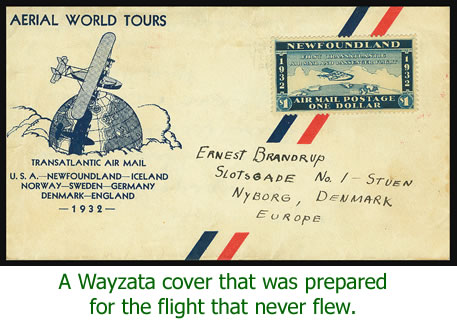
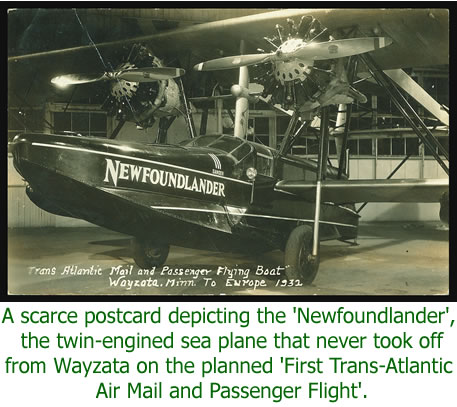
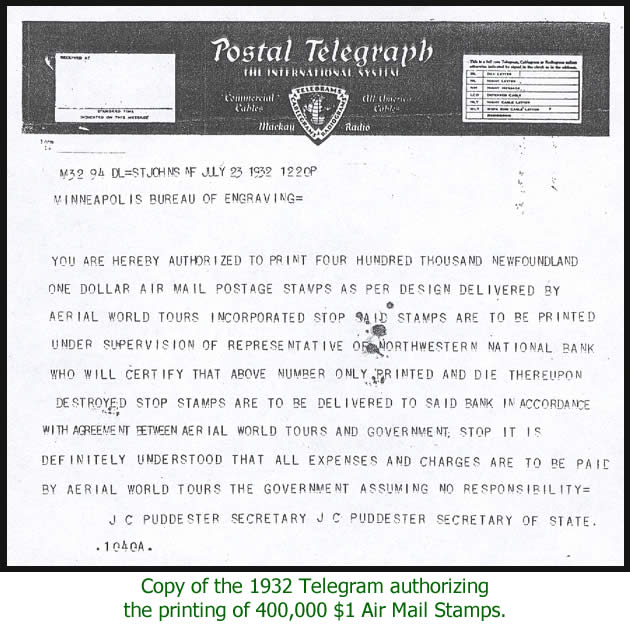
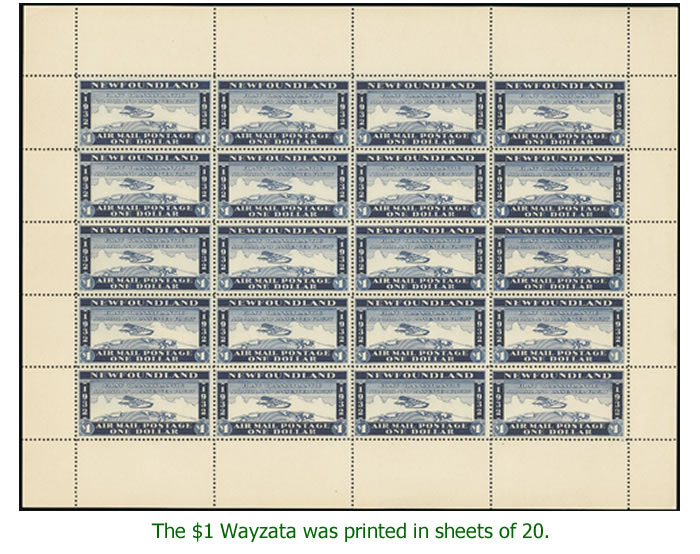
|
|
The World's First Philatelist?
|
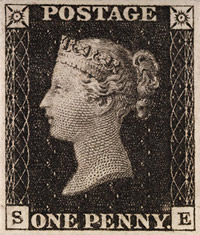 Many authorities agree that the world's first stamp collector was a young Englishwoman who, just a year after Great Britain introduced the One Penny Black in 1840, advertised in the London Times for cancelled stamps. She wanted them to paper a wall in her bedroom. The first stamp album may have been plaster rather than paper! Many authorities agree that the world's first stamp collector was a young Englishwoman who, just a year after Great Britain introduced the One Penny Black in 1840, advertised in the London Times for cancelled stamps. She wanted them to paper a wall in her bedroom. The first stamp album may have been plaster rather than paper!
Saving stamps became a popular pastime, and before long, stamp accumulating progressed to stamp collecting. As other countries around the world followed Great Britain's lead and started printing stamps, a hobby was born.
According to the Encyclopedia Britannica, the term 'philately' was coined in 1864 by a Frenchman, Georges Herpin, who invented it from the Greek philos, “love,” and ateleia, “that which is tax-free”. The postage stamp permitted a letter to come free of charge to the recipient, rendering it untaxed. Before the Penny Black was issued, the recipient of mail paid the postal charges.
Since that young Englishwoman placed her classified ad in 1841, stamp collecting has been one of the world's most popular hobbies, attracting millions of people including kings and presidents. |
|
My Top 3 Favourite Stamps
|
Every collector has his or her own favourite stamps.The appeal may lie in the design, the engraving, or simply the appearance. Here are my top 3 favourite stamps:
Canada 50¢ Bluenose, Scott #158
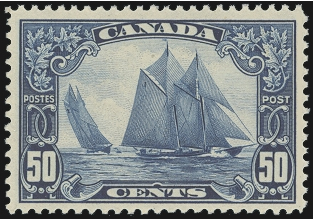
This majestic stamp depicting the famous Bluenose fishing schooner is my all time favourite.
The engraving and the design of this 1929 issue are remarkable. The stamp exemplifies
three aspects of Canadian maritime life: Great fishing, ship building, and seamanship.
Great Britain £1 PUC, Scott #209
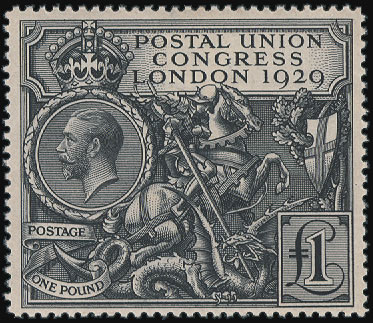
This mighty stamp embodies the power of the British Empire. It's large size and detailed
engraving are magnificent. The stamp was issued to honour the 9th UPU Congress
held in London in 1929. Its allegorical design depicting St. George slaying
The Dragon represents Britain triumphing over her enemies.
United States $1 Cattle in Storm, Scott #292
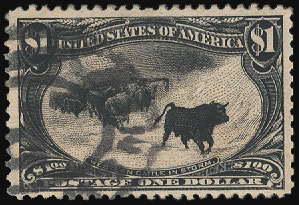
This beautiful engraved stamp just might be the most beautiful American commemorative stamp
ever issued. The central design is a reproduction of a painting by J.N. McWhirter and
is part of the 1893 series issued to commemorate the Trans-Mississippi
and
International Exposition held in Omaha Nebraska in 1898. |
|
Fourth Generation Stamp Dealers?
|
It is never too early to introduce young people to the joys of our hobby. At the November 2011 CSDA Stamp Show in Toronto we were visited by my two grandchildren, Elyse (age 3) and Mason (age 6 months).
Who knows? Perhaps one (or both) of them will carry on the tradition and become a fourth generation Carmichael stamp dealer.
The photo below picturing me and my son Chris with Elyse and Mason is courtesy of Mary-Anne at Canadian Stamp News.
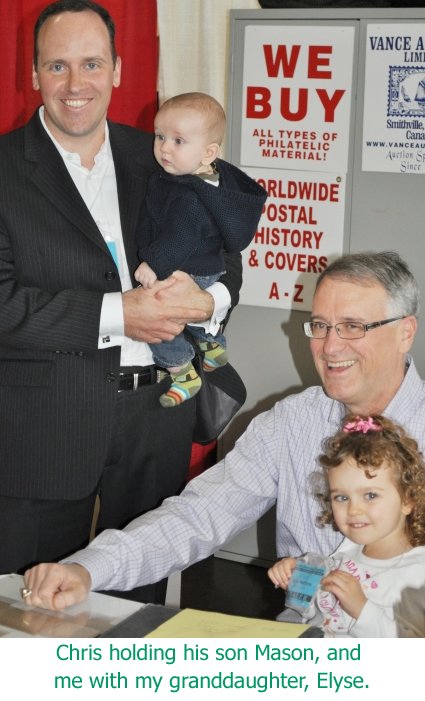
|
|
Canada's Navy on Stamps and Postcards
|
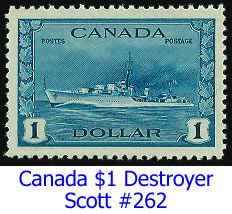 Canada
has 243,000 kilometres of shoreline, more than any other country
in the world, so our navy has always been essential to our national
safety and development. On May 4, 1910, the Royal Canadian Navy
came into being. Canada
has 243,000 kilometres of shoreline, more than any other country
in the world, so our navy has always been essential to our national
safety and development. On May 4, 1910, the Royal Canadian Navy
came into being.
Before 1910, Canada's maritime security was in the hands of Britain's Royal Navy, but it was time for Canada to assume her share of responsibility for the protection of her coastline. Charles Edmund Kingsmill, a Canadian who became a Rear Admiral in the Royal Navy, was invited to direct our Naval services. He assembled a fleet which included two light cruisers that were transferred from the Royal Navy (the HMCS Rainbow and the HMCS Niobe), as well as purchased yachts and other miscellaneous vessels. The Rainbow and the Niobe had already seen duty around the world under Britain's command.
From these humble beginnings, Canada built up
her naval forces over the years so that by the end of World War
II, Canada had the third largest navy of the Allied Nations (behind
the United States and Great Britain).
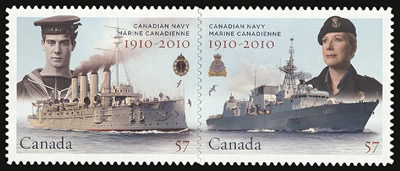 2010
marked the 100th year that our shores have been protected by our
naval forces. Special events and exhibitions celebrated a
century of extraordinary achievements by the men and women of
our navy. A number of stamps have been issued honouring the navy
including Canada’s famous $1 Destroyer stamp (above), and the 2010
Centennial commemorative set pictured at the left. 2010
marked the 100th year that our shores have been protected by our
naval forces. Special events and exhibitions celebrated a
century of extraordinary achievements by the men and women of
our navy. A number of stamps have been issued honouring the navy
including Canada’s famous $1 Destroyer stamp (above), and the 2010
Centennial commemorative set pictured at the left.
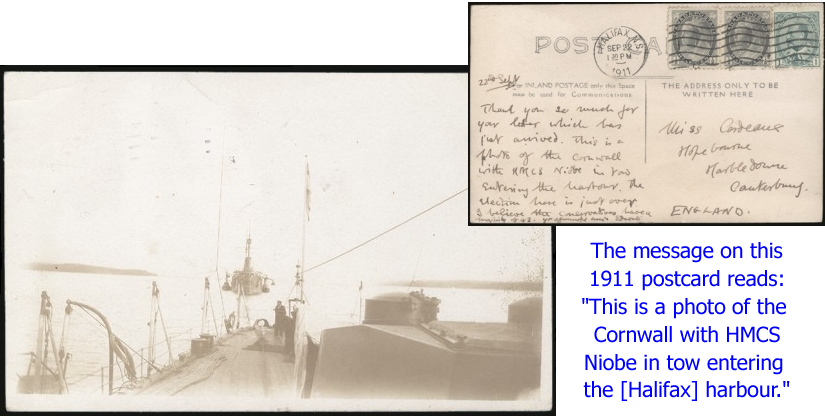
Seven years after arriving in Canada, the Niobe would be damaged in Halifax harbour in the devastating explosion of 1917. She was scrapped in the 1920's.
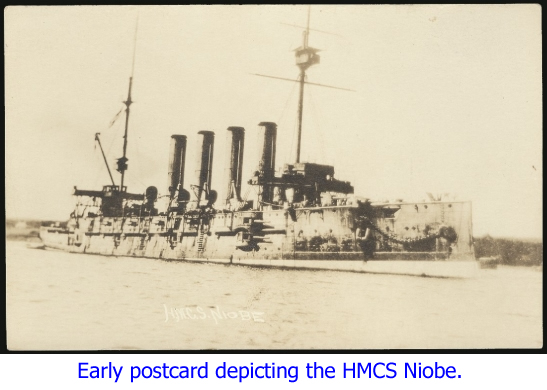
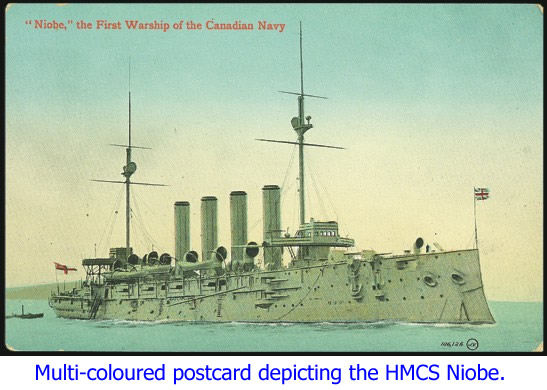
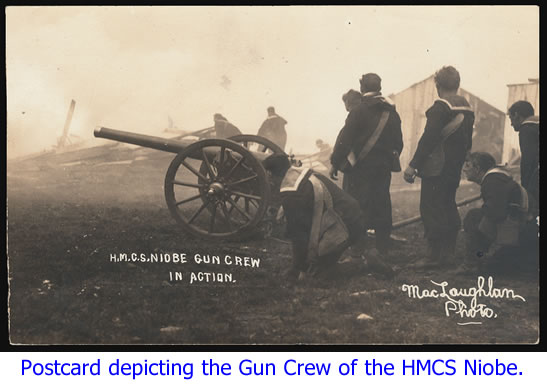
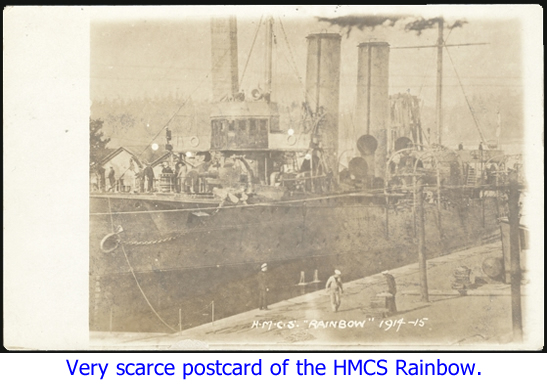
|
|
Stamp Collectors' Exchange Club
|
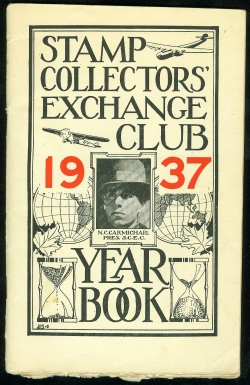 In these days when the internet dominates the world of communication, it is nice to think back to the time when 'social networking' meant writing a letter, addressing an envelope, licking a stamp, and finding a mailbox. In these days when the internet dominates the world of communication, it is nice to think back to the time when 'social networking' meant writing a letter, addressing an envelope, licking a stamp, and finding a mailbox.
In 1935, my father, N.C. Carmichael, saw the need for an association to facilitate communication between stamp collectors. He started the Stamp Collectors' Exchange Club through which stamp collectors could correspond and exchange stamps with other collectors throughout the world.
For a yearly subscription fee of $1, a collector and his address were listed in the club's bi-monthly magazine. A member could then write to, or receive mail from, any other member. It made it easy for collectors to find people with similar collecting interests. The club included members from a wide variety of countries around the world, so if you collected stamps from the Canary Islands or Ivory Coast, for instance, you could write to collectors there!
The club's bi-monthly magazines also included informative articles and interesting advertising from some of the biggest names in philately at the time. Browsing
through some of the old magazines that I have collected, I found ads from Fred Jarrett, K. Bileski, Jim Webb, H.E. Harris and J.N. Sissons.
In addition to bi-monthly magazines, the club published annual yearbooks like the one pictured at the left. That is my father in the centre. He told me that he wore that hat to make him look older since he was only nineteen years old at the time!
The club ran for 23 years and grew to well over 5,000 members in over 100 countries. It was run first by my father, and later by J.K. MacRory (who became publisher of the Canada Lyman's Catalogue), and then by J.R. Cooke.
During that time, tens of thousands of letters were written and mailed between members, resulting in some very interesting covers. I come across S.C.E.C. covers from time to time when handling estate lots and collections, and I am always happy to discover them.
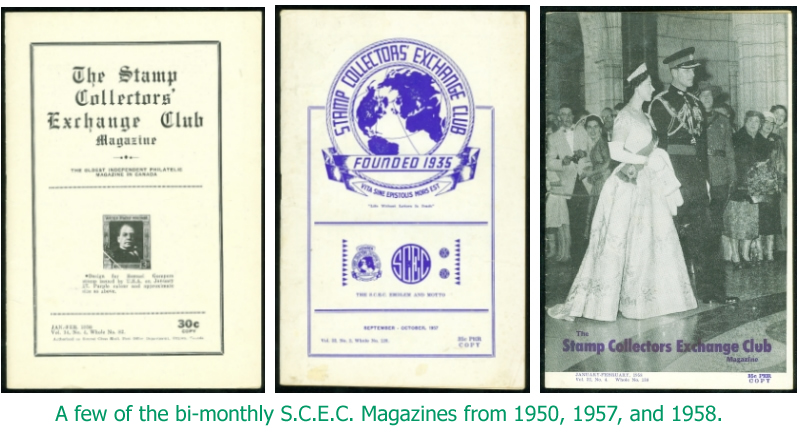
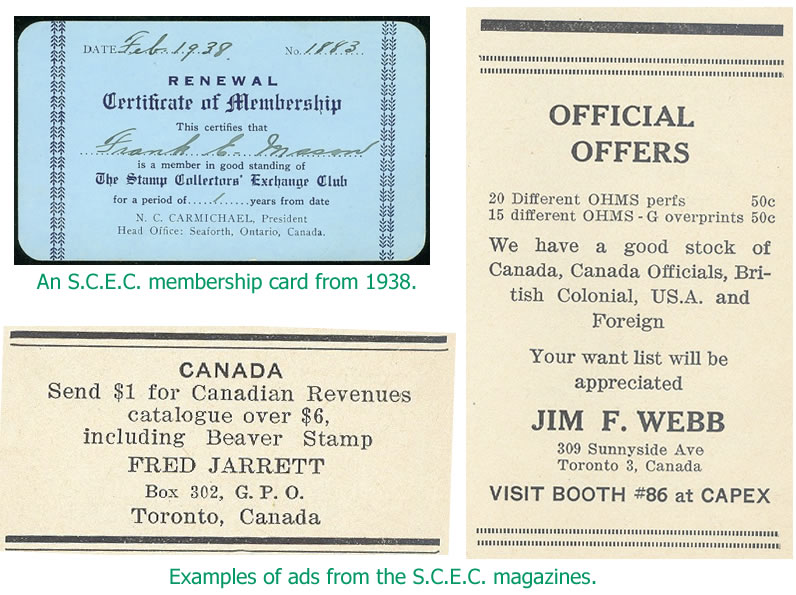
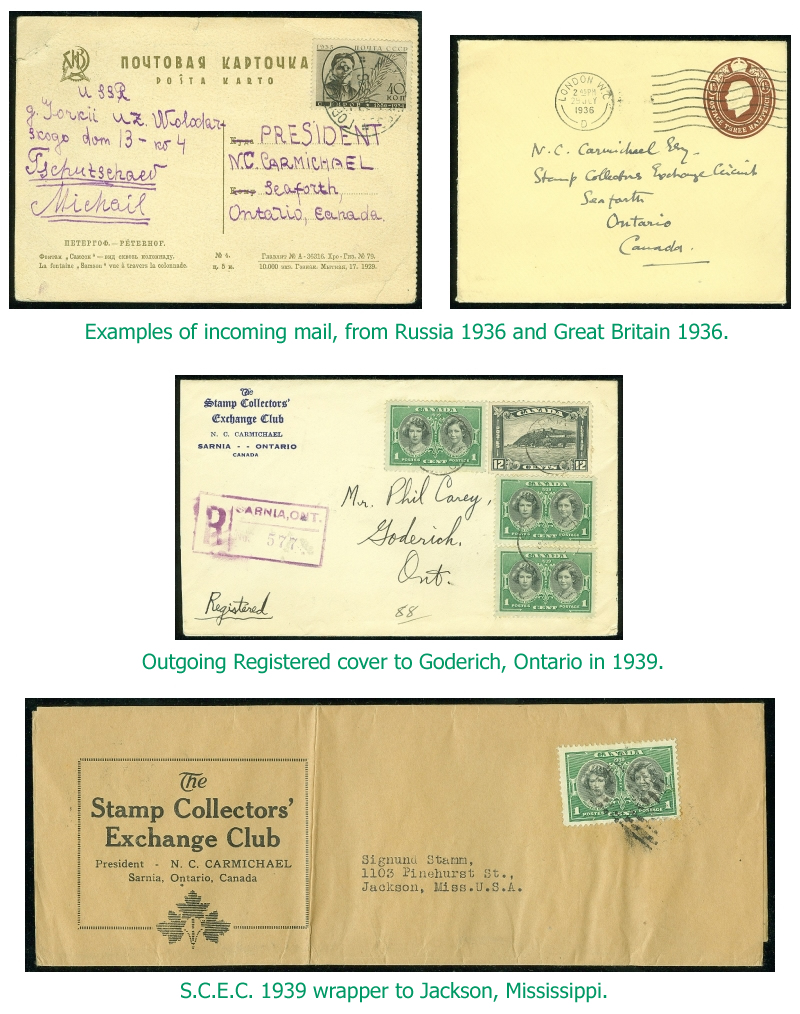
|
|
Canada's Avro Arrow
|
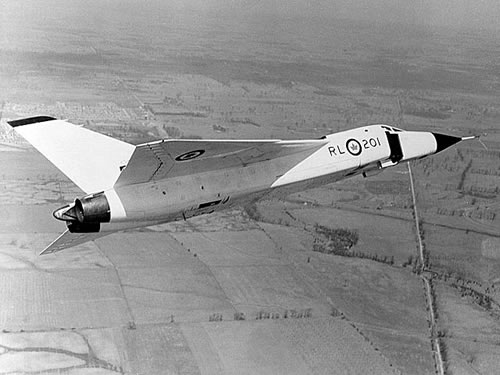
After WWII, the Soviet Union had begun developing long-range bombers that were capable of reaching North America with nuclear weapons. In response to the threat of nuclear attack by Soviet bombers coming over the Arctic, Canada developed the Avro Arrow, a supersonic interceptor airplane that was arguably the most advanced aircraft in the world at that time. The two-seat, twin-engine plane was designed by A.V. Roe Canada Limited, with funding from the Canadian government under the Liberal party.
The first test flight took place on March 25, 1958 at the Malton Airport in Ontario (today known as Pearson International Airport). One of the test pilots was Janusz Zurakowski, a renowned Polish fighter pilot. Many more test flights in 1958 and 1959 were highly successful, resulting in only minor corrections.
Unfortunately the Arrow was never allowed to fulfill its mission because the entire program fell victim to politics when it was suddenly canceled by the Conservative Government of John Diefenbaker in 1959. The government's official stance was that the threat to Canada did not warrant the cost of the program, however many believe that was not the full story.
For security reasons, almost everything connected with the program was destroyed, prompting bitter controversy and debate that persists today. Articles and books have been written on the subject, and a movie was even made which starred Dan Ackroyd.
Little of the Avro Arrow remains, but some flight covers and press photos have survived. Only four men flew the Arrow: Janusz Zurakowski, Wladek Potocki, Peter Cope, and Jack Woodman.
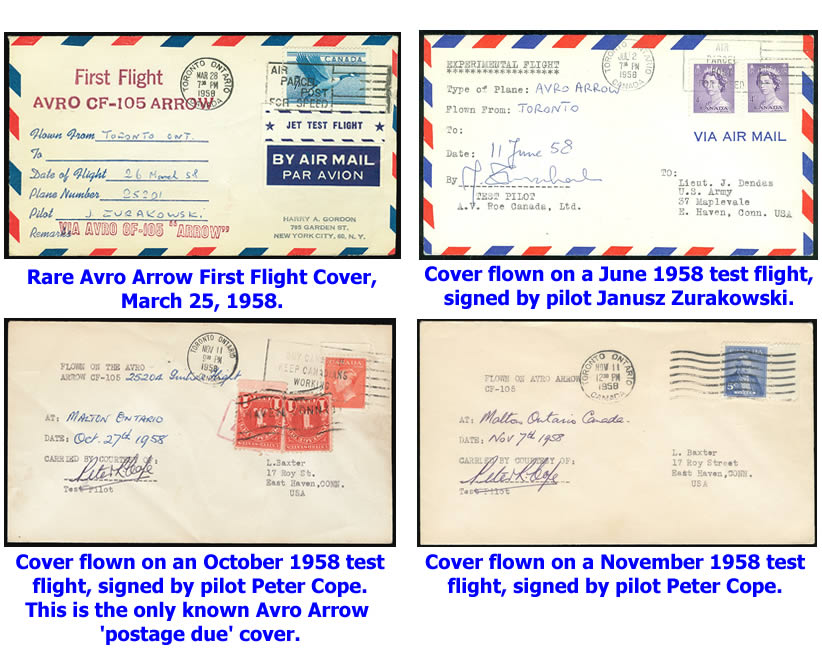
|
|
Heligoland
|
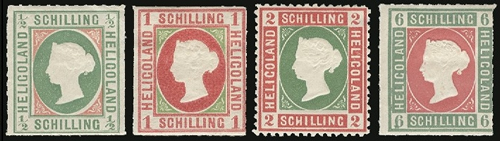 A tiny island in the North Sea called Heligoland has quite an interesting history. Covering less than one square mile, it is one of the smallest areas ever to have its own stamps. Heligoland was a British possession for most of the 19th Century. It issued twenty-five stamps from 1867 to 1888, most bearing the portrait of Queen Victoria. A tiny island in the North Sea called Heligoland has quite an interesting history. Covering less than one square mile, it is one of the smallest areas ever to have its own stamps. Heligoland was a British possession for most of the 19th Century. It issued twenty-five stamps from 1867 to 1888, most bearing the portrait of Queen Victoria.
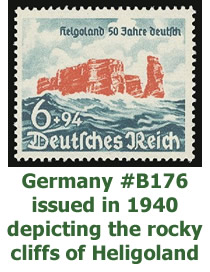 In 1890, the British ceded the island to Germany in exchange for Zanzibar. Primarily a summer resort and fishing centre, the island's role changed dramatically at the beginning of World War I when it was fortified as a naval base. When the sea walls and fortifications were torn down after the war under the terms of the Treaty of Versailles, a third of the island was washed away. The walls were rebuilt prior to World War II, and Heligoland played an important role as a German submarine base. The British Navy blew up all of the military installations after the war, and Heligoland was returned to West Germany in 1952. After almost half a century of turbulence and war, Heligoland was resettled and became a resort area once more. In 1890, the British ceded the island to Germany in exchange for Zanzibar. Primarily a summer resort and fishing centre, the island's role changed dramatically at the beginning of World War I when it was fortified as a naval base. When the sea walls and fortifications were torn down after the war under the terms of the Treaty of Versailles, a third of the island was washed away. The walls were rebuilt prior to World War II, and Heligoland played an important role as a German submarine base. The British Navy blew up all of the military installations after the war, and Heligoland was returned to West Germany in 1952. After almost half a century of turbulence and war, Heligoland was resettled and became a resort area once more.
The stamps of Heligoland were extensively reprinted in the 19th Century. Original stamps sell for far more than the reprints. It is a very interesting field to study.
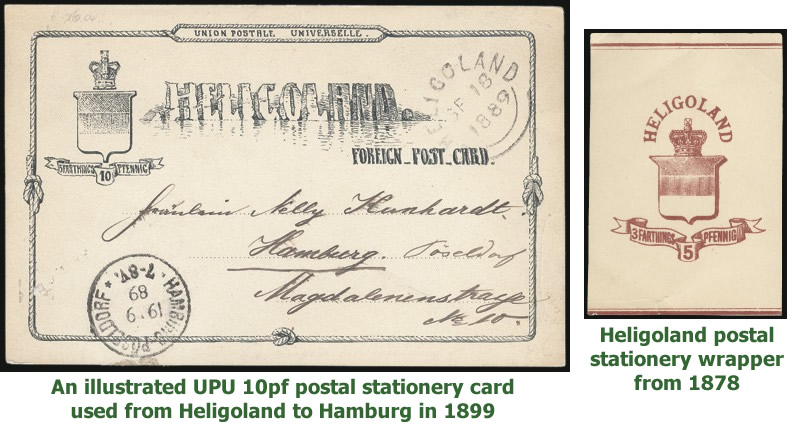
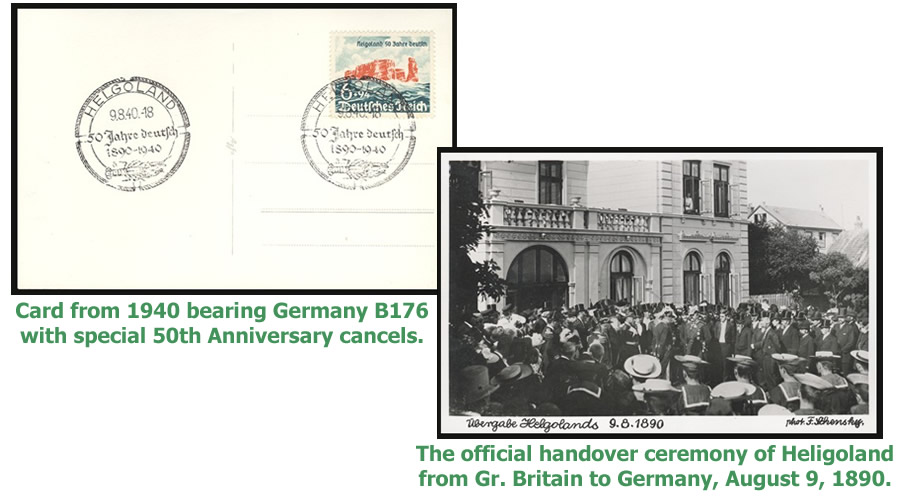
|
|
WWII Occupation of the Channel Islands
|
In
the Second World War, the Channel Islands of Guernsey and Jersey
were the only parts of the British Commonwealth that were occupied
by Germany. During the German occupation that lasted from 1940-1945,
the inhabitants of the islands suffered hunger and privation.
In addition to the more serious shortages of food and other essentials,
the stamp supply was cut off. Prior to the occupation, Guernsey
and Jersey used British stamps on their mail. When stamps became
scarce early in the occupation, it was permitted to bisect them.
Many interesting bisect covers exist and are sought after by collectors.
Starting in 1941, occupation stamps were produced by the Germans
for both Guernsey and Jersey. These issues were valid only within
the Channel Islands. Some were printed locally while others were
printed in Paris. As the result of wartime paper shortages and
multiple printings, these interesting issues can be found with
various paper, shade and perforation varieties.
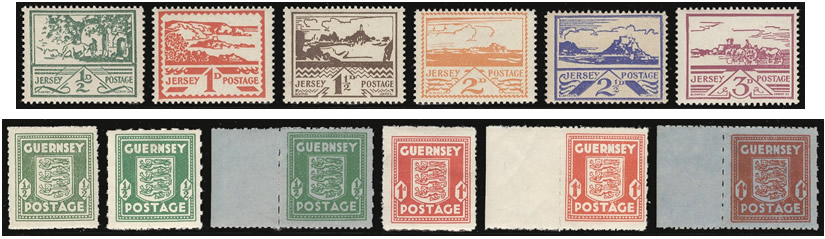
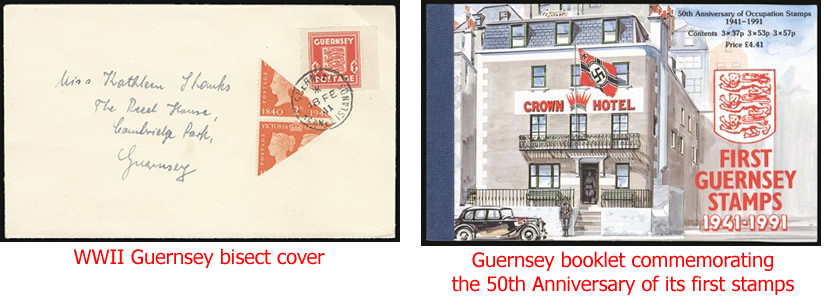 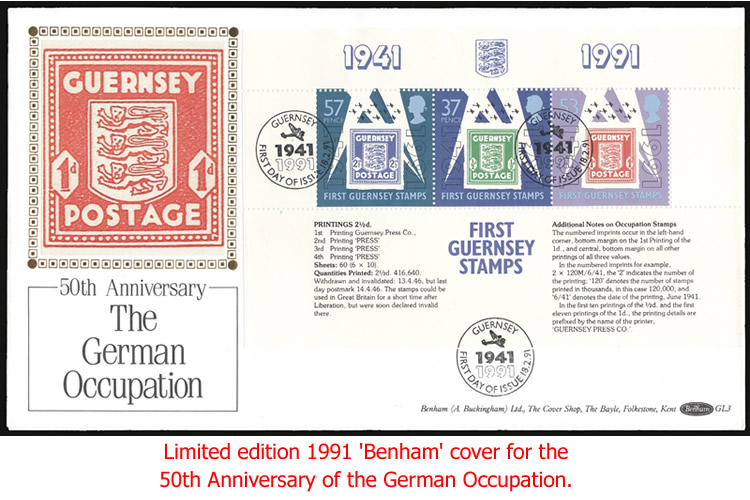
|
|
First United Kingdom Aerial Post
|
 To celebrate the Coronation of King George V of England, a series of special flights was organized to carry mail between London and Windsor in September of 1911. Aviation was still fairly new as only eight years had passed since the Wright Brothers flew in 1903. While there had been earlier mail flights, the United Kingdom Aerial Post was the world's first sustained air mail service, lasting from September 9th to September 26th, 1911. To celebrate the Coronation of King George V of England, a series of special flights was organized to carry mail between London and Windsor in September of 1911. Aviation was still fairly new as only eight years had passed since the Wright Brothers flew in 1903. While there had been earlier mail flights, the United Kingdom Aerial Post was the world's first sustained air mail service, lasting from September 9th to September 26th, 1911.
Great Britain's Postmaster General authorized these flights to carry specially printed envelopes and postcards that were sold to the public at various outlets, collected in special boxes, and then taken to either London or Windsor to be put aboard a flight. The envelopes and cards were sold with stamps already affixed. The envelopes were franked with 1 pence stamps, and the cards with ½ pence stamps. Since air mail stamps did not exist yet, and the flights were costly, the envelopes were sold to the public for 1 shilling 1 pence, and the postcards were sold for 6½ pence, to raise the necessary funds.
The special cachet, depicting a bi-plane flying over Windsor Castle, was printed in a number of colours. The colours are described differently by different sources:
- Scarlet (or red)
- Purple (or purple-brown)
- Dark green (or deep green)
- Olive green
- Light brown (or red-brown)
- Dark brown (or deep brown)
- Violet (These were not sold to the public but reserved for use by the organizers, so they are considerably scarcer.)
Only the olive green and the violet envelopes and cards were used from Windsor to London.
Six different cancels, numbered from 1 to 6 at the bottom, were used for the London to Windsor mail. Two cancels were used for the Windsor to London mail.
Each envelope or card had an inscription at the bottom that varied depending on whether the item was to be flown from London or Windsor. There were sixteen flights from London to Windsor, but only two flights from Windsor to London, so the latter are naturally much scarcer. It is our experience that it is harderto find the envelopes than the postcards of any of these flights.
Collectors enjoy the challenge of finding all of the possible cancels and colours for both the envelopes and the cards. As the 100th anniversary of the flights approaches, there will no doubt be more interest than ever in the First United Kingdom Aerial Post, the world's first regularly scheduled air mail service.
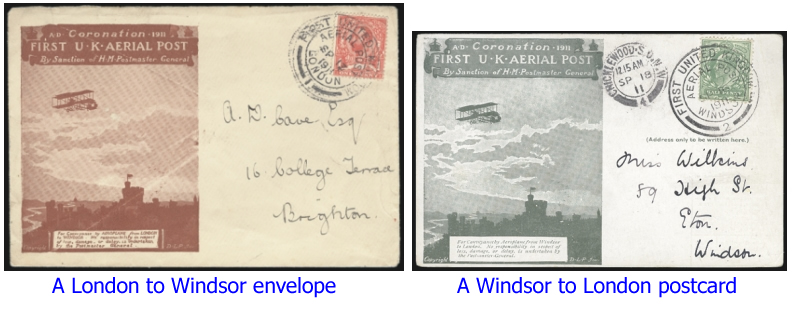
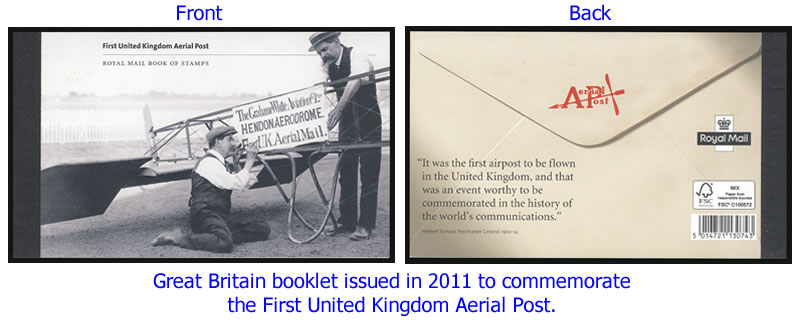
|
|
Topical Collecting
|
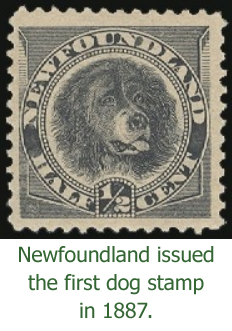
Topical collecting has constantly grown in popularity over the years. Whether you collect space, ships, Boy Scouts, sports, or paintings, a very nice collection can be put together at a modest cost.
At a recent stamp exhibition, a customer showed me his collection of "dogs on stamps". I particularly enjoyed looking over his collection because my family has had a German Shepherd for many years, and we recently added a lovable Jack Russell terrier to the household. I was truly amazed at the variety and scope of his collection. It was well researched and described, and showed me what could be done with one topic.
Those interested in topical collecting may wish to consider joining the American Topical Association. You can visit their web site at www.americantopicalassn.org They offer checklists for almost any topic that you can imagine!
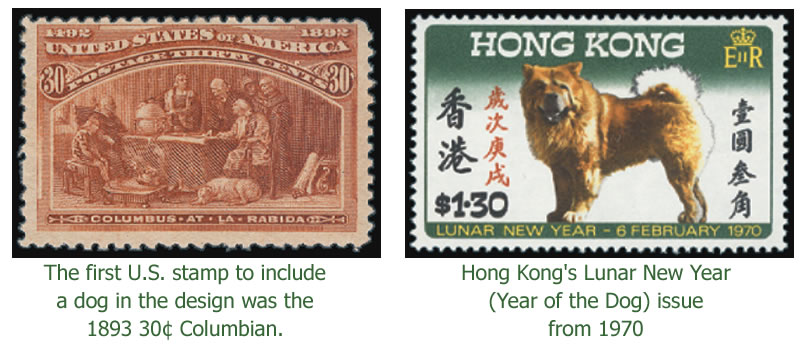
|
|
Canadian Postmasters
|
They didn't know it at the time, but Canadian Postmasters have been responsible for creating some very interesting and collectable items.
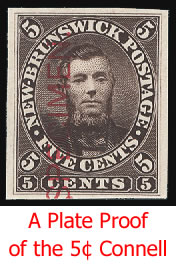
- In 1860, New Brunswick's Postmaster Charles Connell tried to use his own portrait rather than the portrait of Queen Victoria on a 5¢ stamp. The stamps were printed, but because of the ensuing scandal they were never issued. Connell burned many of the stamps on his back lawn, but some copies have survived. Even though it was never officially issued, the "Connell" stamp is acknowledged in the Scott catalogue as New Brunswick #5.
- Early Post Offices had to deal with stamp shortages, and sometimes a pair of scissors came in handy. If a 1¢ stamp was needed, some Postmasters allowed a 2¢ stamp to be cut in half! Bisects on covers have always been sought after by collectors.
- A Post Office in rural Manitoba received a sheet of the 1946 7¢ Goose Airmail that was only partially perforated. The creative Postmaster used a sewing machine to stitch perforations between the stamps. The sheet could then be torn up, and the stamps were sold over the counter.
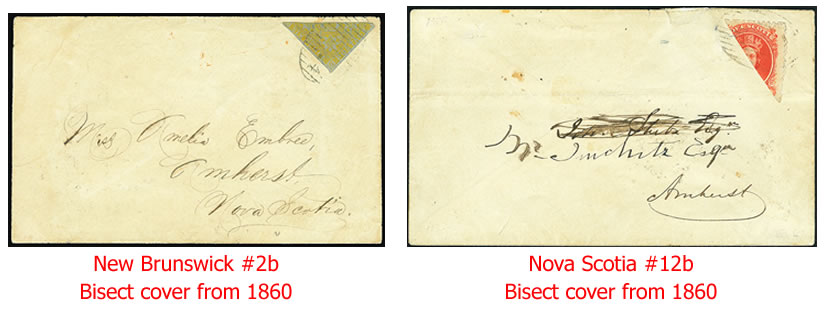
|
|
Universal Postal Union
|
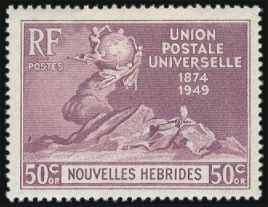 All of us take for granted that a letter mailed in our own country will be delivered in any other country around the world, and we have the Universal Postal Union to thank. In 1874, twenty-two countries formed the Union to facilitate international mail delivery. Canada joined in 1878, and today 189 countries are members. All of us take for granted that a letter mailed in our own country will be delivered in any other country around the world, and we have the Universal Postal Union to thank. In 1874, twenty-two countries formed the Union to facilitate international mail delivery. Canada joined in 1878, and today 189 countries are members.
Originally, every time a member country issued a stamp, it was required to send copies to UPU Headquarters in Bern, Switzerland. The UPU then distributed copies to all other member countries to provide identification of authorized issues. To prevent these stamps from ever being used as postage they were usually marked "Specimen" in the language of the country, either by overprint, handstamp or perforation. For example, a Specimen was marked " Muestra" in Spain, "Saggio" in Italy, and "Muster" in Germany. Many Specimens ultimately find their way onto the philatelic market, and are highly desirable to specialists as they are usually the first printing of a stamp and show the original colour. Our auctions always feature a variety of Specimens and these can make a very nice specialty collection on their own.
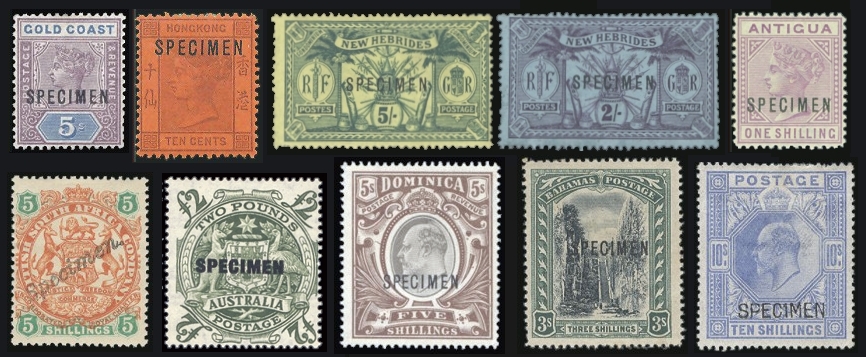
|
|
Canada Semi-Official Airmails
|
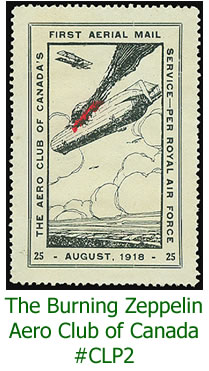 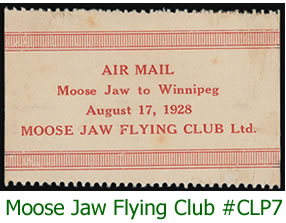 Between the years of 1924 and 1932, a very interesting chapter of Canadian philatelic history was written. During this brief period, Canada's "Semi-Official Airmail Stamps" were issued. Between the years of 1924 and 1932, a very interesting chapter of Canadian philatelic history was written. During this brief period, Canada's "Semi-Official Airmail Stamps" were issued.
In years gone by, these stamps were often regarded as labels or cinderella items, but they were actually authorized by the Canadian Post Office Department to facilitate the delivery of mail to northern communities and mining areas.
Thirteen private airline companies were allowed to print their own stamps and collect a fee for delivering mail to remote places that could only be reached by air. Many of the pilots had flown in World War I, and sought further adventure by flying into Canada's wilderness.
Semi-Official Airmails have always been popular with collectors because of their connection to a very romantic period of aviation history, and also because the number of issues is finite. A collection of the stamps themselves makes an impressive array, and you can delve further by collecting the numerous varieties as well as flight covers. Many of the stamps were printed in very small quantities, and even fewer of the flight covers exist. Very detailed records of the flights and pilots were kept, so for the avid collector the sky is the limit.
Our auctions always include a diverse section of Semi-Official Airmail material including pilot signed covers.
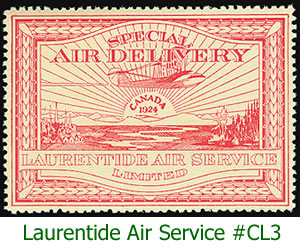 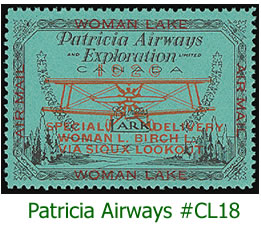
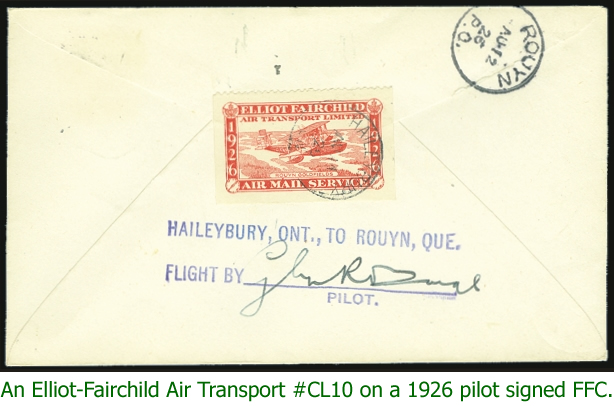
|
|
12 Penny Black sold for
$260,000 US
in New York!!
|
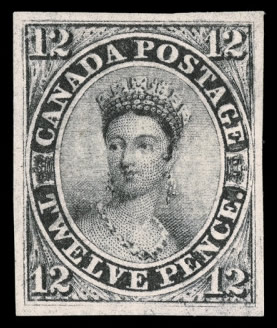
This beautiful mint example of one of Canada’s rarest stamps, the 12 Penny Black, sold for $260,000 US (hammer) yesterday (Thursday November 19th) at a Spink Shreves Galleries auction in New York. The hammer price makes this the highest price ever paid for a single Canadian stamp! This stamp was part of the BNA collection formed by bond king Bill Gross and sold in benefit of the Smithsonian’s National Postal Museum. The result is certainly astounding and a further indication of the demand for rare stamps despite the current climate of economic uncertainty. The Globe and Mail newspaper in Toronto featured an article about the sale of this stamp.
Check out the front page of our January 2010 auction for a gorgeous used Canada 12 Penny Black. |
|
John Lennon
|
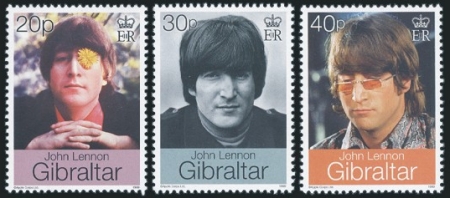
Every year we see dozens
of childhood or “junior” collections. Most are only worth a few
dollars each, but a few years ago Stanley Gibbons offered one for sale
for £29,950 ! This particular collection happened to belong to a
boy from Liverpool named John Lennon. The stamps themselves might
have been found in any youngster’s collection, but the interest lay in
the flyleaf where Lennon doodled and wrote his name and address.
The hardcover Mercury Stamp Album circa 1950 was acquired by the Smithsonian Institute’s National Postal
Museum. When young Lennon was putting stamps in
his album he would never have imagined that it would be displayed
at the Smithsonian, or that his own image would one day appear
on many worldwide postage stamps.
I grew up listening to Beatles music, and had
a pair of tickets to a concert at Maple Leaf Gardens in Toronto
in the 1960’s. On a trip to England several years ago I visited
the Cavern Club in Liverpool where the Beatles first played. Many of you probably
have memories of the Beatles, too.
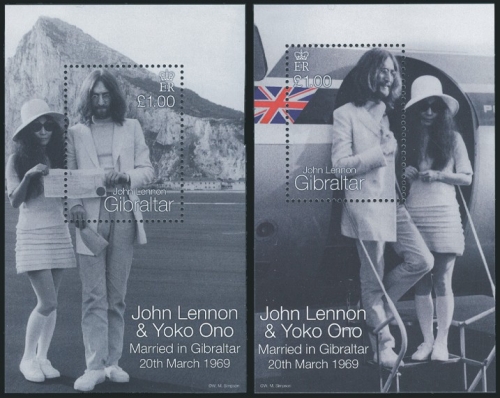
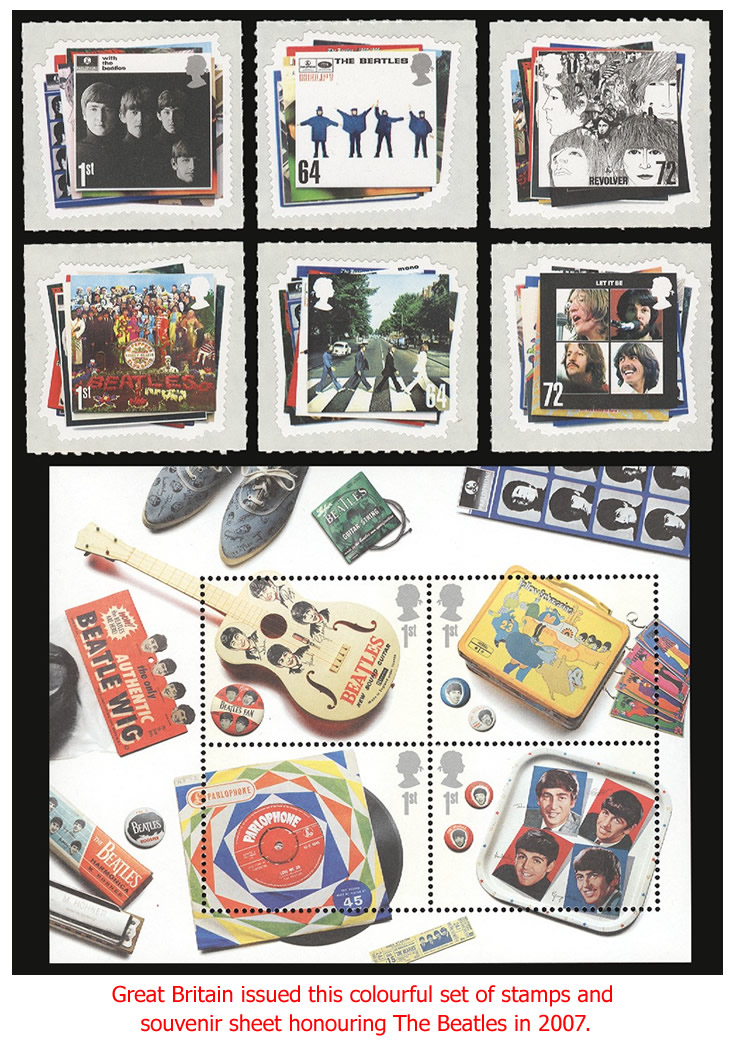
|
|
Revenue Stamps
|
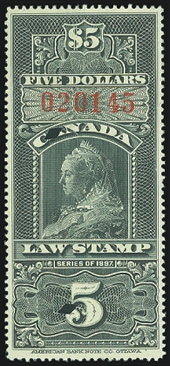 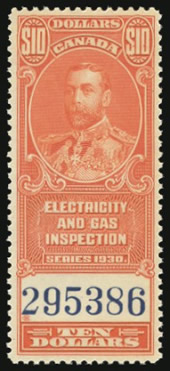
The postage stamp was
invented in 1840 to collect fees for mail delivery, but governments
soon learned that stamps could also be used to collect taxes. Aptly
named ‘Revenues’, these stamps had to be purchased for a variety
of services and products. Some countries issued stamps that served
the dual purpose of both postage and revenue collection, but in
Canada the majority of revenues were issued separately and had just
one job to do. From 1864 to the present, Canada’s federal and provincial
governments have issued stamps for taxing legal services, promissory
notes, bills of exchange, electricity and gas inspections, liquor,
tobacco, licenses, and also to collect more obscure duties like
immigration head taxes. Revenue issues provide a wide variety of
designs and some beautiful examples of engraving to enhance a collection
of postage stamps. |
|
Rowland Hill and the First Stamp
|
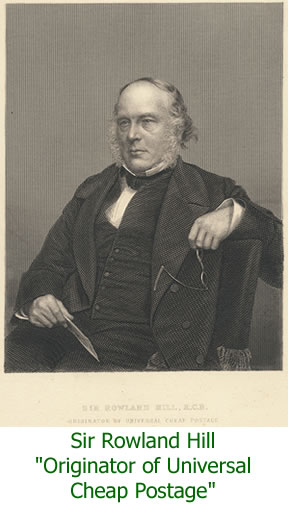
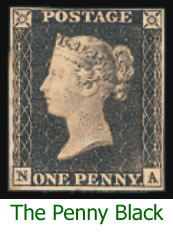 Before 1840, mailing a letter in Britain was a complicated matter. The rate for each letter had to be calculated on its weight and the distance that it had to travel. The postman collected the fee from the addressee, not the sender, and after a letter had been carried over a great distance, the fee might not even be paid. Inefficiency resulted in high costs that made the postal system inaccessible to the masses. A man named Rowland Hill saw the need for reform, and the result was a uniform, lower postal rate that was prepaid by the sender. Before 1840, mailing a letter in Britain was a complicated matter. The rate for each letter had to be calculated on its weight and the distance that it had to travel. The postman collected the fee from the addressee, not the sender, and after a letter had been carried over a great distance, the fee might not even be paid. Inefficiency resulted in high costs that made the postal system inaccessible to the masses. A man named Rowland Hill saw the need for reform, and the result was a uniform, lower postal rate that was prepaid by the sender.
It was Hill's idea to affix a little piece of paper to each letter as proof that the fee had been paid. The first adhesive postage stamp, the Penny Black, was printed in 1840. Since Great Britain was the first country in the world to print postage stamps, it probably did not occur to anyone to put the country name on the stamps. Even today, a stamp without a country name must be from Great Britain.
At the same time that the Penny Black appeared, Great Britain introduced the world's first postal stationery. Mulready envelopes and letter sheets were sold in One Penny and Two Penny denominations. Elaborately illustrated with patriotic designs by William Mulready, they did not prove to be popular at the time, but they are very collectible today.
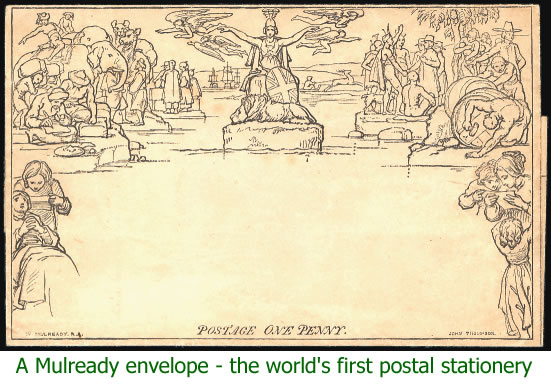
|
|
The R.M.S. Nascopie
|
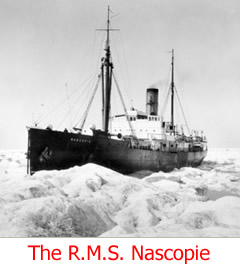
The covers pictured below have interesting stories to tell. They were carried aboard the R.M.S. Nascopie, a valiant little steamer that began her career as a supply ship for the Hudson's Bay Company in 1912. While the Nascopie is most famous for sinking a German submarine off the coast of Russia during WWI, her true calling was her annual voyage of about 10,000 miles from Montreal to the Eastern Arctic. She made thirty-four trips, breaking through ice to bring supplies to the traders and the Inuit population in about twenty northern outposts such as Port Burwell, Lake Harbour and Chesterfield Inlet.
On July 22, 1947, the Nascopie was driven ashore on Baffin Island during a wild Arctic storm. Fortunately, the 54 passengers and crew were rescued by the icebreaker N.B MacLean. Mail that was salvaged from the Nascopie was taken to Winnipeg for redistribution.
Because of the Nascopie's long and varied history, the covers that she carried are very popular with collectors today.
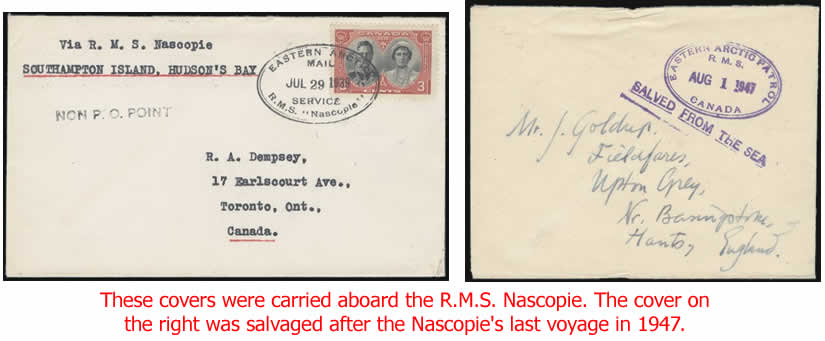
|
|
The Queen Victoria Chalon Head
|
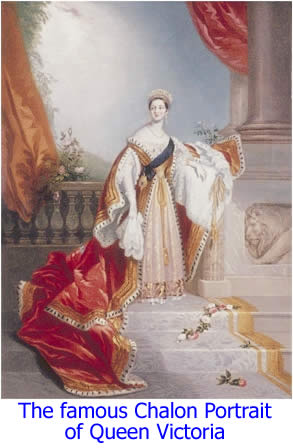
I have always been fascinated by old pictures of the British monarchy, and some of my favourite stamp designs are based on royal portraits. The most famous portrait of Queen Victoria, by British artist Alfred Edward Chalon, was used on many stamps which are called 'Chalon Heads'. Canada was the first country to use the portrait on a stamp, the famous
12 Penny Black (Scott #3) in 1851.
Over 300 more stamps from 11 British Dominions and Colonies used the design including Canada's famous Jubilee issue of 1897.
Chalon first sketched the Queen in her royal robes in 1837. From this sketch, Chalon made three copies of the portrait. The first was given by the Queen to her mother. This copy was exhibited for the Queen's Diamond Jubilee in 1897, but since that time its whereabouts have been unknown. Queen Victoria also presented a copy to the King of Prussia, but it is believed to have been destroyed during WWII. The third copy, which the Queen gave to the King of Portugal, may be the only surviving copy.
The Chalon portrait had a great impact on the world of its day as it was only through the distribution of stamps and engravings that the people of the British Empire came to know the likeness of their young Queen.
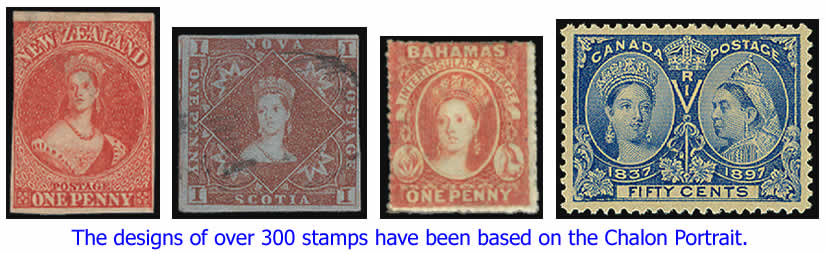
|
|
Falkland Islands
|
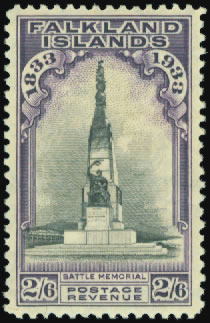
A British Crown Colony since 1833, the Falkland Islands are located in the South Atlantic about 300 miles east of the Straits of Magellan at the southern limit of South America. There are two main islands and about 200 small islands, many of which are uninhabited. The islands are small, having a combined land area of only 4,700 square miles, but their location gives them a strategic value that was demonstrated in both World Wars. In December 1914, the British Naval Squadron from Stanley, the capital city, defeated the German fleet at the Battle of the Falkland Islands and thus regained control of the South Atlantic. This battle is commemorated by the Battle Monument depicted on the 2sh6p value of the famous Centenary set. Twenty-five years later in December of 1939, a Royal Navy Squadron won the Battle of the River Plate, again allowing Britain to control the South Atlantic.
Argentina has long laid claim to the islands. Perhaps the most famous event in Falkland history occurred when the Argentine military invaded the islands in April of 1982, sparking an international conflict. The short-lived Falklands War ended in June 1982 when the Argentine forces surrendered to the British military after fierce sea, land and air battles.
Their beautiful stamps, their obscure location, and their rich military history have always made Falkland issues popular with stamp collectors. |
|
Canada's Famous 12 Penny Black
|
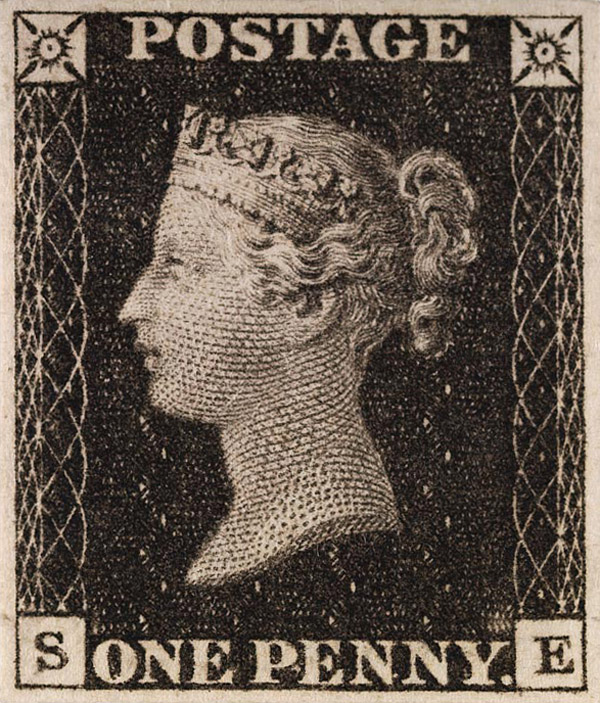
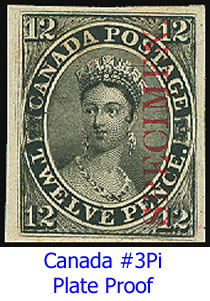 The most sought after early Canadian stamp is the famous "12 Penny Black"
(Scott #3). It is a stamp that is missing from virtually all collections and is one of the world's more desirable classic stamps. It was printed in 1851 by the New York firm of Rawdon, Wright, Hatch and Edson which is the same company that printed the first issues of the United States. The most sought after early Canadian stamp is the famous "12 Penny Black"
(Scott #3). It is a stamp that is missing from virtually all collections and is one of the world's more desirable classic stamps. It was printed in 1851 by the New York firm of Rawdon, Wright, Hatch and Edson which is the same company that printed the first issues of the United States.
The 12 Penny Black also has the distinction of being the first of hundreds of stamps to depict the well known 'Chalon portrait' of Queen Victoria by the British artist Alfred Edwin Chalon.
The stamp's use was very limited because it was issued for prepayment of the letter rate to Newfoundland and the West Indies. It is noted in Boggs that only 1,450 were issued to various Post Offices, and any unsold remainders were destroyed. Many authorities believe that only 100 or less examples of this stamp exist today. Collectors often use a Plate Proof of this issue to fill the space in their collections knowing that they probably will not have the opportunity to acquire the regular issue of #3. |
|
Allan Steinhart
|
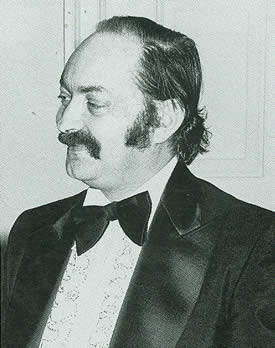 Allan Steinhart was one of the preeminent authorities on Canadian postal history. I first met Allan in the 1960's when he was a regular customer at my father's stamp and coin store in Toronto. Over the years we became friends and had lots of dealings. He was a frequent bidder in our auctions. During that time Allan amassed an enormous stock of Canada and worldwide postal history that became legendary. Allan Steinhart was one of the preeminent authorities on Canadian postal history. I first met Allan in the 1960's when he was a regular customer at my father's stamp and coin store in Toronto. Over the years we became friends and had lots of dealings. He was a frequent bidder in our auctions. During that time Allan amassed an enormous stock of Canada and worldwide postal history that became legendary.
Allan's sudden death in 1996 left a void in the Canadian postal history scene, and a book was published in 1997 as a tribute to his life. David Handelman and Gray Scrimgeour edited 'Allan Steinhart Postal Historian' which includes some of Allan's many postal history articles, anecdotes from people who knew him, and a wealth of information that any postal history collector would find fascinating. The book is well illustrated with many exhibition class covers that passed through Allan's hands.
In 2007, Charles Firby Auctions offered the balance of the Steinhart stock.
I was the largest buyer at the sale, acquiring thousands of $10 to $500 Canadian items. Covers from Allan's stock still turn up regularly, described in his distinctive style.
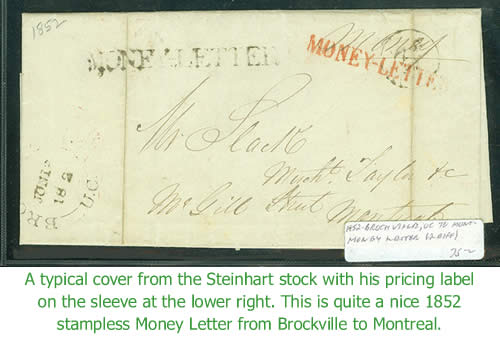 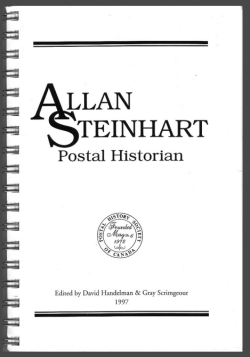
|
|
Franklin Delano Roosevelt
|
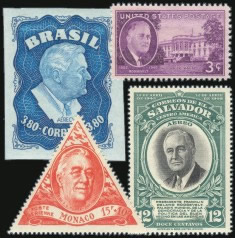
One of the most famous
stamp collectors of all time was United States President
Franklin D. Roosevelt. The time that he regularly spent
with his stamp collection helped him to cope with the
pressures of his busy life and made him a firm believer
in the therapeutic value of stamp collecting.
His enthusiasm
did much to promote the hobby in North America. We regularly
come across items from the FDR Collection and they always
have a special appeal. It is fitting that President Roosevelt
himself has been depicted on many stamps and covers from
countries all around the world.
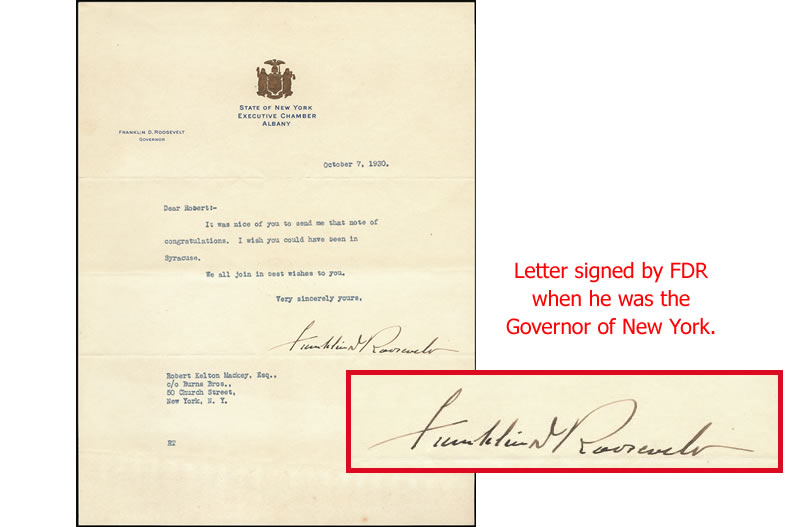
|
|
Captain Cook
|
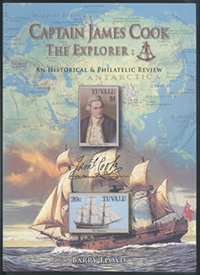 I enjoyed
reading my friend Dr. Barry Floyd’s philatelic work entitled
Captain James Cook the Explorer. It was a real pleasure to read
Barry’s historical examination of Cook’s three voyages of discovery
combined with a philatelic review of related stamps and covers.
Cook’s fascinating personal story and his remarkable legacy are
complemented by full colour illustrations of stamps, first day covers,
and souvenir covers that were issued around the world to commemorate
events from Cook’s voyages. Barry does an excellent job portraying
the romantic image of South Pacific exploration, while also examining
the harsh realities of long, dangerous voyages and European contact
with indigenous peoples. I enjoyed
reading my friend Dr. Barry Floyd’s philatelic work entitled
Captain James Cook the Explorer. It was a real pleasure to read
Barry’s historical examination of Cook’s three voyages of discovery
combined with a philatelic review of related stamps and covers.
Cook’s fascinating personal story and his remarkable legacy are
complemented by full colour illustrations of stamps, first day covers,
and souvenir covers that were issued around the world to commemorate
events from Cook’s voyages. Barry does an excellent job portraying
the romantic image of South Pacific exploration, while also examining
the harsh realities of long, dangerous voyages and European contact
with indigenous peoples.
I highly recommend this
book to anyone who has an interest in Captain Cook or Pacific exploration. |
|
Canadian Provinces |
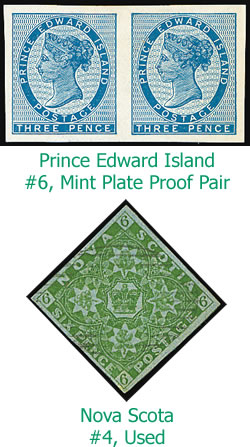 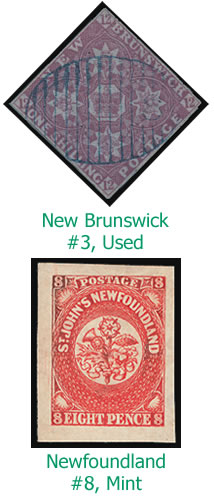 The Provincial issues of Canada have always been popular with collectors. British Columbia, New Brunswick, and Nova Scotia had their own governments and postal systems until they joined the Confederation of Canada on July 1, 1867. Prince Edward Island followed in 1873. Newfoundland has the most stamps of any of the provinces since it did not become part of Canada until 1949. Because no more stamps will ever be issued, collecting the Provinces has added appeal since the goal of a complete collection is attainable. One can also acquire all kinds of interesting varieties, imperfs, proofs, postmarks and postal history. The Provincial issues of Canada have always been popular with collectors. British Columbia, New Brunswick, and Nova Scotia had their own governments and postal systems until they joined the Confederation of Canada on July 1, 1867. Prince Edward Island followed in 1873. Newfoundland has the most stamps of any of the provinces since it did not become part of Canada until 1949. Because no more stamps will ever be issued, collecting the Provinces has added appeal since the goal of a complete collection is attainable. One can also acquire all kinds of interesting varieties, imperfs, proofs, postmarks and postal history.
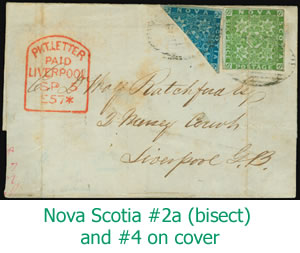 |
|
London
to London 1927 Flight
|
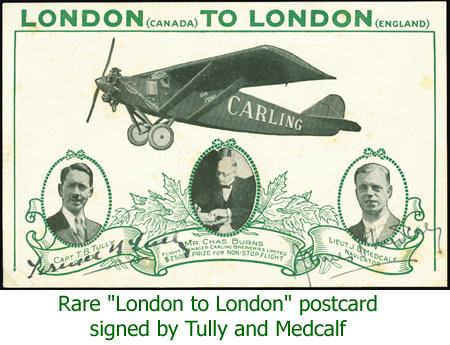
Aviation
and philately have always been closely tied, so it is no wonder that airmail
stamps and postal history are so popular. The postcard shown here tells
an interesting story.
In 1927, flying across the Atlantic was all the rage. Lindbergh completed
a Trans-Atlantic flight in May, but a dozen others lost their lives in
other attempts. The world was fascinated by the daring aviators who attempted
the dangerous flight. Carling Breweries of London Ontario offered a $25,000
prize to any Canadian or British pilot who could fly non-stop from London
Ontario to London England. Since it was not possible to fly that distance
on a single load of fuel, the rules were changed to allow a landing in
Newfoundland.
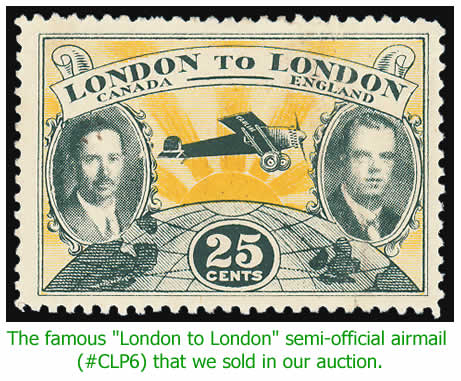
The plane ‘Sir John Carling’ piloted by Captain Terrence B. Tully
and Lieutenant James Medcalf took off from London Ontario on September
5th. After stopping at St. John’s Newfoundland, Tully and Medcalf headed
across the Atlantic carrying mail franked with a special airmail stamp
that bore their portraits (#CLP6). The plane never arrived in England.
The plane, the crew, and the mail were lost. In our May 2007 auction, we sold one of the 9 known copies of the rare
“London to London” stamp for $38,000. Recently, much excitement was
generated by the discovery of a printer’s proof of this issue. The proof
was sold at a Talman auction in Toronto in December 2008 for $11,500 and
made front page news in the Toronto Star newspaper.
|
|
The
Carmichael New Issue |
 I
am very proud to announce the birth of my first grandchild, Elyse Milena
Carmichael. My son, Chris, and his wife Kim welcomed their new daughter
into the world at the Welland Hospital on Monday, September 15, 2008 at
12:48pm. I
am very proud to announce the birth of my first grandchild, Elyse Milena
Carmichael. My son, Chris, and his wife Kim welcomed their new daughter
into the world at the Welland Hospital on Monday, September 15, 2008 at
12:48pm.
Elyse weighed 7lbs 8oz and arrived very quickly. In fact,
Chris barely made it to the delivery room in time to witness the birth
of his daughter. Kim and Elyse are doing very well, and they are all adjusting
to life together as a family.
Who knows? Maybe our ‘new issue’ will be a fourth
generation stamp dealer!
|
|
King
Farouk of Egypt |
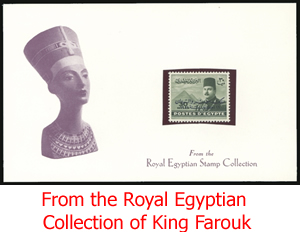 Over
the years, many famous people like President Franklin D. Roosevelt and
King George V have collected stamps. Over
the years, many famous people like President Franklin D. Roosevelt and
King George V have collected stamps.
Egypt’s King Farouk was also an avid philatelist, and he assembled a
very extensive collection. He ruled Egypt from 1936 until 1952, but unfortunately
his regime was corrupt, and he was forced to abdicate as the result of
a military coup in 1952. He died under mysterious circumstances while
in exile in Italy, and his government put his royal collection up for
sale in 1954.
Several dealers were among the purchasers of the collection,
and the stamps were put back on the market with the added appeal of having
once been owned by a king! Prominent Canadian stamp dealer Kasimir Bileski
handled many of the stamps, and he mounted some of them on special cards
as illustrated here. Items from King Farouk’s collection are still very
popular among collectors.
|
|
Royal
2008 Stamp Convention
|
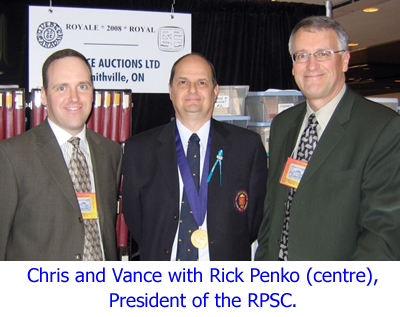 We
very much enjoyed meeting many of our bidders at the Royal Philatelic
Society of Canada Convention held in Quebec City in May 2008. Stamp collectors
came from all across Canada and the United States to attend. The convention
was an excellent forum for collectors, dealers, and exhibitors to share
their knowledge, add something to their collection at the bourse, and
enjoy the many fine exhibits. We
very much enjoyed meeting many of our bidders at the Royal Philatelic
Society of Canada Convention held in Quebec City in May 2008. Stamp collectors
came from all across Canada and the United States to attend. The convention
was an excellent forum for collectors, dealers, and exhibitors to share
their knowledge, add something to their collection at the bourse, and
enjoy the many fine exhibits.
The 2009 RPSC Convention will be held in St. Catharines
Ontario, about 30 minutes away from Smithville. Plans are well under way
for that show, which will run from June 12-14, 2009 at the Parkway Convention
Centre, 327 Ontario St., St. Catharines, Ontario.
|
|
The
Largest Stamp Store in the World
|
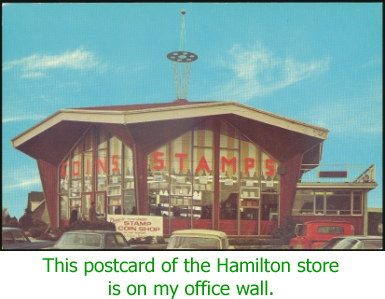 As
many of our bidders know, my family has a long history in the stamp collecting
field. My father was in the stamp business from the 1930’s-70’s, first
running a large exchange club for collectors, and then owning stamp stores
in Toronto and later in Hamilton Ontario. The Hamilton store is the most
memorable one for me. The two floor store became a landmark for collectors
and was billed as “the largest stamp and coin store in the world”. As
many of our bidders know, my family has a long history in the stamp collecting
field. My father was in the stamp business from the 1930’s-70’s, first
running a large exchange club for collectors, and then owning stamp stores
in Toronto and later in Hamilton Ontario. The Hamilton store is the most
memorable one for me. The two floor store became a landmark for collectors
and was billed as “the largest stamp and coin store in the world”.
The store stocked over 2,500 albums of stamps for collectors
to look through. It was also a hub for collectors looking for coins, military
medals, rocks and minerals, and prints. Even though the store closed in
1974, I still meet collectors who used to frequent the store and have
fond memories of dealing with my father.
|
|
Vance Goes
Green |

The Forestry Stewardship
Council is an international organization which promotes the responsible
management of the worlds forests. We are very proud that
since May of 2008, Vance Auctions catalogues have been printed on paper stock which is guaranteed
by the FSC as originating from forests which have been managed in an environmentally
responsible, socially beneficial, and economically viable manner. For
more information on the FSC please visit www.fsc.org
|
|
Canada Official OHMS Perfins
|
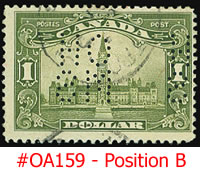
Canadian Official OHMS Perfins are a very popular colleting field. These stamps were perforated with an “OHMS” pattern for official use. Depending on how the sheets of stamps happened to be fed through the perforating machine, the letters appear differently when viewed from the front of the stamp. For your reference, here is a guide to the possible positions:
:
|
|
|
United Empire Loyalists
|
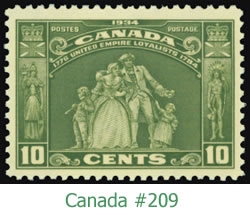 After the American Revolutionary War (1775-83) and the defeat of the British, many people remained loyal to Britain. Fearing persecution, a large migration of over 40,000 Loyalists came to Canada, resettling in various parts of the country. Many United Empire Loyalists were attracted to the Niagara Peninsula where Smithville is located. After the American Revolutionary War (1775-83) and the defeat of the British, many people remained loyal to Britain. Fearing persecution, a large migration of over 40,000 Loyalists came to Canada, resettling in various parts of the country. Many United Empire Loyalists were attracted to the Niagara Peninsula where Smithville is located. 
Their British culture and laws had a great influence on the area. A statue of a Loyalist family, created by Sydney March of England, has a prominent place in nearby Hamilton (about 30 minutes away from our office) in front of the former Court House.
This famous statue was depicted on a Canadian stamp in 1934 (Scott #209) to commemorate the 150th Anniversary of the arrival of the United Empire Loyalists. The stamp is considered one of the more beautiful issues from the middle period of Canada.
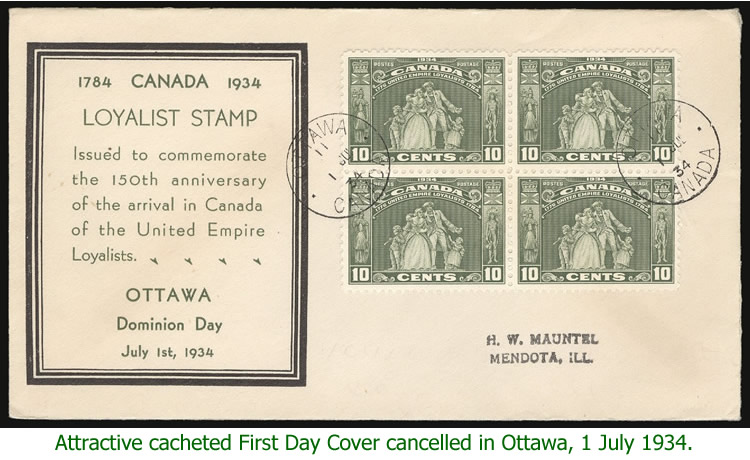
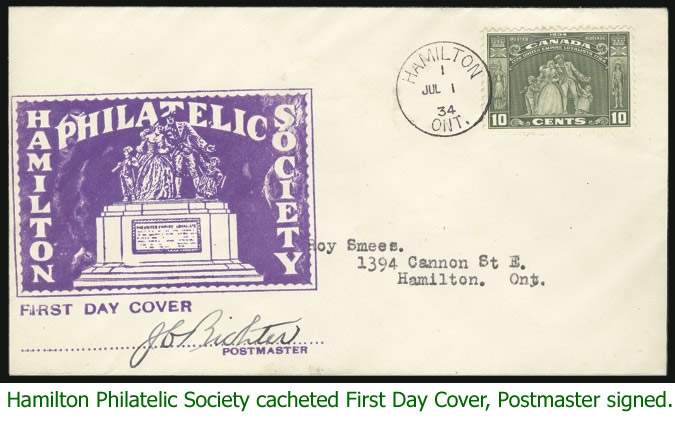
|
|
|
|
|